
GLP-1 (Glucagon-Like Peptide-1) receptor agonists have gained significant attention as a medical breakthrough for weight loss. They are effective for appetite regulation, metabolism support, and promoting sustainable weight reduction. Many individuals considering GLP-1 therapy often ask, “How long does it take for GLP-1 to work?” This guide will answer that question in detail while providing insights on its benefits, side effects, usage, and tips to maximize results.
1. What is GLP-1 and How Does It Work?
GLP-1 is a naturally occurring hormone in the body that helps regulate blood sugar and appetite. GLP-1 receptor agonists are synthetic medications designed to mimic these effects.
Mechanisms of Action:
- Appetite Suppression – GLP-1 signals the brain to reduce hunger, making it easier to stick to a calorie-controlled diet.
- Slowing Stomach Emptying – Extends the feeling of fullness after meals, reducing overall calorie intake.
- Metabolic Support – Improves insulin sensitivity and blood sugar regulation, reducing fat storage.
- Weight Maintenance – Supports long-term weight management when combined with healthy lifestyle choices.
2. Factors Affecting How Long GLP-1 Takes to Work
The speed at which GLP-1 produces noticeable weight loss varies among individuals due to multiple factors:
2.1 Type of GLP-1 Medication
- Semaglutide (Ozempic, Wegovy): Results typically appear within 4–6 weeks, with more significant weight loss over 3–6 months.
- Liraglutide (Saxenda): May take 2–4 weeks to see initial effects, with gradual improvement over 2–3 months.
2.2 Dosage and Titration
- GLP-1 medications are often started at a low dose and gradually increased to minimize side effects.
- Slow titration may delay initial results but improves long-term tolerability.
2.3 Individual Factors
- Metabolism: Faster metabolism can lead to quicker results.
- Lifestyle: Diet, exercise, and hydration significantly influence outcomes.
- Medical Conditions: Diabetes, thyroid issues, or digestive disorders may affect GLP-1 response.
3. Typical Timeline for GLP-1 Effectiveness
The effectiveness of GLP-1 therapy typically follows a gradual, progressive timeline, as the body adjusts to the medication and lifestyle changes. In the first 1–2 weeks, most individuals notice a subtle reduction in appetite and a mild feeling of fullness after meals, which may be accompanied by minor digestive changes such as nausea or bloating.
By weeks 3–4, cravings and snacking often decrease, and early weight loss of 1–3 pounds may become apparent. Between weeks 5–8, many patients experience more consistent satiety, smaller portion sizes, and steady weight reduction, while energy levels and mood may improve. By the third to sixth month, significant and more noticeable results are common, with patients often achieving a 5–15% reduction in body weight.
Alongside these physical changes, blood sugar levels stabilize, metabolism improves, and healthier eating habits become more natural. Consistency with prescribed dosages, a balanced diet, and regular exercise is key to maximizing GLP-1’s benefits and achieving sustainable long-term results.
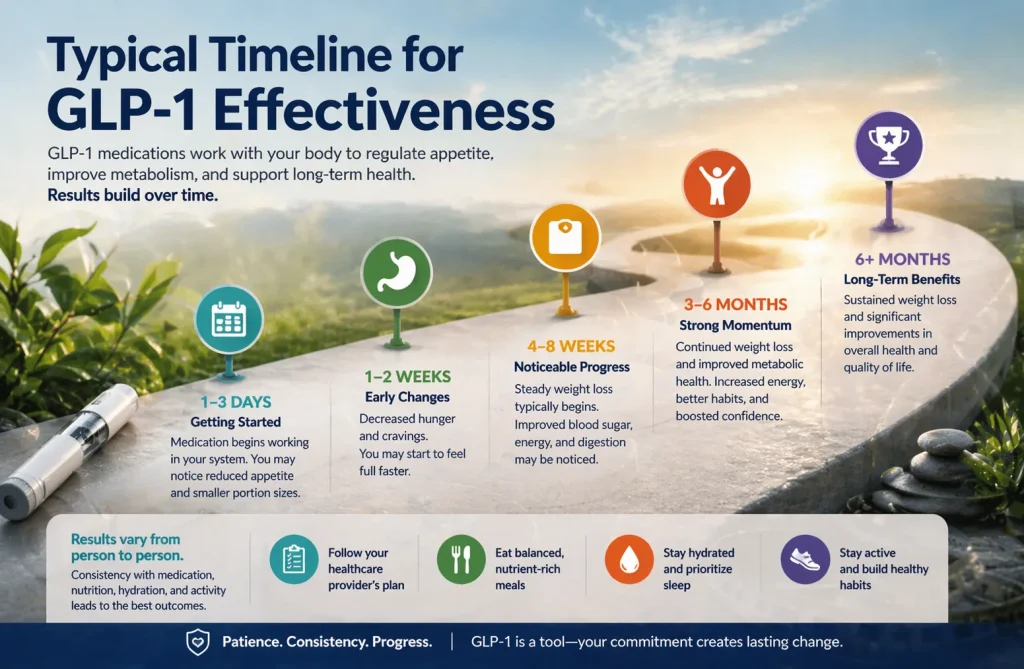
Understanding the expected timeline helps manage expectations and maintain motivation:
Week 1–2
- Initial appetite reduction
- Mild fullness after meals
- Possible minor nausea or digestive changes
Week 3–4
- Noticeable decrease in snacking and cravings
- Slight weight loss, often 1–3 pounds
- Improvement in blood sugar levels for diabetic patients
Week 5–8
- Increased satiety and smaller portion sizes
- Steady weight reduction
- Improved energy and mood
Month 3–6
- Significant weight loss of 5–15% of body weight (varies by individual)
- Enhanced metabolic function and cardiovascular benefits
- Establishment of new, sustainable eating habits
Tip: Consistency with dosage, diet, and exercise is key to achieving results within this timeline.
4. Benefits of GLP-1 for Weight Loss
GLP-1 medications provide multiple benefits that extend beyond simple weight reduction, making them a valuable tool for long-term health improvement. Primarily, GLP-1 helps regulate appetite by signaling the brain to reduce hunger, making it easier to stick to a healthy diet and more sustainable.
It slows stomach emptying, increasing feelings of fullness and naturally lowering calorie intake. Additionally, GLP-1 improves blood sugar control and insulin sensitivity, supporting better metabolic function and reducing fat storage. Beyond weight management, GLP-1 may contribute to cardiovascular health by helping lower blood pressure, improve cholesterol levels, and reduce inflammation.
GLP-1 therapy can also enhance energy levels and overall well-being, as more stable blood sugar levels reduce fatigue and mood swings. It may help improve liver health by reducing fat accumulation in the liver, which is especially beneficial for patients with non-alcoholic fatty liver disease (NAFLD).
By supporting lean muscle retention during weight loss, GLP-1 helps maintain metabolic rate and prevents the slowdown often seen with calorie restriction alone. Some patients also experience improvements in sleep quality due to better blood sugar regulation and reduced nighttime hunger.
GLP-1 therapy encourages a positive feedback loop, where early weight loss motivates continued adherence to diet and exercise, leading to more sustained health benefits. Additionally, research suggests potential neuroprotective effects, possibly lowering the risk of cognitive decline associated with obesity and diabetes.
These combined effects make GLP-1 not just a weight loss aid, but a comprehensive tool for metabolic and cardiovascular health, supporting long-term wellness when paired with healthy lifestyle choices.
Clinical studies indicate that, when combined with lifestyle changes, GLP-1 therapy can lead to a sustainable weight loss of 10–20% of body weight, making it an effective and science-backed option for individuals committed to improving their health.
GLP-1 offers multiple health advantages beyond just weight loss:
4.1 Appetite Control
- Reduces hunger signals
- Helps resist unhealthy cravings
- Supports adherence to a healthy diet
4.2 Slows Stomach Emptying
- Promotes longer-lasting fullness
- Reduces caloric intake naturally
4.3 Boosts Metabolism
- Supports fat burning
- Stabilizes blood sugar and insulin levels
4.4 Cardiovascular Health
- May lower blood pressure
- Improves cholesterol levels and reduces inflammation
4.5 Sustainable Weight Loss
- Clinical studies show an average reduction of 10–20% of body weight over months
- Encourages long-term lifestyle changes
5. How to Maximize GLP-1 Effectiveness
Maximizing the effectiveness of GLP-1 therapy requires combining the medication with consistent lifestyle habits and proper adherence to prescribed protocols. A balanced diet rich in lean proteins, whole grains, fruits, and vegetables enhances the appetite-suppressing effects of GLP-1, while limiting processed foods and sugary beverages can further improve results.
Regular physical activity, including both aerobic exercises and strength training, supports metabolism, preserves muscle mass, and accelerates fat loss. Staying well-hydrated also helps regulate appetite and promotes overall metabolic efficiency.
Additionally, following the dosing schedule as prescribed by a healthcare professional ensures the medication works optimally while minimizing side effects. By integrating these strategies, individuals can achieve more consistent and sustainable weight loss results alongside GLP-1 therapy.
Tracking progress through regular weight measurements, food logs, and blood sugar monitoring allows patients to see trends and adjust habits effectively. Incorporating behavioral strategies, such as mindful eating and portion control, can further enhance the appetite-suppressing benefits of GLP-1.
Getting adequate sleep is crucial, as poor sleep can disrupt hormones that regulate hunger and metabolism. Stress management techniques, such as meditation or yoga, help prevent emotional eating and support overall metabolic health.
Patients should also discuss any other medications or supplements with their healthcare provider, as some can influence GLP-1 effectiveness. Periodic follow-ups ensure dosing adjustments are made when necessary, improving both safety and efficacy.
Combining these practices with GLP-1 therapy promotes long-term weight loss, better blood sugar control, and improved overall health outcomes.
To get the best results from GLP-1 therapy, follow these evidence-based strategies:
5.1 Maintain a Balanced Diet
- Focus on lean proteins, vegetables, fruits, and whole grains
- Limit sugary drinks, processed foods, and alcohol
- Eat smaller, mindful meals to enhance satiety
5.2 Exercise Regularly
- 150 minutes of moderate exercise weekly
- Strength training 2–3 times per week
- Physical activity boosts metabolism and maintains muscle mass
5.3 Stay Hydrated
- 2–3 liters of water per day
- Hydration supports digestion, energy, and appetite control
5.4 Follow Prescribed Dosage
- Never self-adjust medication without guidance
- Adherence prevents side effects and ensures consistent results
6. Possible Side Effects of GLP-1
While GLP-1 medications are generally well-tolerated, they may cause some side effects, particularly during the initial stages of treatment. The most common reactions include nausea, vomiting, diarrhea, and constipation, which often subside as the body adjusts to the medication.
Some patients may also experience loss of appetite or reduced food intake, which is expected but should be monitored to prevent nutrient deficiencies. Fatigue or low energy can occur, especially during the first few weeks of therapy, as the body adapts.
Injection site reactions, such as redness, itching, or mild swelling, are occasionally reported, particularly with weekly GLP-1 injections. Rarely, individuals may experience heartburn or bloating, which usually resolves over time.
Patients with a history of thyroid disorders should discuss potential risks with their healthcare provider, as GLP-1 therapy may not be suitable in certain cases. Regular monitoring of blood sugar, liver function, and kidney function helps ensure early detection of any adverse effects.
Staying hydrated, eating smaller meals, and spacing doses consistently can reduce gastrointestinal discomfort. Reporting persistent or severe symptoms promptly allows healthcare providers to adjust dosage or switch therapies for safety and effectiveness.
Some individuals may experience mild headaches or dizziness. In rare cases, more serious complications such as pancreatitis or gallbladder issues can occur, so it is essential to monitor symptoms closely and consult a healthcare provider if any concerning signs appear.
Gradually increasing the dosage and taking the medication with food can help minimize discomfort and improve overall tolerability, ensuring a safer and more effective weight loss experience.
While generally safe, GLP-1 medications may cause mild to moderate side effects:
- Nausea, vomiting, or diarrhea
- Headache or dizziness
- Rare cases: pancreatitis or gallbladder issues
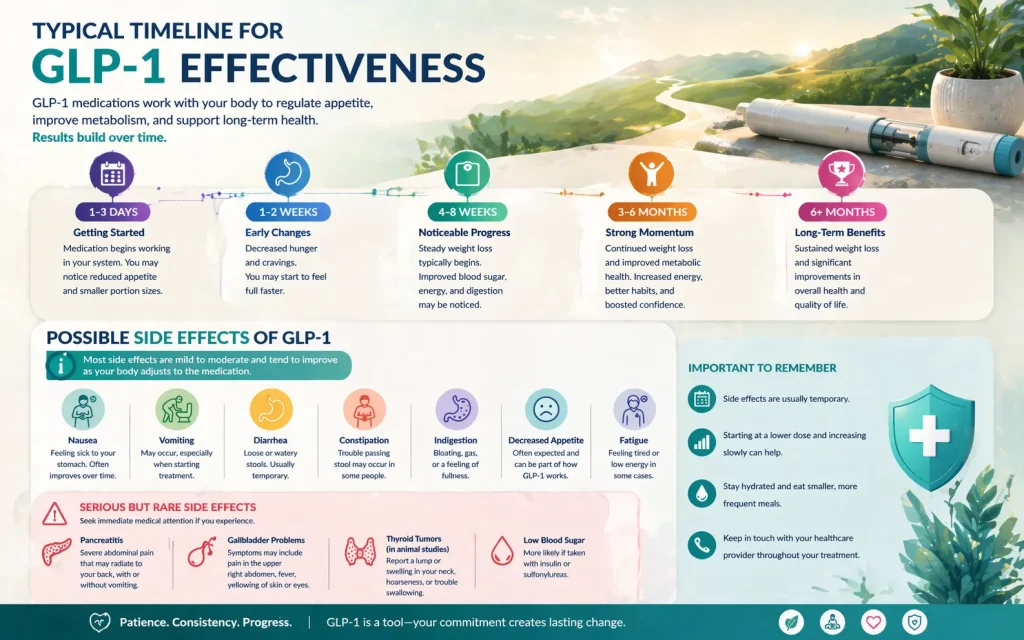
Pro Tip: Gradually increasing the dosage and taking GLP-1 with meals can minimize side effects.
7. Who Can Use GLP-1 for Weight Loss?
GLP-1 therapy is primarily recommended for adults who are struggling with obesity or weight-related health conditions. It is generally suitable for individuals with a body mass index (BMI) of 30 or higher, as well as those with a BMI of 27 or higher who also have comorbidities such as type 2 diabetes, high blood pressure, or high cholesterol.
GLP-1 can be an effective tool for people who have not achieved sufficient weight loss through diet and exercise alone. However, it is essential to consult a healthcare professional before starting GLP-1 therapy to ensure it is safe, appropriate, and tailored to an individual’s medical history and lifestyle.
GLP-1 is suitable for adults who struggle with obesity or weight-related health conditions:
- Adults with BMI ≥30 (obese)
- Adults with BMI ≥27 with comorbidities (e.g., diabetes, high blood pressure, high cholesterol)
Always consult a healthcare provider before starting therapy.
GLP-1 therapy may also benefit individuals who face metabolic challenges that make weight loss difficult, such as insulin resistance or hormonal imbalances. It is often considered for patients who have struggled with recurrent weight gain despite consistent lifestyle interventions.
Healthcare providers may assess medical history, current medications, and potential side effects before recommending GLP-1 therapy. People with certain gastrointestinal conditions or a history of pancreatitis may need to avoid or use these medications cautiously.
GLP-1 is not typically recommended for pregnant or breastfeeding individuals, and pediatric use is limited and must be guided by a specialist. Combining GLP-1 therapy with behavioral support, nutritional counseling, and physical activity enhances both safety and efficacy.
Ongoing monitoring by a healthcare professional ensures optimal dosing, management of side effects, and evaluation of overall health improvements, including blood sugar control, blood pressure, and lipid levels.
8. Lifestyle Tips Alongside GLP-1
Using GLP-1 medications can be highly effective, but combining them with healthy lifestyle habits maximizes results. Balanced nutrition is essential—focus on whole foods, lean proteins, fiber-rich vegetables, and controlled carbohydrate intake to stabilize blood sugar. Regular physical activity, including both cardio and strength training, enhances insulin sensitivity and supports weight management.
Hydration is important, as adequate water intake can help manage appetite and support metabolism. Ensuring quality sleep improves hormone regulation, which can complement GLP-1 therapy. Patients should also limit alcohol consumption and avoid smoking, as these can interfere with metabolic health.
Monitoring blood sugar levels consistently allows patients to track progress and adjust habits in consultation with their healthcare provider. Additionally, keeping a food and activity journal can improve adherence and motivation. By integrating these lifestyle strategies, GLP-1 therapy becomes more effective for weight loss, blood sugar control, and overall health.
For optimal results with GLP-1 therapy, integrating healthy lifestyle habits is essential. Adequate sleep of 7–8 hours per night helps regulate hormones that control appetite and metabolism, while stress management through practices such as meditation, yoga, or deep breathing prevents cortisol-related weight gain.
Regular physical activity, including both cardiovascular exercises and strength training, supports fat loss, maintains muscle mass, and boosts overall energy. Tracking progress with weight logs, food journals, or apps helps monitor results and stay accountable. By combining GLP-1 therapy with these consistent lifestyle strategies, individuals can maximize weight loss, improve metabolic health, and establish long-term, sustainable wellness habits.
Integrating healthy habits enhances the medication’s effectiveness:
- Sleep: 7–8 hours per night improves hormone regulation
- Stress Management: Meditation, yoga, or deep breathing reduces cortisol-related weight gain
- Progress Tracking: Use journals or apps to monitor weight, measurements, and habits
- Consistency: Following routines ensures long-term results
9. Frequently Asked Questions (FAQs)
Q1: When will I see noticeable results with GLP-1?
Initial results appear in 2–4 weeks, with significant weight loss over 3–6 months.
Q2: Can GLP-1 be combined with other weight loss medications?
Only under medical supervision to avoid interactions or side effects.
Q3: Is GLP-1 safe for non-diabetic adults?
Yes, GLP-1 is approved for weight management in non-diabetic adults with obesity or overweight-related conditions.
Q4: What happens if I stop GLP-1 therapy?
Some weight regain may occur without lifestyle modifications; continuing diet and exercise is crucial.
Q5: Can GLP-1 replace diet and exercise?
No, GLP-1 enhances weight loss but is most effective alongside healthy lifestyle habits.
10. Key Takeaways
- GLP-1 medications are a scientifically supported solution for weight management
- The timeline to results varies based on medication type, dosage, and individual factors
- Maximum effectiveness requires combining GLP-1 with diet, exercise, hydration, and sleep
- Benefits extend beyond weight loss to metabolic and cardiovascular health
- Consistency and medical guidance are essential for sustainable results
Conclusion:
GLP-1 therapy represents a scientifically proven and clinically supported approach to weight management, offering benefits that go beyond simple fat reduction. By regulating appetite, slowing stomach emptying, and improving insulin sensitivity, GLP-1 helps individuals reduce calorie intake naturally while maintaining stable blood sugar levels. Clinical trials have shown that patients can achieve a weight loss of 10–20% over several months, particularly when the therapy is combined with a balanced diet and regular exercise. Beyond weight loss, GLP-1 may contribute to cardiovascular health by lowering blood pressure, improving cholesterol profiles, and reducing markers of inflammation.
For long-term effectiveness, consistency is critical. Patients who follow prescribed dosing schedules, maintain healthy lifestyle habits, and monitor their progress experience more sustainable results and fewer side effects. GLP-1 therapy also provides psychological benefits, as reduced hunger and cravings can enhance motivation and adherence to dietary plans. While it is not a standalone solution, GLP-1 acts as a powerful adjunct to traditional weight loss strategies, making it suitable for individuals with obesity or weight-related health conditions. With medical guidance and commitment to lifestyle changes, GLP-1 can transform weight management, support metabolic health, and significantly improve overall quality of life.