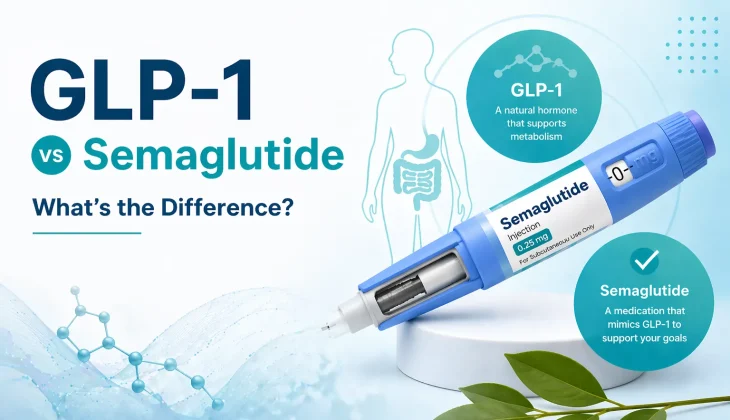
In the rapidly evolving field of metabolic health, particularly diabetes care and weight management, the terms GLP‑1 and semaglutide often appear together. While they are closely related, it is crucial to understand that GLP‑1 and semaglutide are not the same thing. GLP‑1 refers both to a naturally occurring hormone and a class of medications called GLP‑1 receptor agonists (GLP‑1RAs), while it is a specific drug developed within that class.
This guide will explain the differences, mechanisms, clinical applications, benefits, safety considerations, and answer common questions, providing a comprehensive resource for patients, clinicians, and health content creators.
1. What Is GLP‑1? A Hormone and a Drug Class
Definition
GLP‑1 stands for glucagon‑like peptide‑1, a hormone produced naturally in the gut in response to food intake. Its primary biological roles include:
- Enhancing insulin secretion when glucose levels rise
- Suppressing glucagon, a hormone that raises blood sugar
- Slowing gastric emptying
- Communicating satiety (fullness) signals to the brain
This combination helps keep blood sugar under control after eating and reduces appetite—two key processes in metabolic health.
Natural vs. Therapeutic GLP‑1
When most people talk about “GLP‑1” in a clinical context, they mean GLP‑1 receptor agonists (GLP‑1RAs)—a class of medications inspired by the natural hormone.
Natural GLP‑1 circulates for only about 1–2 minutes before being broken down by the enzyme DPP‑4. Because of this fleeting presence, native GLP‑1 can’t be used as a practical medication in its unmodified form.
GLP‑1 as a Drug Class
The term “GLP‑1” also refers broadly to GLP‑1 receptor agonists (GLP‑1RAs)—synthetic or engineered drugs that bind to the same receptor as the natural hormone, triggering similar biological effects but lasting much longer in the body.
Approved medications in this class include (but are not limited to):
- Exenatide
- Liraglutide
- Dulaglutide
- Semaglutide
- Others under development or with mixed incretin actions
These medications have transformed diabetes care by improving glycemic control, reducing weight, and offering cardiovascular benefits with a low risk of hypoglycemia compared to older therapies.
2. What Is Semaglutide? A Medication Within the GLP‑1 Family
Definition of Semaglutide
It is a specific medication within the GLP‑1 receptor agonist class. It is a synthetic analog of human GLP‑1 engineered to mimic the hormone’s effects while staying active in the body much longer—days instead of minutes.
Semaglutide is approved under several brand names with different clinical indications:
- Ozempic® – for type 2 diabetes management
- Wegovy® – for chronic weight management
- Rybelsus® – the first oral form of a GLP‑1 medication
Why Semaglutide Was Developed
Natural GLP‑1, due to its short half‑life, cannot be administered as a drug in its native form. Scientists modified the peptide sequence to:
- Resist degradation by DPP‑4
- Bind reversibly to albumin in the bloodstream
- Extend half‑life to about 7 days, allowing weekly dosing
These modifications mean semaglutide stays in circulation long enough to act as an effective therapeutic agent for chronic health conditions like diabetes and obesity.
3. Key Differences: GLP‑1 vs. Semaglutide
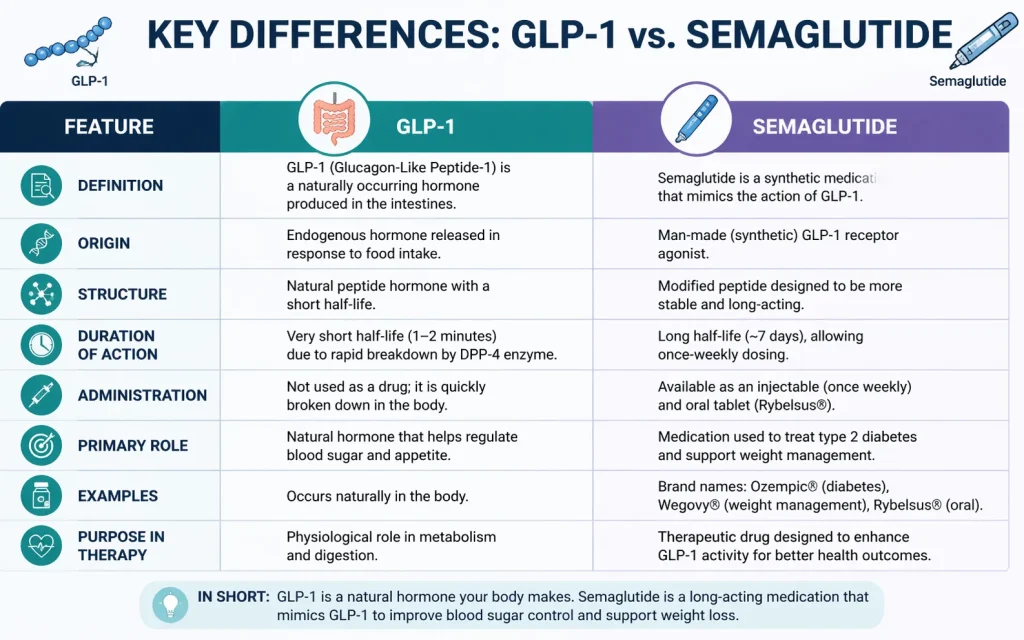
| Feature | GLP‑1 (Native Hormone / Class) | Semaglutide |
| Nature | Natural hormone / class of drugs | Specific engineered drug |
| Duration in Body | ~1–2 minutes | ~7 days (weekly dosing) |
| Use | Regulates metabolism naturally | Treats type 2 diabetes & obesity |
| Examples | Endogenous GLP‑1, various GLP‑1RAs | Ozempic, Wegovy, Rybelsus |
| Structure | Naturally occurring peptide | Modified analog with enhanced stability |
Not the Same Thing
In simple terms:
- GLP‑1 refers to both a natural hormone and a class of medicines that act like the hormone.
- Semaglutide is one specific drug within the GLP‑1 medication class.
So saying “GLP‑1 is the same as semaglutide” is inaccurate—semaglutide belongs to the GLP‑1 family, but doesn’t represent all GLP‑1 agents.
4. How Semaglutide Works: Mechanism of Action
It is a long-acting GLP‑1 receptor agonist that mimics the effects of the naturally occurring hormone GLP‑1 in the body. Once administered, it binds to GLP‑1 receptors located in the pancreas, gastrointestinal tract, and brain, triggering a cascade of metabolic effects.
In the pancreas, semaglutide enhances insulin secretion in response to elevated blood glucose while simultaneously suppressing glucagon, the hormone responsible for raising blood sugar levels. In the gastrointestinal system, it slows gastric emptying, which helps maintain satiety and reduces post-meal glucose spikes. In the brain, semaglutide activates appetite-regulating centers, signaling fullness and reducing caloric intake.
This combination of actions supports better blood sugar control, promotes weight loss, and contributes to overall metabolic health. Its extended half-life allows for weekly dosing, making it both effective and convenient for long-term management of type 2 diabetes and obesity.
It works by binding to GLP‑1 receptors in various tissues, especially the pancreas, brain, and gastrointestinal tract. Once activated, several physiological processes occur:
1. Enhanced Insulin Secretion
In the pancreas, semaglutide increases insulin release—but only when glucose levels are elevated—reducing the risk of dangerously low blood sugar (hypoglycemia).
2. Reduced Glucagon Secretion
It suppresses glucagon, a hormone that raises blood glucose, helping maintain metabolic balance.
3. Appetite Suppression
Activation of receptors in the brain reduces hunger signals and enhances satiety, leading to lower food intake and aiding weight loss.
4. Slower Gastric Emptying
By delaying food movement from the stomach to the intestines, semaglutide keeps you feeling full longer, which also helps with appetite control and glucose regulation.
These combined actions explain semaglutide’s dual benefits: improved glycemic control in diabetes and clinically significant weight reduction in obesity management.
5. Clinical Uses of Semaglutide
It is a versatile medication with several clinically approved uses. Primarily, it is prescribed for adults with type 2 diabetes to improve glycemic control by enhancing insulin secretion and suppressing glucagon, helping maintain stable blood sugar levels.
In addition to diabetes management, semaglutide is approved for chronic weight management in adults with obesity or overweight who have associated health risks, such as high blood pressure or cardiovascular disease. Its effects on appetite suppression, satiety, and gastric emptying make it a highly effective adjunct to diet and lifestyle interventions.
Furthermore, some studies indicate that semaglutide may reduce the risk of cardiovascular complications, such as heart attack and stroke, particularly in patients with type 2 diabetes, making it a valuable tool in comprehensive metabolic care. The availability of both injectable and oral formulations enhances flexibility for patients and improves adherence to long-term treatment plans.
1. Type 2 Diabetes
It helps patients with type 2 diabetes manage blood glucose, reduce HbA1c levels, and even lower the risk of cardiovascular events.
2. Chronic Weight Management
Under brand names like Wegovy®, semaglutide is approved to help adults with obesity or overweight lose weight and maintain the results alongside lifestyle changes.
3. Cardiovascular Benefits
Some formulations have demonstrated reductions in major adverse cardiovascular outcomes in patients with type 2 diabetes.
4. Oral Formulations
Unlike many GLP‑1 drugs that require injections, semaglutide has an oral version (Rybelsus®), broadening access to patients who prefer pills.
6. Safety and Side Effects: GLP‑1 Therapies
GLP‑1 receptor agonists, including semaglutide, are generally considered safe and well-tolerated, but like all medications, they may cause side effects. The most common are gastrointestinal issues, such as nausea, vomiting, diarrhea, constipation, and abdominal discomfort, which often occur during the first few weeks of therapy and typically subside as the body adjusts.
Rare but more serious side effects can include pancreatitis, gallbladder disease, or kidney complications, making it important for patients to report any persistent or severe symptoms promptly. Semaglutide may also interact with other medications, so healthcare providers carefully evaluate patient history and comorbidities before prescribing.
Regular monitoring and gradual dose titration are standard practices to minimize adverse effects while maximizing the drug’s benefits for blood sugar control and weight management. Overall, when used under medical supervision, GLP‑1 therapies provide a safe and effective option for chronic metabolic care.
Like any medication, semaglutide and other GLP‑1RAs come with potential side effects. The most common include:
- Nausea
- Vomiting
- Diarrhea
- Constipation
- Gastrointestinal discomfort
Most side effects are mild and often lessen over time as the body adjusts. Serious adverse events are rare but need medical attention if symptoms appear.
Because semaglutide influences digestive and metabolic pathways, coordination with dietary changes and medical supervision ensures optimal outcomes and safety.
7. Why This Distinction Matters
Understanding the distinction between GLP‑1 and semaglutide is critical for patients, healthcare providers, and content creators alike. For patients, it clarifies what they are taking, how it works, and what effects to expect, reducing confusion between a natural hormone and a synthetic medication.
For clinicians, precise terminology ensures accurate prescriptions, safe dosing, and informed discussions about risks and benefits. In the context of health content and SEO, distinguishing GLP‑1 from semaglutide improves the accuracy and credibility of information, helping audiences find reliable guidance on treatment options, the mechanism of action, and potential side effects.
Ultimately, this understanding supports better health outcomes, safer therapy management, and higher-quality educational materials in metabolic health and diabetes care.
For Patients
A clear understanding helps individuals know:
- What they are being prescribed
- How it works biologically
- Why semaglutide doses differ from other GLP‑1 drugs
- What expectations to set for outcomes and side effects
For Clinicians
Precise language ensures better patient education, correct prescriptions, and informed risk‑benefit discussions.
For Content
Accurate differentiation maximizes search relevance and authority. People searching terms like:
- “GLP‑1 vs semaglutide differences”
- “What is semaglutide medication?”
- “GLP‑1 hormone function”
…will find content that correctly targets both general hormone biology and specific drug mechanisms.
8. Summary: GLP‑1 vs. Semaglutide
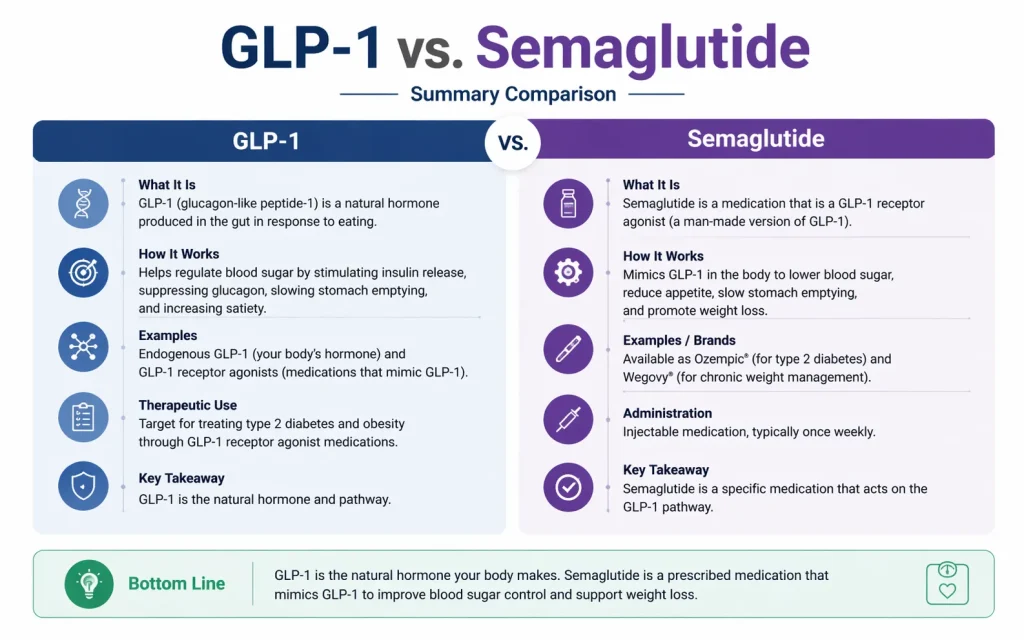
GLP‑1 and semaglutide are closely related but not identical. GLP‑1 is a naturally occurring hormone that regulates blood sugar and appetite, and it also refers to a class of medications known as GLP‑1 receptor agonists.
Semaglutide, on the other hand, is a specific long-acting drug within this class, designed to mimic GLP‑1’s effects while remaining active in the body for several days. While both act on GLP‑1 receptors to improve glycemic control, suppress glucagon, slow gastric emptying, and promote satiety, semaglutide offers the convenience of weekly dosing and proven clinical efficacy in diabetes management, weight loss, and cardiovascular risk reduction.
Understanding this distinction is essential for patients, healthcare providers, and content creators to ensure accurate communication, proper treatment decisions, and safe long-term management of metabolic conditions.
- GLP‑1 is both a natural hormone and the name for a class of medications that mimic its actions.
- Semaglutide is a specific drug in that class, engineered to last longer and treat metabolic diseases.
- They share related mechanisms, but they are not interchangeable terms.
- Accurate understanding improves clinical care, writing quality, and patient outcomes.
Frequently Asked Questions (FAQs)
1. Is GLP‑1 the same as semaglutide?
No, GLP‑1 and semaglutide are related but not identical. GLP‑1 is a naturally occurring hormone that regulates blood sugar and appetite and is also the basis for a class of medications called GLP‑1 receptor agonists.
Semaglutide is one specific drug within this class, designed to mimic GLP‑1’s effects while lasting longer in the body. Understanding this difference is important for patients and clinicians when discussing treatment options.
2. How does semaglutide work in the body?
It works by activating GLP‑1 receptors in the pancreas, gastrointestinal tract, and brain. It enhances insulin secretion in response to high blood sugar, suppresses glucagon release, slows stomach emptying, and signals the brain to reduce appetite.
These combined actions improve glycemic control and support weight loss in patients with type 2 diabetes or obesity. Its long-acting design allows for weekly dosing, making it convenient for long-term therapy.
3. Can GLP‑1 alone be used as a medication?
Native GLP‑1 cannot be used directly as a medication because it breaks down rapidly in the bloodstream, with a half-life of only 1–2 minutes. To overcome this limitation, scientists developed GLP‑1 receptor agonists, like semaglutide, which resist degradation and stay active in the body for days.
These synthetic analogs replicate the hormone’s effects safely and effectively for therapeutic use in diabetes and weight management.
4. What are the main benefits of semaglutide?
Semaglutide has several clinically proven benefits. It improves blood sugar control in type 2 diabetes, promotes significant weight loss, and can reduce the risk of cardiovascular complications.
Additionally, it supports appetite control and satiety, which helps patients maintain healthier eating habits. Both injectable and oral forms are available, providing flexibility and improving adherence to treatment plans.
5. Are there side effects of semaglutide?
Like all medications, semaglutide can cause side effects, most commonly gastrointestinal symptoms such as nausea, vomiting, diarrhea, and constipation. These side effects are usually mild and tend to decrease over time as the body adjusts.
Rare but serious complications can occur, so patients should consult their healthcare provider if they experience persistent or severe symptoms. Regular monitoring ensures safety and optimal outcomes.
6. How long does semaglutide last in the body?
Semaglutide is designed to be long-acting, with a half-life of approximately 7 days. This allows for once-weekly injections, which is a major convenience compared to older GLP‑1 drugs or natural GLP‑1 that lasts only a few minutes.
The extended action ensures consistent blood sugar management and sustained appetite control, making it an effective therapy for chronic conditions like diabetes and obesity.
7. Who should consider semaglutide therapy?
Semaglutide is typically recommended for adults with type 2 diabetes, obesity, or overweight individuals with associated health risks, such as high blood pressure or cardiovascular disease.
It should be used in combination with lifestyle interventions, including diet and exercise, under medical supervision. Healthcare providers evaluate patients individually to ensure that semaglutide is safe, effective, and tailored to their specific health goals.
Conclusion
GLP‑1 and semaglutide are closely connected but not the same. GLP‑1 is a natural hormone and a broad class of medications, whereas semaglutide is a long-acting drug specifically developed within that class to treat type 2 diabetes and obesity.
Understanding the distinction helps patients, healthcare providers, and content creators communicate accurately about treatment options, benefits, and potential side effects. Semaglutide’s efficacy in glycemic control, weight management, and cardiovascular protection highlights the significance of GLP‑1 receptor agonists in modern metabolic healthcare.