A Complete Guide to Alcohol, GLP‑1 Drugs, Safety & Best Practices
Introduction
GLP‑1 medications like Ozempic, Wegovy, Mounjaro, and Victoza are increasingly prescribed for weight loss and diabetes management. These drugs work by mimicking a hormone called glucagon‑like peptide‑1 (GLP‑1), which helps regulate appetite, blood sugar, and digestion. But a common question many patients ask is:
1. Can you drink alcohol while taking a GLP‑1 medication?
The short answer: Yes — but with caution. Alcoholic drinks interact with your body differently when you’re on GLP‑1 therapies, and understanding these effects is key to staying safe and achieving your health goals.
GLP‑1 medications, such as Ozempic, Wegovy, and Mounjaro, are widely used for diabetes management and weight loss. These drugs work by regulating appetite, slowing digestion, and helping control blood sugar levels.
Many patients wonder whether it is safe to consume alcohol while on these medications. Alcohol affects blood sugar, hydration, and digestion, which can interact with GLP‑1 drugs in ways that may increase side effects. Common issues include nausea, bloating, and unpredictable blood sugar fluctuations. Occasional moderate drinking may be safe for some, but heavy or frequent spirit intake is discouraged.
Understanding the potential interactions and monitoring your body’s response is essential. Always consult your healthcare provider before combining Spirits with GLP‑1 therapy. Making informed choices helps you stay safe and maintain the effectiveness of your medication.
2. Know What the GLP‑1 Medications Are?
GLP‑1 medications, also known as GLP‑1 receptor agonists, are a class of injectable drugs designed primarily for managing type 2 diabetes and supporting weight loss. They work by mimicking a natural hormone in the body called glucagon-like peptide-1 (GLP‑1), which regulates appetite, digestion, and blood sugar levels.
By activating GLP‑1 receptors, these medications help slow down gastric emptying, making you feel fuller for longer periods and reducing the urge to overeat. This effect also contributes to more stable blood sugar levels throughout the day, which is particularly important for people managing diabetes.
Some of the most commonly prescribed GLP‑1 medications include Ozempic (semaglutide), Wegovy (semaglutide) for weight loss, Mounjaro (tirzepatide), and Victoza (liraglutide). While each has slightly different uses and dosing schedules, they all share the same core mechanism of appetite suppression and blood sugar regulation.
In addition to aiding weight loss, these drugs can help improve insulin sensitivity, lower glucose spikes after meals, and support long-term metabolic health. Although GLP‑1 medications are generally safe when prescribed by a healthcare professional, they can cause side effects such as nausea, vomiting, or mild gastrointestinal discomfort, especially during the initial weeks of therapy. Understanding how these medications function is essential, particularly when considering lifestyle factors such as Alcoholic drinks consumption.
Drinking Hard drinks while on GLP‑1 drugs can interact with the body in ways that may intensify side effects or affect blood sugar control, so awareness and caution are key to using these medications safely and effectively.
GLP‑1 receptor agonists are injectable medications used primarily to treat:
- Type 2 diabetes
- Obesity and weight management
- Prediabetes (in some cases)
These drugs include:
- Ozempic (semaglutide)
- Wegovy (semaglutide) — specifically for weight loss
- Mounjaro (tirzepatide)
- Victoza (liraglutide)
They work by:
- Slowing gastric emptying (makes you feel full longer)
- Reducing appetite
- Helping regulate blood sugar levels
3. Why Alcohol Matters With GLP‑1 Medications?
Alcohol can significantly impact the way your body responds to GLP‑1 medications, which already influence digestion, appetite, and blood sugar regulation. Drinking hard drinks while on these drugs can increase the risk of side effects such as nausea, vomiting, dizziness, and stomach discomfort.
Both alcohol and GLP‑1 medications slow gastric emptying, which can lead to bloating and prolonged feelings of fullness. For people with diabetes, Alcoholic drinks can cause unpredictable fluctuations in blood sugar levels, sometimes resulting in hypoglycemia or hyperglycemia. Additionally, alcohol may interfere with weight loss goals by adding extra calories and stimulating appetite, which counteract the appetite-suppressing effects of GLP‑1 drugs.
Understanding these interactions is crucial for safely managing your medication and making informed lifestyle choices. Moderation, timing, and monitoring your body’s response are key strategies for reducing risks when alcohol is consumed alongside GLP‑1 therapy.
Spirits impacts your digestive system, liver, brain, and blood sugar — all of which are also affected by GLP‑1 meds.
Here’s why combining them requires caution:
- Spirits slows gastric emptying: The same effect that helps with satiety can be compounded with GLP‑1 drugs.
- Spirits affect blood sugar: It can cause rapid swings — hypoglycemia (especially in diabetics).
- Spirits increase nausea risk: GLP‑1 meds already commonly cause nausea and stomach discomfort.
4. How Alcohol Affects Your Body on GLP‑1 Drugs?
Alcohol can significantly impact the way your body responds to GLP‑1 medications, which already influence digestion, appetite, and blood sugar regulation. Drinking hard drinks while on these drugs can increase the risk of side effects such as nausea, vomiting, dizziness, and stomach discomfort.
Both ethanol and GLP‑1 medications slow gastric emptying, which can lead to bloating and prolonged feelings of fullness. For people with diabetes, alcohol can cause unpredictable fluctuations in blood sugar levels, sometimes resulting in hypoglycemia or hyperglycemia. Additionally, alcohol may interfere with weight loss goals by adding extra calories and stimulating appetite, which counteract the appetite-suppressing effects of GLP‑1 drugs.
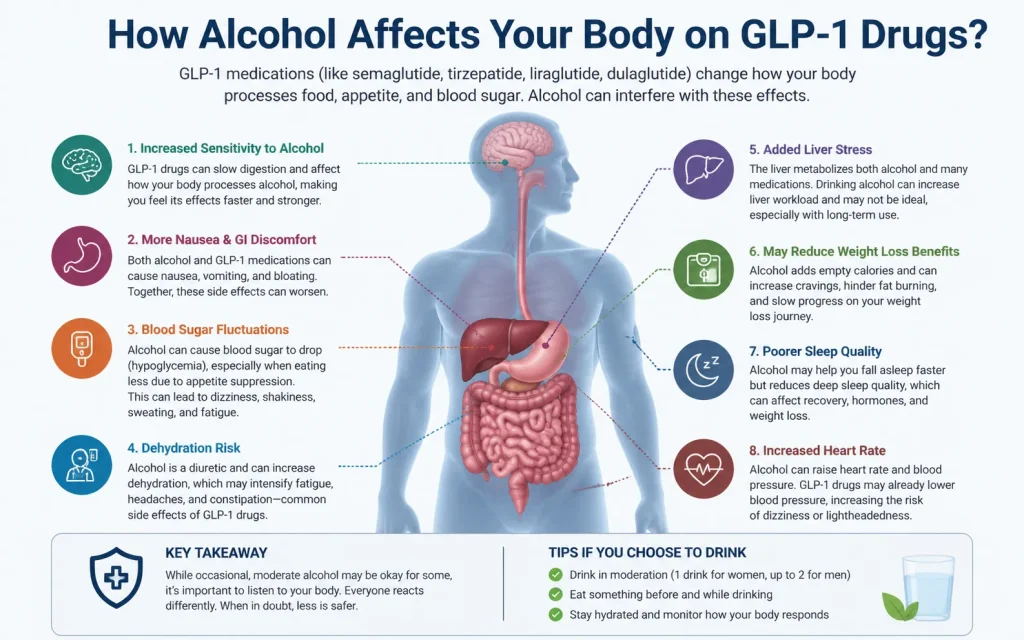
Understanding these interactions is crucial for safely managing your medication and making informed lifestyle choices. Moderation, timing, and monitoring your body’s response are key strategies for reducing risks when alcohol is consumed alongside GLP‑1 therapy.
1. Slowed Digestion
Both ethanol and GLP‑1 drugs slow down how quickly food leaves your stomach.
This can lead to:
- Bloating
- Gas
- Increased nausea
- Uncomfortable fullness
2. Blood Sugar Changes
In people with diabetes, alcohol can:
- Lower blood sugar suddenly
- Mask symptoms of low blood sugar
- Interact with medications that regulate glucose
3. Increased Side Effects
Common GLP‑1 side effects that alcohol can worsen include:
- Nausea
- Vomiting
- Dizziness
- Headaches
5. Safe Drinking Guidelines (If You Choose to Drink)
While it is generally recommended to limit alcohol consumption while on GLP‑1 medications, occasional drinking may be possible if approached with caution. Moderation is key, and it’s important to monitor how your body reacts, especially during the first few weeks of therapy.
Drinking on an empty stomach should be avoided, as this can increase the risk of nausea, dizziness, or blood sugar fluctuations. Staying hydrated by drinking water alongside alcohol can help reduce dehydration and other side effects. Opting for lower-ethanol beverages and limiting sugary mixers is also advisable to maintain more stable glucose levels.
Listening to your body and being aware of any warning signs is essential. Ultimately, consulting your healthcare provider before drinking ensures that you make safe and informed choices while on GLP‑1 therapy.
If you decide to drink while on a GLP‑1 medication, follow these best practices:
Drink hard drinks in moderation
Monitor how you feel during and after drinking
Avoid drinking on an empty stomach
Stay hydrated with water between drinks
Understand your blood glucose levels (if diabetic)
6. How Much Alcohol Is “Safe”?
There’s no universal number, but in general:
| Group | Standard Recommendation |
| Adults without diabetes | 1 drink/day for women, 2 drinks/day for men |
| Adults with diabetes | Limit or avoid, monitor glucose |
| People with nausea or GI sensitivity | Avoid alcohol during dose increases |
A standard drink = ~14g pure alcohol
(e.g., 5 oz wine, 12 oz beer, 1.5 oz spirits)
7. Signs You Should Stop Drinking While on GLP‑1
It is important to recognize when alcohol consumption may be unsafe while taking GLP‑1 medications. If you experience severe nausea, persistent vomiting, or intense stomach discomfort, it is a clear sign to stop drinking immediately.
Dizziness, fainting, or lightheadedness can indicate dehydration or low blood sugar, both of which may be worsened by Spirits in combination with GLP‑1 therapy. Rapid or unexplained changes in blood glucose levels should also prompt caution, as alcohol can interfere with the medication’s effects. Feeling unusually fatigued or weak after drinking is another warning signal.
Paying attention to these symptoms and responding quickly by stopping alcohol intake can help prevent complications and support your overall health. When in doubt, consult your healthcare provider before consuming ethanol.

Stop drinking and consult your healthcare provider if you experience:
- Severe nausea or vomiting
- Signs of dehydration
- Dizziness or fainting
- Rapid changes in blood sugar
- Severe stomach pain
8. Alcohol & GLP‑1: What Research Says
Research directly examining the combination of alcohol and GLP‑1 medications is limited, but existing studies and clinical guidance provide useful insights. Booze is known to affect blood sugar regulation, digestion, and appetite, all of which are also influenced by GLP‑1 drugs.
Combining the two can increase the risk of gastrointestinal side effects, such as nausea, bloating, or vomiting, and may lead to unpredictable blood sugar fluctuations in people with diabetes. While occasional moderate drinking may not significantly reduce the effectiveness of GLP‑1 therapy, frequent or heavy consumption can interfere with weight management and metabolic control.
Healthcare providers generally recommend moderation and careful monitoring of symptoms when drinking while on these medications. More research is needed, but the current consensus emphasizes caution and informed choices.
While research directly on GLP‑1 medications + alcohol is limited, we do know:
📌 Alcohol impairs glucose regulation
📌 GLP‑1 drugs slow gastric emptying
📌 Combined effects can increase GI symptoms and hypoglycemia risk
More studies are needed, but caution is widely recommended by healthcare professionals.
9. Does Alcohol Reduce Weight Loss Effects?
Alcohol can indirectly impact the weight loss benefits of GLP‑1 medications, even though it does not directly block the action of the drugs. One of the main concerns is that ethanol beverages are calorie-dense, and regular consumption can add a significant number of extra calories to your diet.
Alcohol can also lower inhibitions, which may lead to overeating or choosing foods that counteract the appetite-suppressing effects of GLP‑1 therapy. Additionally, Spirits can affect metabolism and blood sugar control, potentially reducing the efficiency of the medication in regulating appetite and glucose levels.
While an occasional drink is unlikely to completely negate progress, frequent or heavy drinking can slow down weight loss and make it harder to achieve your health goals. Being mindful of booze intake and choosing low-calorie or non-alcoholic alternatives can help maintain the effectiveness of GLP‑1 treatment.
There’s no clear evidence that occasional alcohol reduces the effectiveness of GLP‑1 meds — but:
❗ Alcohol is calorie-dense
❗ It can encourage poor food choices
❗ It may blunt appetite control benefits
So while one drink may not “undo” progress, regular drinking can slow weight loss.
10. Quick Tips for Social Drinking
If you plan to drink at an event:
✔ Eat a meal first
✔ Choose lower‑booze beverages
✔ Alternate water and ethanol
✔ Avoid sugary mixers
✔ Know your limit
Table: Alcohol & GLP‑1 Interaction Effects
| Factor | GLP‑1 Medication | Alcohol | Combined Effect |
| Gastric Emptying | Slows | Delays digestion | Increased fullness, bloating |
| Blood Sugar | Regulates | Can lower or spike | Unpredictable levels |
| Nausea | Possible side effect | Can cause | Increased risk |
| Hydration | Neutral | Causes dehydration | Worse dehydration |
| Appetite Control | Helps reduce appetite | Can increase hunger | Mixed effects |
Frequently Asked Questions FAQs
1. Can alcohol counteract GLP‑1 benefits?
Not directly — but it can interfere with appetite control and blood sugar regulation, especially if overused.
2. Is one drink safe on GLP‑1?
For most people, one occasional drink is okay. Pay attention to your body.
3. Can alcohol trigger nausea on GLP‑1?
Yes. Both alcohol and GLP‑1 meds can cause nausea — together, the risk increases.
4. Does alcohol affect blood sugar with GLP‑1 meds?
Yes. Alcohol can both increase and decrease glucose levels unpredictably.
5. Should diabetics avoid alcohol on GLP‑1?
Many healthcare providers recommend minimizing or avoiding alcohol and closely monitoring sugar.
6. Is beer worse than wine on GLP‑1?
No type is “safe.” Calories, sugars, and alcohol content are what matter most.
7. Can I drink while increasing my GLP‑1 dose?
It’s best to avoid alcohol while your dose is being adjusted — this is when side effects are strongest.
8. How long after an injection can I drink?
There’s no strict rule, but waiting until you know how your body reacts is wise.
9. Do spirits affect weight loss with GLP‑1 meds?
Spirits, calories, and appetite effects can slow weight loss indirectly.
10. Are mocktails a good option?
Yes! Non‑alcoholic drinks avoid glucose swings and dehydration.
Conclusion
Alcohol does not need to be completely off-limits while taking GLP‑1 medications, but caution is essential. These drugs affect digestion, appetite, and blood sugar, and Spirits can amplify side effects like nausea, dizziness, or glucose fluctuations.
Occasional, moderate drinking may be acceptable for some, but heavy or frequent booze intake can interfere with weight loss and overall health goals. Monitoring your body’s response and staying hydrated can help reduce risks. Always avoid drinking on an empty stomach and opt for lower-alcohol or non-alcoholic options when possible.
Most importantly, consult your healthcare provider before consuming alcohol while on GLP‑1 therapy. Making informed choices ensures both safety and the effectiveness of your treatment.
Ethanol doesn’t need to be 100% off‑limits when you’re taking a GLP‑1 medication — but it must be approached carefully. These medications change how your body digests food and controls blood sugar, which can interact with alcohol’s effects.