- Lean beef jerky is a high-protein, portable snack that can play a supporting role in bone health when chosen carefully and eaten in moderation.
- Not all beef jerky is created equal — grass-fed, low-sodium options with no added nitrates offer significantly more nutritional value than standard store-bought varieties.
- One ounce of standard beef jerky contains 19% of your daily sodium value, which can actually work against bone health over time if consumed in excess.
- Pairing lean beef jerky with calcium-rich and vitamin D-rich foods creates a more complete bone-support strategy than relying on jerky alone.
- Keep reading to find out exactly which label claims matter when buying lean beef jerky for bone support — and which ones are just marketing noise.
Lean Beef Jerky Can Help Support Your Bones — Here’s What You Need to Know
Most people grab beef jerky for a quick protein hit on a road trip or between meetings — bone health is the last thing on their mind. But lean beef jerky, when chosen wisely, actually contains several nutrients that directly support bone density and strength.
It’s important to note that the beef jerky we’re talking about is lean. Many types of jerky are high in sodium, preservatives, and saturated fat, which can counteract its benefits. Lean beef jerky made from grass-fed beef with few additives is a completely different product. For those who want to incorporate bone-supporting snacks into their diet, websites like BeefJerky.com are a good place to start learning about what makes a high-quality jerky.
Building bone health takes time, it’s a process that involves consistent nutrition, physical activity, and smart food choices. Lean beef jerky can be one of those smart food choices. While it won’t replace calcium, vitamin D, or weight-bearing exercise, the protein, zinc, and phosphorus in lean beef jerky make it more than just a handy snack.
A Quick Look at the Nutrition: 1 oz of Lean Beef Jerky
Nutrient
Amount per 1 oz
Why It’s Important for Bones
Protein
~9–11g
Helps support bone matrix structure and density
Zinc
~2mg (18% DV)
Encourages the growth of bone-building cells (osteoblasts)
Phosphorus
~110mg
Works with calcium to mineralize bone
Sodium
~450–590mg
High levels can lead to increased calcium excretion
Iron
~1.5mg
Supports the synthesis of collagen in bone tissue
The Importance of Protein for Bone Health
Many people believe that bone health is only about calcium. However, approximately 50% of bone volume is protein — mainly collagen — which creates the flexible structure that provides bones with their strength and resistance to fractures. For more insights on how collagen contributes to bone health, you can explore this guide on collagen peptides.
How Protein Directly Impacts Bone Density
Eating protein can stimulate the production of insulin-like growth factor 1 (IGF-1), a hormone that helps build bones. Protein also makes it easier for the body to absorb calcium from the gut. A 2022 study that appeared in the National Library of Medicine confirmed that if you get enough protein in your diet, you’re likely to have better bone mineral density and a lower risk of fractures, especially if you’re over 50.
One thing that is frequently ignored is that a lack of protein not only impacts muscle, but it also speeds up bone loss. If you don’t consume enough protein, the collagen matrix that keeps bone minerals in place is reduced, making bones more brittle even if you get enough calcium.
What is the Necessary Amount of Protein for Bone Health?
For most adults, the suggested daily intake of protein is 0.8g per kilogram of body weight, but recent studies suggest that older adults who are at risk for osteoporosis should have higher intakes, between 1.0g and 1.2g per kilogram. Lean beef jerky, which provides about 9–11g of protein per ounce, is a great way to meet your daily protein requirements without having to eat a full meal. Additionally, incorporating collagen peptides can further support bone health.
Why Lean Beef Jerky is a Wise Snack for Bone Support
Establishing permanent dietary habits is easier when convenience is a factor. Lean beef jerky is a great source of protein that doesn’t need to be refrigerated, prepared, or cooked, unlike fresh meat. This eliminates the usual obstacles to maintaining regular protein consumption throughout the day.
Moreover, it’s high in calories without being too much. A 1-oz serving is usually between 70–100 calories depending on the brand and cut used, making it easy to fit into a calorie-conscious diet without losing nutrient density. That balance is hard to find in most portable snack options.
Grass-fed lean beef jerky is a great snack that also benefits your health. Grass-fed beef has more omega-3 fatty acids and conjugated linoleic acid (CLA) than grain-fed beef. Both of these nutrients can reduce inflammation, which helps your bones and joints stay healthy. Inflammation can cause your bones to lose density, so eating a diet that reduces inflammation can help keep your bones strong. For more on bone health, check out this guide on collagen peptides and bone health.
How Lean Beef Jerky Helps Your Bones
Lean beef jerky isn’t just protein-packed. It’s also a great source of zinc, phosphorus, iron, and B vitamins — all of which your body needs to keep your bones healthy. Zinc is especially important because it helps your body make osteoblasts, the cells that build new bone tissue. Most people don’t get enough zinc in their diets, so eating beef jerky can really help.
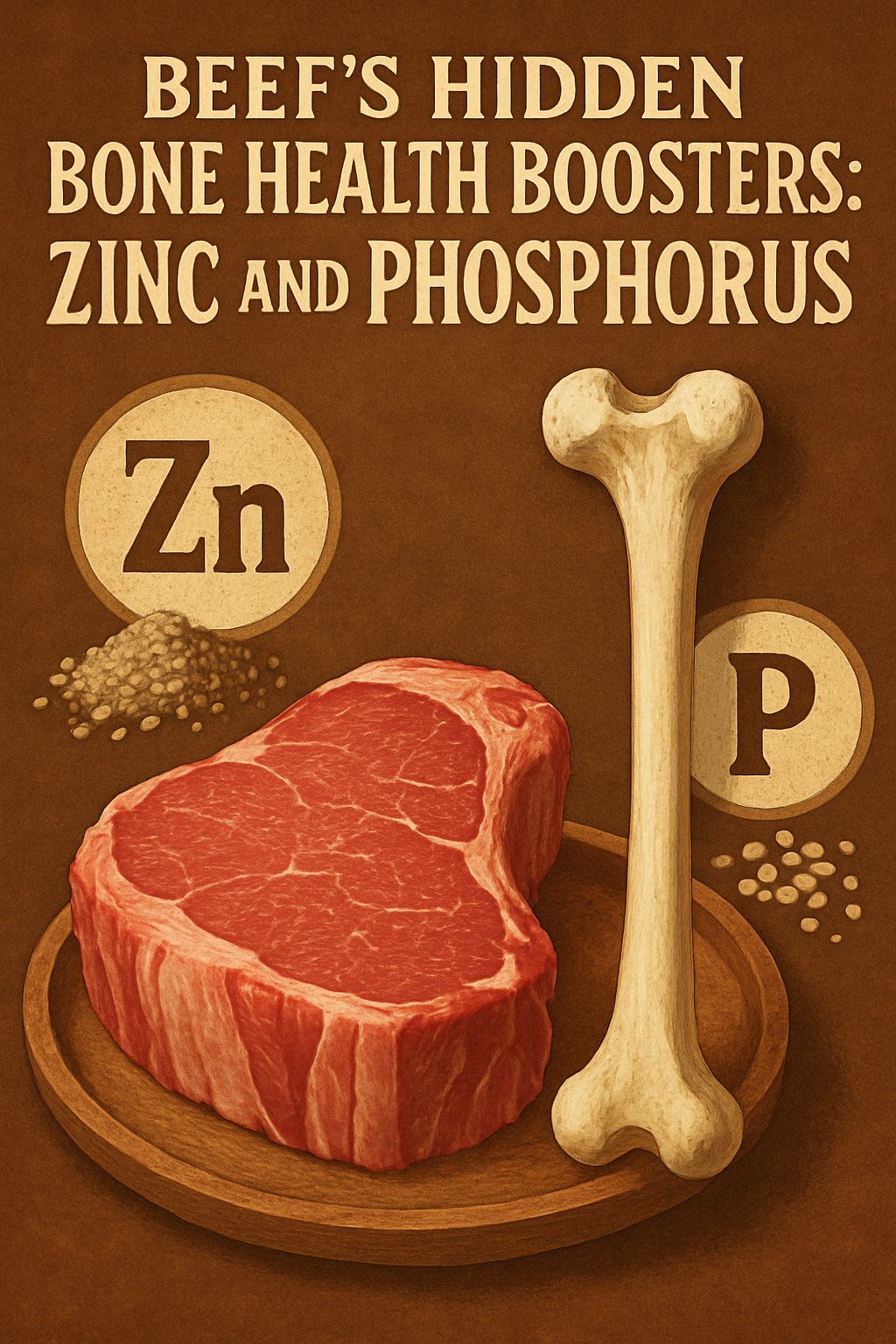
Beef’s Hidden Bone Health Boosters: Zinc and Phosphorus
Zinc is a catalyst for the enzyme alkaline phosphatase, which is critical for bone mineralization. If zinc levels are insufficient, bone formation can slow considerably, even if calcium and vitamin D levels are adequate. A one-ounce serving of lean beef jerky provides about 18% of the daily value for zinc.
Phosphorus and calcium work together in a specific ratio to create hydroxyapatite, which is the mineral compound that makes bones hard. Approximately 85% of the phosphorus in the body is stored in the bones and teeth. The phosphorus in lean beef is highly bioavailable, which means it’s absorbed and used more efficiently than plant-based sources, where phytic acid can inhibit absorption. To learn more about the benefits of nutrients for bone health, check out this guide on collagen peptides and bone health.
Why You Should Choose Lean Jerky Over Regular Jerky
Regular beef jerky made from fatty cuts gives you more saturated fat per serving, which can increase inflammation if you eat too much of it — this is bad for your bones. Lean cuts like top round, eye of round, and sirloin tip have less saturated fat and more protein per calorie. When the label says “lean,” it should be talking about the actual cut of meat, not just the brand’s marketing.
The Sodium Issue in Beef Jerky
The main issue with beef jerky diets is sodium. It’s the most significant nutritional disadvantage of jerky as a daily snack. That’s why many healthy individuals suffer unintended side effects from consuming it too often.
It’s not just about blood pressure. Eating too much salt can stop your body from keeping enough calcium, which is the main mineral that your bones need to stay dense and strong. When you have too much salt, your kidneys try to get rid of it, and they also get rid of calcium at the same time.
The Negative Impact of High Sodium Levels on Bone Health
Studies have found that for every 2,300mg of sodium that you eat, your body gets rid of about 40mg of calcium in your urine. If you consistently eat foods that are high in sodium, that lost calcium can lead to a noticeable decrease in your bone mineral density over time. This is particularly worrisome for postmenopausal women and older adults, who are already losing bone density due to age.
Most people are aware of the impact of sodium on the heart and kidneys, but few realize that it can also affect bone health. This is particularly important for people who regularly eat lean beef jerky as part of their diet.
A Single Ounce of Regular Jerky Has 19% of Your Daily Sodium
For context, the FDA’s daily sodium limit recommendation is 2,300mg. A 1-oz serving of regular beef jerky contains about 450–590mg of sodium — and most people eat more than one serving at a time. Three servings could put you at or over 50% of your daily sodium limit with just one snack. For anyone who values bone health, choosing low-sodium lean jerky options, ideally under 300mg per serving, is a must.
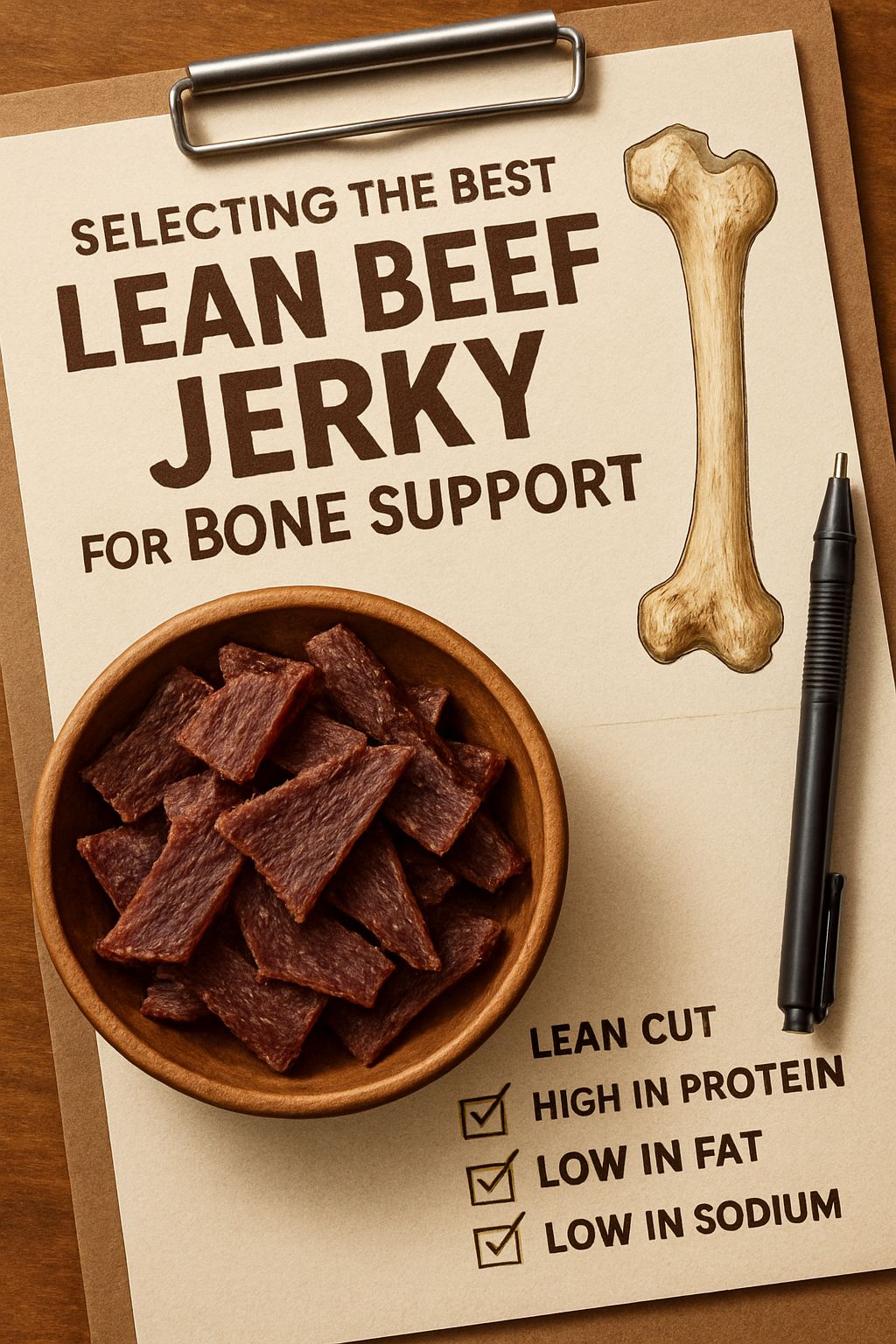
Selecting the Best Lean Beef Jerky for Bone Support
It takes about half a minute to read a jerky label, but most people don’t bother. That half a minute can be the difference between a snack that will actively help your bones and one that will subtly harm them. Here’s what you need to know.
1. Check the Label for Grass-Fed Beef
Beef jerky made from grass-fed beef has more omega-3 fatty acids and CLA than beef raised in conventional ways. These compounds can lower systemic inflammation, which is known to speed up bone loss. Brands such as Epic Provisions Bar Beef Habanero Cherry and Paleovalley 100% Grass Fed Beef Sticks clearly label their sourcing — this transparency indicates a high-quality product.
2. Ensure Sodium Levels Remain Below 300mg Per Serving
For the sake of bone health, this is the most crucial figure on the entire label. If anything exceeds 300mg per serving, you’ll have to balance it out with calcium-rich foods for the rest of your day, something most people don’t consistently do.
While it may be a bit more challenging to locate, low-sodium jerky is available. Brands such as Country Archer Zero Sugar Beef Jerky and Nick’s Sticks 100% Grass-Fed Beef Jerky provide choices that hover around the 160–230mg sodium per serving range, making them much better suited to a diet aimed at supporting bone health.
Use this easy method to quickly check the sodium content when looking at different brands:
Sodium Rating Guide for Bone-Friendly Beef Jerky
Sodium Per Serving
Bone Health Rating
Recommendation
Under 200mg
★★★★★ Excellent
Ideal for daily consumption
200mg – 300mg
★★★★ Good
Fine for most people 4–5x per week
300mg – 450mg
★★★ Moderate
Limit to 2–3x per week, pair with calcium
450mg – 590mg
★★ Poor
Occasional only, compensate with dairy or leafy greens
590mg+
★ Avoid
Not recommended for bone-conscious diets
3. Avoid Jerky With Added Nitrates or Nitrites
Sodium nitrate and sodium nitrite are chemical preservatives used to extend shelf life and enhance the pink color of cured meats. They’ve been linked to increased cancer risk in multiple studies, particularly colorectal cancer, according to research cited by the World Health Organization’s classification of processed meats as Group 1 carcinogens.
When it comes to bone health, the worry is less direct but still very present. Diets that are rich in processed meats have been linked to increased levels of systemic inflammation, and chronic inflammation speeds up the activity of osteoclasts, the cells that break down bone tissue.
- Find labels that clearly say “No added nitrates or nitrites”
- Be wary of the term “except those naturally occurring in celery powder” — this is a typical loophole that still adds nitrates
- Choose jerky preserved with vinegar, sea salt, or natural citric acid instead
- Companies like Chomps Grass-Fed Beef Jerky Sticks use clean preservation methods that don’t include synthetic nitrate compounds
Nitrate-free jerky generally has a shorter shelf life — usually 1–2 months instead of 6–12 months for conventionally preserved products. This is actually a good sign of less processing and cleaner ingredients overall.
When you see a jerky product that can sit on a shelf for over a year without refrigeration, it’s a safe bet that it’s filled with chemical preservatives instead of being cured the old-fashioned way. It’s much better for your bone health in the long run to choose a product with a shorter shelf life and fewer additives.
4. Choose Jerky Without Added Sugar
Sugar is a shockingly regular ingredient in store-bought beef jerky — it’s often listed as brown sugar, honey, dextrose, or high-fructose corn syrup in the marinade. Besides its impact on blood sugar and inflammation, too much dietary sugar has been associated with increased urinary calcium excretion, following a similar process to high sodium. For bone health in particular, a zero-sugar or low-sugar jerky is significantly better than a sweetened type, even if the protein content appears the same on the label. Learn more about bone health and how dietary choices can impact it.
5. Select Brands That Don’t Use Artificial Preservatives or MSG
Monosodium glutamate (MSG) is an additive that increases the sodium content of a product that already contains a lot of sodium. Although MSG isn’t directly harmful to bone tissue, it adds to the overall sodium load in a way that can be easily overlooked because it’s listed separately from the sodium content on some labels. Opting for jerky made with simple, whole-food ingredients — beef, sea salt, spices, and natural smoke — helps keep your nutrient profile clean and your sodium intake under control. For more insights on maintaining bone health, you might explore this guide on collagen peptides and bone health.
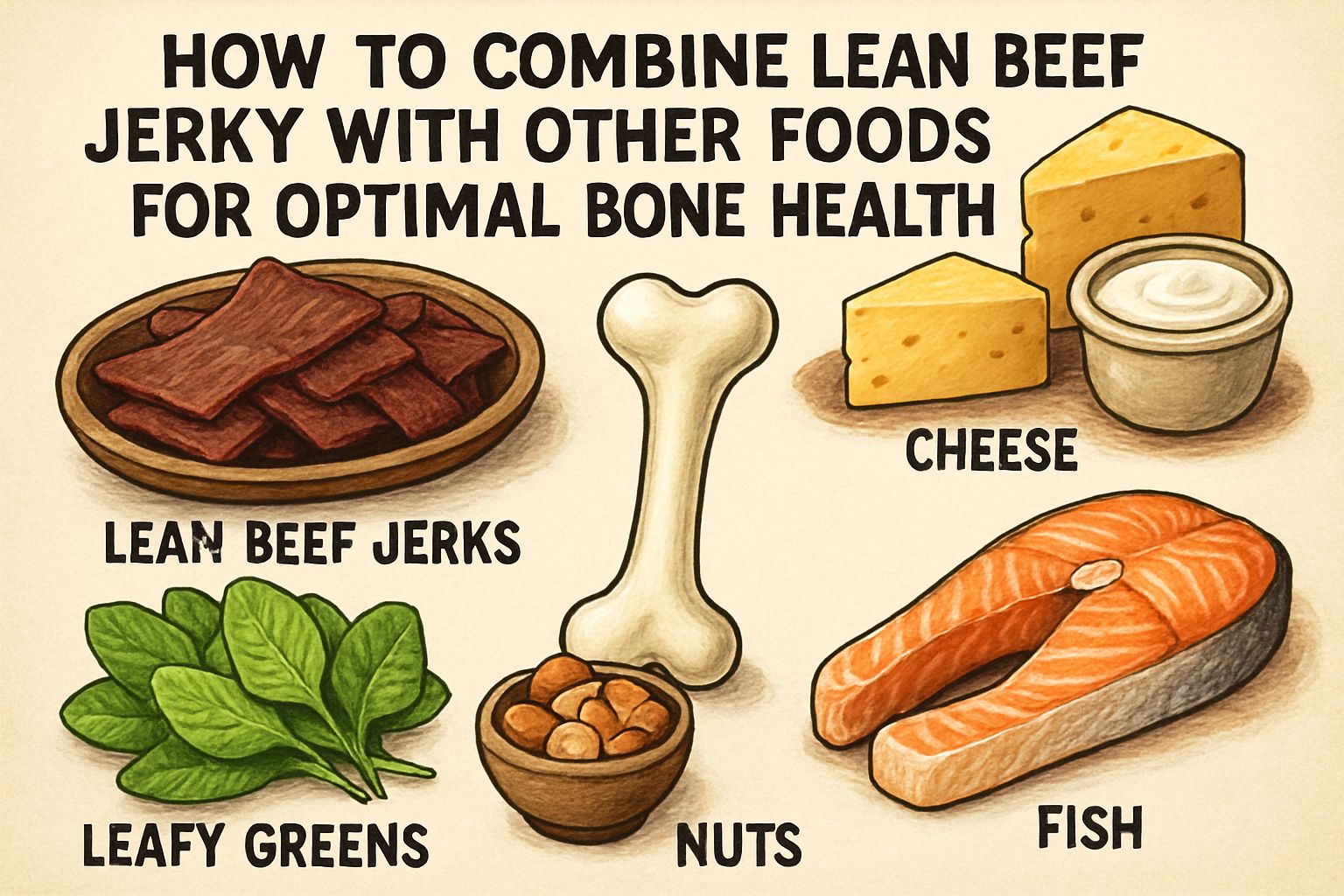
How to Combine Lean Beef Jerky With Other Foods for Optimal Bone Health
Lean beef jerky should be included in a balanced diet, not used as a meal replacement. The nutrients in jerky, such as zinc, phosphorus, and protein, are much more beneficial when combined with foods that provide the additional minerals your bones require to fully mineralize.
Imagine your bone health as a construction project. Protein and zinc are the construction workers, while calcium and vitamin D are the building materials and the blueprint. Without all of these elements working together, the construction project comes to a halt. By pairing your jerky with other foods that support bone health, you can fill in the nutritional gaps that you can’t achieve with a single food.
Calcium-Rich Foods That Pair Well With Jerky
When it comes to finding the perfect foods to pair with lean beef jerky, you want to aim for those that are high in calcium, but low in sodium and sugar. Some examples include plain Greek yogurt (which contains around 200mg of calcium per 6-oz serving), aged hard cheeses like Parmesan or cheddar, canned sardines with bones, and dark leafy greens like kale and bok choy. If you want to add a little extra calcium and magnesium (which helps regulate how calcium is deposited into bone tissue) to your snack, try a small handful of almonds with your jerky. These combinations are simple, but they can turn your snack into a great source of bone-supporting nutrients.
Vitamin D: The Nutrient That Helps Your Body Use the Minerals in Beef
Vitamin D is the key to unlocking calcium absorption. Without enough vitamin D, your gut absorbs as little as 10–15% of the calcium you consume, compared to 30–40% when vitamin D levels are sufficient, according to Harvard Health. Since lean beef jerky contains minimal vitamin D on its own, pairing it with vitamin D-rich foods or ensuring adequate sun exposure is essential to getting the most from its mineral content.
Everyday food items like fatty fish (salmon and mackerel), egg yolks, and dairy or plant milk fortified with vitamin D are great sources. If you’re not getting enough from your diet, bone health experts generally suggest taking a daily vitamin D3 supplement of 1,000–2,000 IU. This could greatly increase the bone-strengthening benefits you get from all the nutrients in your lean beef jerky.
How Much Lean Beef Jerky Should You Eat Daily for Bone Support?
For the average healthy adult, one to two 1-oz servings of lean beef jerky each day is a reasonable and maintainable amount. This keeps protein levels high without exceeding manageable levels of sodium — especially if you opt for a low-sodium variety with less than 300mg per serving. Those with high blood pressure, kidney disease, or existing osteoporosis should speak with a healthcare provider before making jerky a daily part of their diet, as their sodium and protein limits may be significantly different from the average person.
Lean Beef Jerky Alone Isn’t Enough to Keep Your Bones Healthy — But It’s a Start
There’s no magic bullet for bone health, and lean beef jerky is no exception. However, it does provide a convenient, protein-packed, mineral-rich snack option that can easily be incorporated into a bone-healthy lifestyle without the need for meal prep or refrigeration. When combined with foods rich in calcium, adequate vitamin D levels, regular weight-bearing exercise, and controlled sodium intake, lean beef jerky can play a significant role in a comprehensive bone health plan. The key is to be intentional in your choices — read the label, choose clean ingredients, and view it as one piece of a larger nutritional strategy.

Commonly Asked Questions
When it comes to how lean beef jerky can play a role in a diet that supports bone health, there are a few questions that often come up. The answers to these questions often depend on the type of jerky you are eating and how it fits into your overall daily diet.
Here are the most commonly asked questions about lean beef jerky and bone health, answered straight from the latest nutritional studies.
Can beef jerky support bone health?
When chosen wisely, lean beef jerky can be beneficial for bone health. It provides protein, zinc, and phosphorus — three nutrients that are crucial for maintaining bone density and the process of bone rebuilding. However, the high sodium content in regular jerky can lead to increased calcium excretion, which is detrimental to bone health. The overall benefit largely depends on the specific product: low-sodium, grass-fed, nitrate-free varieties are the most beneficial, while heavily processed, high-sodium options can be more harmful than beneficial to your bones over time.
What is the recommended daily intake of lean beef jerky?
For most adults, consuming one to two 1-oz servings of lean beef jerky per day is a reasonable amount. Each ounce contains 9-11g of protein and significant amounts of zinc and phosphorus, without causing sodium intake to become an issue, as long as you opt for a low-sodium version. Consuming more than two servings per day can make it challenging to manage sodium intake, particularly since almost all diets contain other foods with sodium. For additional benefits, incorporating collagen peptides for bone health can be considered.
When you’re relying on lean beef jerky to reach your protein goals for bone support, it’s a good idea to monitor your daily sodium intake for a week to see how jerky fits into your overall diet. Many people are shocked to discover that sodium can accumulate quickly from sources other than the usual suspects like chips or fast food.
Does beef jerky’s sodium content negate its bone health benefits?
- Not entirely — but if your diet is already high in sodium, it does lessen the overall benefit
- It’s all about the mechanism: too much sodium makes the kidneys excrete more calcium in urine, directly decreasing the amount available for bone mineralization
- Low-sodium jerky largely avoids this issue — options with less than 200mg per serving have a minimal effect on calcium balance
- Making up for it with extra calcium is effective: pairing jerky with a high sodium content with a calcium-rich food like plain Greek yogurt or a glass of fortified milk makes up for much of the calcium loss
- Frequency is the key factor: eating jerky with a high sodium content every once in a while has a negligible long-term impact; it’s eating high-sodium varieties every day for months that makes the bone effects measurable
The main takeaway is that sodium in beef jerky is a manageable factor, not a dealbreaker. The practical solution is straightforward: choose low-sodium lean jerky as your go-to, consistently pair it with foods rich in calcium, and consider high-sodium varieties a treat rather than a daily necessity.
Building bone health is a process of making consistent, cumulative choices. Understanding the relationship between sodium and calcium can help you make these choices with intelligence rather than guesswork. This knowledge can change the way you shop, snack, and plan meals to support long-term skeletal strength. For more insights on maintaining bone health, consider exploring the benefits of collagen peptides.
If you’re looking for a natural way to support your bone health, lean beef jerky is one of the few snacks that you can take with you on the go and that doesn’t spoil quickly. It also offers real nutritional benefits, not just empty calories. You just need to know what to look for on the label and how to incorporate it into your diet.
Check out BeefJerky.com for lean beef jerky choices that will help you meet your bone health objectives and make healthy snacking a breeze.