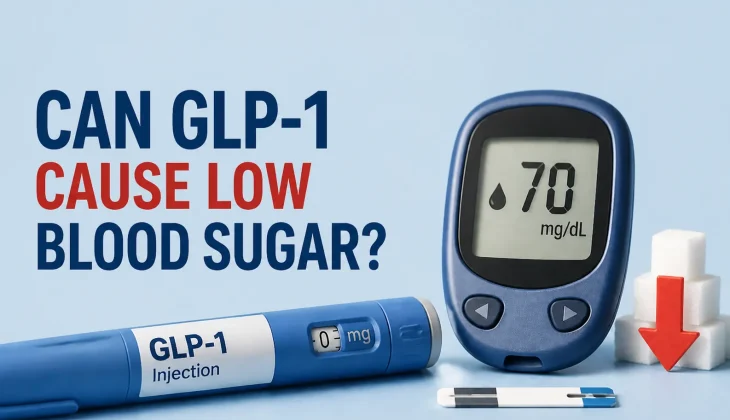
GLP-1 (glucagon-like peptide-1) receptor agonists are a class of medications increasingly used to manage type 2 diabetes and support weight loss. While these drugs are effective at controlling glucose levels and promoting metabolic health, many patients and healthcare providers often ask: “Can GLP-1 cause low blood sugar?”
In this comprehensive guide, we’ll explore how GLP-1 medications work, their potential risks, and strategies to prevent hypoglycemia.
GLP-1 receptor agonists are popular because they help regulate insulin release in response to meals while also slowing digestion and reducing appetite. This dual effect not only supports weight management but also keeps glucose levels stable without causing dramatic drops.
Individual responses can vary depending on factors such as age, kidney function, diet, and use of other medications. Hypoglycemia is uncommon unless GLP-1 is combined with insulin or sulfonylureas.
Many patients notice that GLP-1 helps them feel fuller for longer periods, which can reduce unhealthy snacking and further support overall metabolic control. Regular monitoring during the first few weeks ensures any dips are detected early and managed with small adjustments in meals or medication timing.
Healthcare providers may recommend modifying other diabetes medications when starting GLP-1 to minimize risk. Awareness of early warning signs, such as dizziness or shakiness, empowers patients to respond quickly and stay safe.
Overall, GLP-1 provides a safe, reliable, and effective approach for managing type 2 diabetes while offering additional benefits like weight management and improved metabolic stability.
1. What is GLP-1?
GLP-1, or glucagon-like peptide-1, is a naturally occurring hormone produced in the intestines in response to food intake. It plays a crucial role in regulating blood sugar by stimulating insulin release only when glucose levels are elevated, reducing the risk of low blood sugar.
Beyond insulin regulation, GLP-1 slows down gastric emptying, which helps control the rise in blood sugar after meals. It also signals the brain to reduce appetite, supporting weight management in people with diabetes or obesity.
Synthetic GLP-1 receptor agonists mimic the action of this hormone, providing consistent blood sugar control over time. Because GLP-1 acts in a glucose-dependent manner, it is generally safer than older diabetes medications that can trigger frequent hypoglycemia.
These medications also support heart health in patients with type 2 diabetes by improving cardiovascular markers. As research continues, GLP-1 is being explored for broader metabolic benefits, including liver health and potential neuroprotective effects.
Overall, GLP-1 is more than just a blood sugar regulator—it is a versatile hormone with multiple health benefits that make it a cornerstone of modern diabetes therapy.
GLP-1 is a naturally occurring hormone in the gut that helps regulate blood sugar by:
- Stimulating insulin secretion in response to meals
- Slowing gastric emptying (delaying food absorption)
- Reducing appetite
Synthetic GLP-1 receptor agonists, such as semaglutide, liraglutide, and dulaglutide, mimic this hormone to help manage blood sugar levels in people with type 2 diabetes.
2. How GLP-1 Works in the Body?
GLP-1 works by interacting with specific receptors in the pancreas, gut, and brain to maintain blood sugar within a healthy range. When blood glucose rises after a meal, GLP-1 triggers insulin secretion while simultaneously reducing glucagon, the hormone that raises blood sugar.
By slowing gastric emptying, GLP-1 ensures that glucose enters the bloodstream more gradually, preventing sudden spikes. This also contributes to a feeling of fullness, which can help reduce overeating and support weight management.
In the brain, GLP-1 acts on appetite-regulating centers to decrease hunger signals, making it easier to maintain a balanced diet. Its action is glucose-dependent, meaning it is much less likely to cause low blood sugar compared to traditional diabetes drugs.
Additionally, GLP-1 has beneficial effects on the cardiovascular system, including improving blood vessel function and reducing certain risk factors associated with heart disease. Its multifaceted actions make it a powerful tool in managing both blood sugar and overall metabolic health.
Regular use of GLP-1 receptor agonists can therefore lead to smoother blood sugar curves, fewer post-meal spikes, and enhanced energy levels throughout the day.
GLP-1 receptor agonists function in several key ways:
- Insulin Regulation: They increase insulin release when glucose levels are elevated, but generally do not cause insulin release when blood sugar is low, reducing the risk of hypoglycemia.
- Glucagon Suppression: They lower glucagon secretion after meals, which helps control post-meal blood sugar spikes.
- Slowing Digestion: By delaying gastric emptying, these medications reduce sudden increases in blood glucose.
3. Can GLP-1 Cause Low Blood Sugar?
GLP-1 medications are designed to lower blood sugar safely, but many patients wonder if they can trigger hypoglycemia. The good news is that GLP-1 alone rarely causes low blood sugar because its effect on insulin is glucose-dependent. This means insulin is released primarily when blood sugar is elevated, not when it is normal or low.
However, the risk can increase if GLP-1 is taken alongside other medications like insulin or sulfonylureas, which directly lower blood sugar. Certain factors, such as skipping meals, prolonged fasting, or strenuous exercise, can also raise the chance of hypoglycemia.
It’s essential for patients to monitor their blood sugar, especially during the first weeks of therapy, and to recognize early signs of low blood sugar, such as shakiness, sweating, or dizziness. Small adjustments in diet or timing of other medications can effectively prevent drops in glucose levels.
Overall, GLP-1 offers a safe and reliable approach to blood sugar management while minimizing the risk of hypoglycemia, making it a preferred choice for many people with type 2 diabetes.
The short answer: GLP-1 medications rarely cause low blood sugar on their own.
Key Points:
- GLP-1 alone is less likely to cause hypoglycemia because its insulin-stimulating effect is glucose-dependent.
- The risk increases if combined with other diabetes medications such as sulfonylureas or insulin.
- Certain patients, like the elderly or those with kidney disease, may be at higher risk.
Risk of Low Blood Sugar with Different GLP-1 Medications
| GLP-1 Medication | Hypoglycemia Risk Alone | Hypoglycemia Risk with Insulin or Sulfonylureas | Notes |
| Semaglutide | Low | Moderate | Often used for weight loss too |
| Liraglutide | Low | Moderate | FDA-approved for type 2 diabetes |
| Dulaglutide | Low | Moderate | Weekly injection available |
| Exenatide | Low | Moderate | Short-acting form may slightly increase risk post-meal |
4. Symptoms of Low Blood Sugar
Even though GLP-1 rarely causes hypoglycemia on its own, it’s important to recognize the warning signs in case blood sugar drops. Early symptoms often include shakiness, sweating, and a rapid heartbeat, signaling that the body is trying to raise glucose levels.
Dizziness, lightheadedness, or blurred vision may follow if low blood sugar persists. Some people experience irritability, anxiety, or sudden mood changes as the brain reacts to a lack of glucose. Hunger pangs can appear suddenly, even shortly after a meal.
Here is an image that visually summarizes the common symptoms of low blood sugar and how to recognize them quickly.
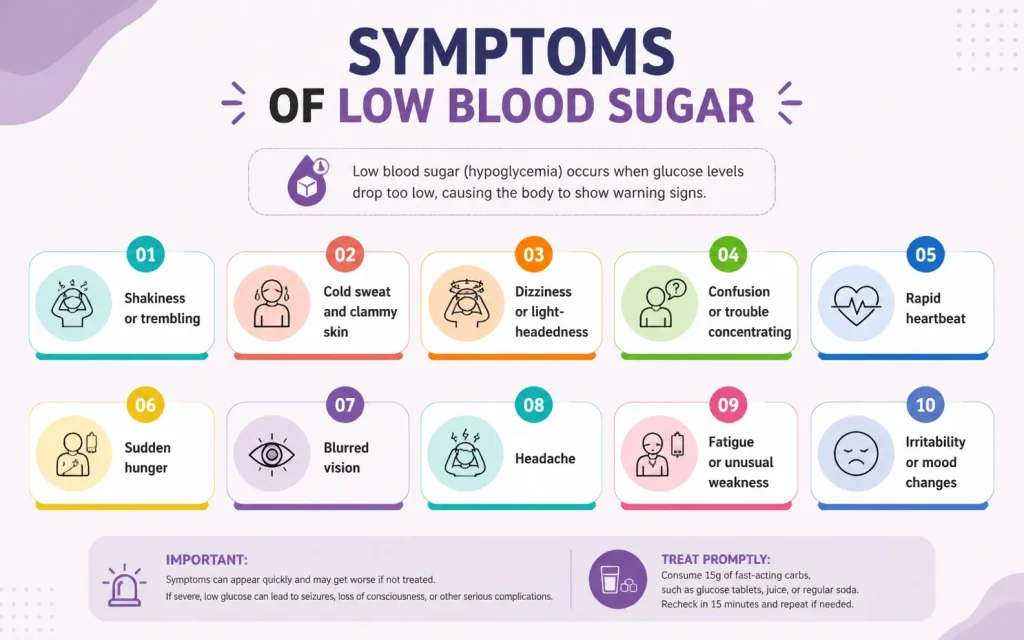
In more severe cases, confusion, weakness, or difficulty speaking may occur, highlighting the need for quick intervention. Nausea and fatigue can also be subtle indicators that blood sugar is falling. Recognizing these symptoms early allows for prompt treatment, such as consuming fast-acting carbohydrates, to prevent more serious complications.
Monitoring symptoms alongside regular blood glucose checks ensures that hypoglycemia is managed effectively and safely.
Even though GLP-1 rarely causes hypoglycemia alone, it is important to recognize symptoms:
- Shakiness or trembling
- Sweating
- Dizziness or lightheadedness
- Hunger
- Rapid heartbeat
- Confusion or irritability (in severe cases)
5. Tips to Prevent Low Blood Sugar on GLP-1
Even though GLP-1 medications rarely cause low blood sugar alone, taking a few precautions can help keep levels stable. Always eat regular, balanced meals and avoid skipping breakfast or lunch. Including a mix of complex carbohydrates, protein, and healthy fats can prevent sudden drops in glucose.
Stay hydrated, as dehydration can make low blood sugar symptoms more pronounced. If you are on insulin or sulfonylureas, monitor your blood sugar more frequently, especially during the first few weeks of therapy. Carry fast-acting glucose, such as glucose tablets or juice, to treat any unexpected dips quickly.
Plan meals and snacks around physical activity, since exercise can lower blood sugar. Educate family members or caregivers about signs of hypoglycemia, so they can assist if needed. Keep a log of blood sugar readings to identify patterns and discuss them with your healthcare provider.
These simple habits can make GLP-1 therapy safer and more effective while minimizing the risk of hypoglycemia.
- Monitor blood sugar regularly, especially if using insulin or sulfonylureas
- Eat balanced meals with complex carbohydrates
- Avoid skipping meals
- Educate family and caregivers about signs of hypoglycemia
- Carry fast-acting glucose (glucose tablets or juice)
6. Benefits of GLP-1 Beyond Blood Sugar Control
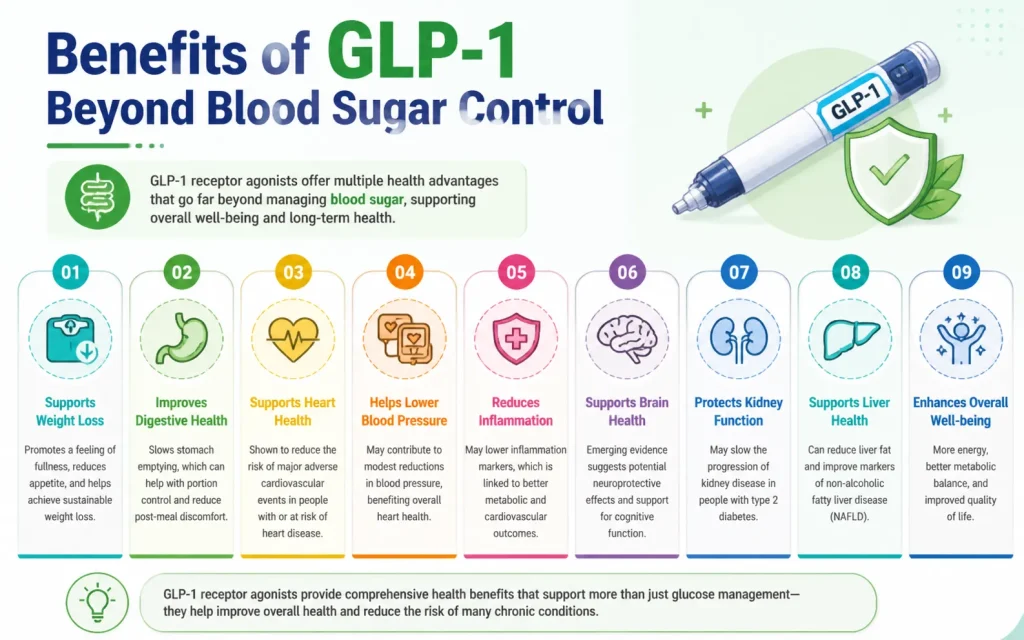
GLP-1 receptor agonists offer benefits that extend far beyond simply managing blood sugar. Many patients experience significant weight loss due to reduced appetite and delayed gastric emptying, which helps control calorie intake naturally. This effect can also improve overall metabolic health and reduce the risk of obesity-related complications.
Studies show that GLP-1 therapy can support heart health by lowering blood pressure, improving cholesterol levels, and reducing cardiovascular risk in people with type 2 diabetes. Some research even suggests potential protective effects on the liver and kidney function.
Patients often report feeling more energetic and satisfied after meals, as the medication promotes stable glucose levels and reduces sharp spikes and crashes. By helping maintain steady blood sugar, GLP-1 can improve focus, mood, and overall quality of life.
This image highlights the multiple health benefits of GLP-1 therapy beyond glucose management, including weight loss, heart, brain, and kidney support.
These additional benefits make GLP-1 a versatile and valuable tool for people managing type 2 diabetes and related metabolic conditions.
GLP-1 receptor agonists also provide:
- Weight loss support
- Reduced appetite and food cravings
- Cardiovascular benefits in patients with heart disease
- Improved HbA1c levels
7. Pros and Cons of GLP-1 Therapy
GLP-1 therapy offers numerous advantages, including effective blood sugar control, weight loss support, and a lower risk of hypoglycemia compared to older diabetes medications. Its ability to reduce appetite and improve cardiovascular markers makes it a versatile option for many patients.
However, like any medication, it has potential drawbacks. Some users experience digestive side effects such as nausea, vomiting, or mild stomach discomfort, especially during the first few weeks. GLP-1 drugs are also typically administered via injection, which may not be convenient for everyone, and they tend to be more expensive than older oral medications.
Despite these minor drawbacks, for most patients, the benefits of GLP-1 therapy outweigh the risks, making it a popular choice in modern diabetes management.
Pros:
- Effective blood sugar control
- Weight loss assistance
- Cardiovascular protection
- Low risk of hypoglycemia alone
Cons:
- Rare digestive side effects (nausea, vomiting)
- Higher cost compared to older medications
- Injection-based, not oral
- Risk of hypoglycemia when combined with insulin or sulfonylureas
Conclusion
In conclusion, GLP-1 receptor agonists provide a safe and effective way to manage blood sugar while offering additional health benefits like weight loss and heart protection. Low blood sugar is rare with GLP-1 alone, making it a reliable option for many people with type 2 diabetes.
The risk of hypoglycemia increases only when GLP-1 is combined with medications like insulin or sulfonylureas, highlighting the importance of careful monitoring and coordination with a healthcare provider. Patients should maintain regular meal patterns, monitor glucose levels, and recognize early symptoms of low blood sugar to stay safe.
Beyond glucose control, GLP-1 therapy can improve overall metabolic health, support appetite regulation, and enhance quality of life. With proper education and routine monitoring, patients can confidently use GLP-1 to achieve better blood sugar management while minimizing risks.
Overall, GLP-1 represents a powerful and versatile tool in modern diabetes care, offering long-term benefits that extend far beyond simply lowering glucose levels.
GLP-1 receptor agonists are a safe and effective option for managing blood sugar in type 2 diabetes.
- Low blood sugar is rare with GLP-1 alone due to its glucose-dependent action.
- The risk increases when combined with insulin or sulfonylureas.
- GLP-1 offers additional benefits such as weight loss, appetite control, and heart protection.
- Always consult a healthcare provider before combining medications or making dosage adjustments.
- Education about hypoglycemia ensures safety and confidence while using GLP-1 therapy.
GLP-1 can be a powerful tool in your diabetes management plan, offering balanced blood sugar control with minimal risk when used responsibly.
Frequently Asked Questions (FAQs)
1. Can GLP-1 injections cause immediate low blood sugar?
Not usually. Hypoglycemia is uncommon unless combined with insulin or sulfonylureas.
2. Are there any GLP-1 medications that are safer for low blood sugar?
All GLP-1 receptor agonists have a low risk alone, but semaglutide and liraglutide are widely studied for safety.
3. Can GLP-1 cause hypoglycemia in non-diabetic people?
Rarely. The glucose-dependent mechanism generally prevents hypoglycemia in those without diabetes.
4. How should I treat low blood sugar if it happens while on GLP-1?
Use fast-acting carbohydrates like glucose tablets or juice and monitor your sugar levels.
5. Can diet affect the risk of low blood sugar on GLP-1?
Yes. Skipping meals or low-carb diets combined with insulin may increase risk.
6. Are children or the elderly at higher risk?
Elderly patients, especially those on other diabetes drugs, are more susceptible. GLP-1 is generally not prescribed for children.
7. Does GLP-1 cause low blood sugar during exercise?
GLP-1 alone rarely causes hypoglycemia, but if combined with other medications, exercise can increase the risk.
8. How do doctors monitor for low blood sugar on GLP-1 therapy?
Through routine blood glucose checks, HbA1c monitoring, and patient symptom tracking.