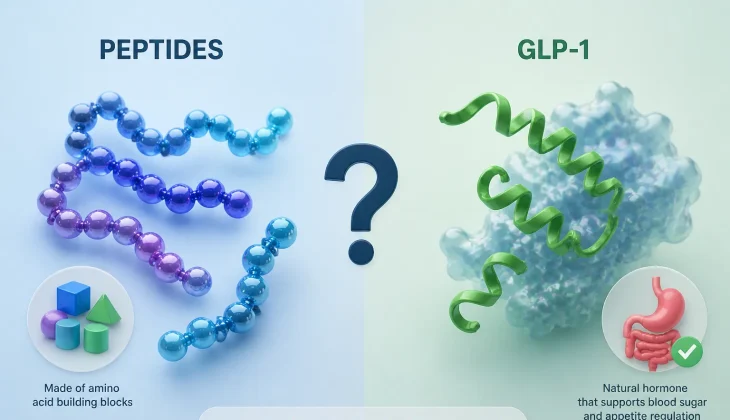
Peptides and GLP-1 are often mentioned together in medical, health, and fitness discussions. Many people wonder whether they are the same, especially with the growing popularity of peptide supplements and GLP-1 medications for weight management and blood sugar control. While GLP-1 is technically a peptide, not all molecular chains have the same structure or function. Understanding the difference between general protein fragments and GLP-1 is important for making safe and effective choices regarding supplementation or treatment.
While GLP-1 is technically classified as a peptide, it has a very targeted function compared to the broad category of small bioactive compounds. These chains serve a wide array of roles in the body, from repairing tissues to transmitting signals between cells, whereas GLP-1 specifically interacts with receptors in the pancreas and brain to regulate blood sugar and appetite.
Not all molecules affect metabolism, which is why GLP-1 stands out in weight management therapies. The size and structure of these chains can vary greatly, but GLP-1 has a precise 30–31 amino acid sequence. Some of these compounds can be derived from food, naturally produced in the body, or synthesized for medical purposes, while GLP-1 receptor agonists mimic the natural hormone but are formulated to last longer in the body.
While peptides may indirectly influence hormones, GLP-1 directly stimulates insulin production and slows digestion. Understanding the difference between general bioactive chains and GLP-1 helps avoid misconceptions about supplements. Research continues to explore new molecules with specific therapeutic effects, but none fully replicate GLP-1’s metabolic functions. Many people confuse all chains with weight-loss hormones, yet only a subset, like GLP-1, plays that role.
Ultimately, choosing between peptide supplements and GLP-1 medications depends on your health goals and medical guidance.
1. What Are Peptides?
Peptides are short chains of amino acids, which are the building blocks of proteins. Unlike full proteins, which can have hundreds of amino acids, peptides typically consist of 2 to 50 amino acids. They are naturally produced in the body and play important roles in signaling, immune response, and cellular repair. For example, some peptides act as hormones, while others help in tissue repair or function as neurotransmitters.
Peptides are small chains of amino acids that are shorter than full proteins but still carry out critical biological functions. They act as messengers in the body, communicating between cells and regulating a variety of processes. Some peptides serve as hormones, while others help repair tissues, support immune function, or influence metabolism.
They can be naturally produced within the body or synthesized in laboratories for medical and cosmetic purposes. Many peptides are popular in supplements, such as collagen for skin health or growth hormone-releasing peptides for muscle recovery. Their versatility makes them a key focus in both research and therapeutic applications. Unlike larger proteins, peptides can be absorbed and utilized more quickly by the body, allowing for faster effects.
Overall, peptides are essential molecules that play a wide range of roles in maintaining health and supporting specialized treatments.
Peptides are also used in supplements and medicine. Collagen peptides, for instance, are popular in skincare and joint health products. Growth hormone-releasing peptides may support muscle development and recovery, while other therapeutic peptides are used in treatments for infections, cancers, and hormone deficiencies.
Key features of peptides:
- Short chains of amino acids (2–50 amino acids)
- Serve as hormones, enzymes, or signaling molecules
- Can be naturally produced or synthetically manufactured
2. What Is GLP-1?
GLP-1, or Glucagon-Like Peptide-1, is a specific type of peptide hormone. It is mainly produced in the intestines and has a targeted role in regulating blood sugar and appetite. GLP-1 is released after eating and signals the pancreas to release insulin while suppressing glucagon. It also slows gastric emptying, which helps control appetite.
GLP-1, or Glucagon-Like Peptide-1, is a specific hormone peptide produced in the intestines that plays a crucial role in metabolism. It helps regulate blood sugar by stimulating insulin release after meals and suppressing glucagon, the hormone that raises blood sugar levels. GLP-1 also slows the emptying of the stomach, which helps control appetite and prolongs feelings of fullness.
Because of these effects, GLP-1 has become a key target for medications used in type 2 diabetes and weight management. Unlike general peptides, which can serve multiple functions, GLP-1 has a very focused and measurable effect on metabolic health. It interacts directly with receptors in the pancreas and brain to balance glucose levels and reduce overeating. Modern GLP-1 receptor agonists are designed to mimic this natural hormone but last longer in the body for sustained benefits.
Understanding GLP-1 helps clarify why it is often confused with general peptide supplements, even though its function is highly specialized.
GLP-1 is widely known because it is the basis for several prescription medications called GLP-1 receptor agonists. These medications, including semaglutide and liraglutide, are used to manage type 2 diabetes and support weight loss.
GLP-1 key functions:
- Stimulates insulin secretion
- Inhibits glucagon production
- Slows digestion for better blood sugar control
- Reduces appetite
3. How Peptides and GLP-1 Are Different
While GLP-1 is a peptide, it is very specialized. In contrast, the term “peptides” represents a wide variety of molecular chains with different structures and purposes. Understanding this difference is crucial.
Although GLP-1 is technically a peptide, it is highly specialized compared to the broad spectrum of bioactive fragments in the body. These chains can have a wide range of functions, from repairing tissues and supporting immune responses to acting as hormones or enzymes. GLP-1, on the other hand, has a very specific role in regulating blood sugar and controlling appetite.
While most compounds influence multiple systems indirectly, GLP-1 works directly on receptors in the pancreas and brain to produce measurable metabolic effects. The chemical structure also differs, with GLP-1 having a precise amino acid sequence that determines its unique function.
Understanding these distinctions helps clarify why not all peptides have the same effects or therapeutic applications as GLP-1. In short, GLP-1 is a specialized messenger within the larger family of molecular chains, designed for targeted metabolic control.
| Varies depending on the peptide | Peptides | GLP-1 |
| Type | Broad class of molecules | Specific peptide hormone |
| Structure | 2–50 amino acids | 30–31 amino acids |
| Function | Hormones, signaling, repair | Regulates insulin and appetite |
| Source | Body, supplements | Intestinal L-cells |
| Medical Use | Skin, muscle, therapeutic applications | Diabetes and weight management |
| Mechanism of Action | Varies depending on peptide | Stimulates insulin, slows digestion |
In simple terms, all GLP-1 molecules are peptides, but not all peptides function like GLP-1. Most peptides influence multiple systems in the body, whereas GLP-1 has a very specific role in metabolism and appetite regulation.
4. Applications of Peptides
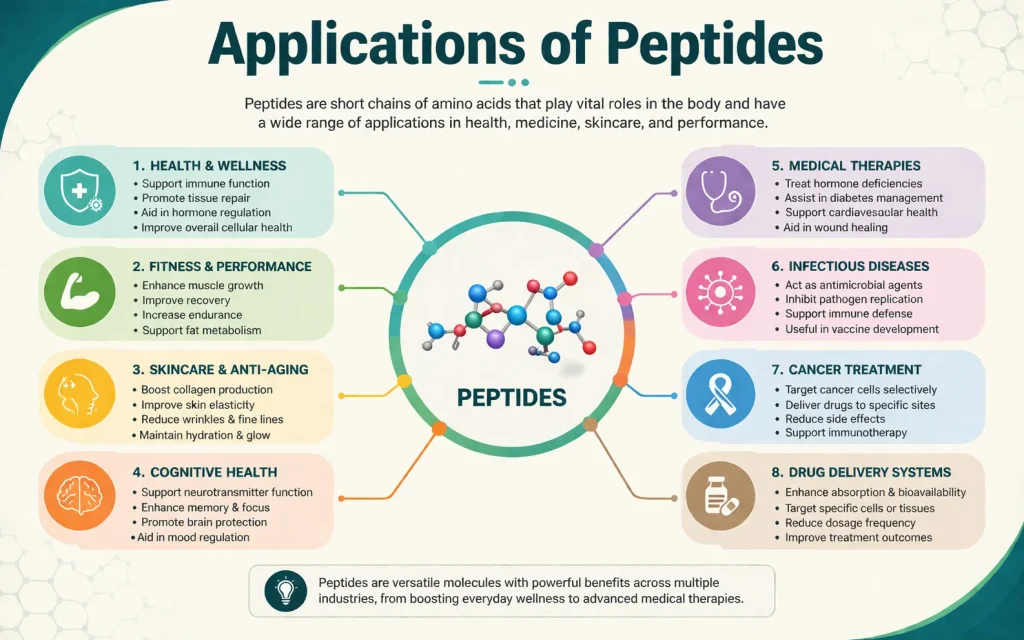
These small molecular chains have become increasingly popular in both health and medical fields due to their versatile applications. They can promote tissue repair, enhance muscle growth, and support overall cellular health. In skincare, compounds like collagen help improve elasticity, reduce wrinkles, and maintain hydration.
Some bioactive fragments are designed to boost immune function or act as neurotransmitters that support cognitive performance. In medicine, synthetic peptides are used in targeted therapies for conditions such as hormone deficiencies, infections, and even certain cancers. Their smaller size compared to full proteins allows them to be absorbed quickly and act efficiently in the body.
Overall, these molecular chains offer a wide range of benefits, making them valuable in wellness, fitness, and therapeutic treatments. Many are used for general health and wellness, while others are specifically designed for therapeutic purposes. For example, collagen compounds can improve skin elasticity, while growth hormone-releasing peptides support muscle development. In medicine, these bioactive compounds are used in targeted therapies, including cancer treatment and hormone replacement.
Benefits of peptides include:
- Supporting muscle repair and growth
- Improving skin health and elasticity
- Enhancing immune function
- Supporting cognitive function and sleep quality
5. Applications of GLP-1
GLP-1 has a very targeted role in managing metabolism, which makes it particularly valuable in medical applications. It helps control blood sugar by stimulating insulin release and reducing glucagon after meals, making it essential for type 2 diabetes management.
GLP-1 also slows gastric emptying, which contributes to appetite suppression and supports weight loss. Because of its precise effects, GLP-1 receptor agonists have become widely prescribed for patients struggling with obesity or metabolic disorders. In addition, some studies suggest that GLP-1 may have cardiovascular benefits by reducing heart-related risks in diabetic patients.
Unlike general peptides, GLP-1 is specifically designed to interact with certain receptors, ensuring consistent and measurable outcomes. Its focused mechanism of action makes it a cornerstone in modern metabolic therapy.
GLP-1 is primarily used for its metabolic effects. GLP-1 receptor agonists mimic the natural hormone to help manage blood sugar and reduce appetite. Unlike general peptides, GLP-1 therapy is highly targeted.
Benefits of GLP-1 include:
- Improved blood sugar control
- Appetite suppression and weight loss
- Reduced insulin resistance
- Cardiovascular protection in diabetics
Medications based on GLP-1 include semaglutide, liraglutide, and exenatide. They are prescription-based and require medical supervision for safe use.
6. Common Misconceptions
There are several misconceptions when it comes to peptides and GLP-1, which can confuse many people. A common mistake is assuming that all molecular chains act as hormones, when in fact most have other roles, such as signaling or tissue repair. Some also think that GLP-1 is just another generic peptide supplement, but it is actually a highly specialized hormone with targeted effects on blood sugar and appetite.
Another misconception is that taking any bioactive compound will result in weight loss, while only GLP-1 and certain specific chains influence metabolism in that way. Many assume that these protein fragments and GLP-1 are interchangeable, yet their functions, mechanisms, and therapeutic uses differ significantly. Understanding these differences is crucial for making informed health and supplementation choices.
Many people misunderstand the relationship between peptides and GLP-1. Here are a few common misconceptions:
- All peptides are hormones: False. Many molecular chains act as enzymes or signaling molecules rather than hormones.
- GLP-1 is a general peptide: False. GLP-1 has a highly specialized function.
- Peptides and GLP-1 have the same effects: False. Most bioactive fragments do not influence insulin or appetite directly.
7. Safety Considerations
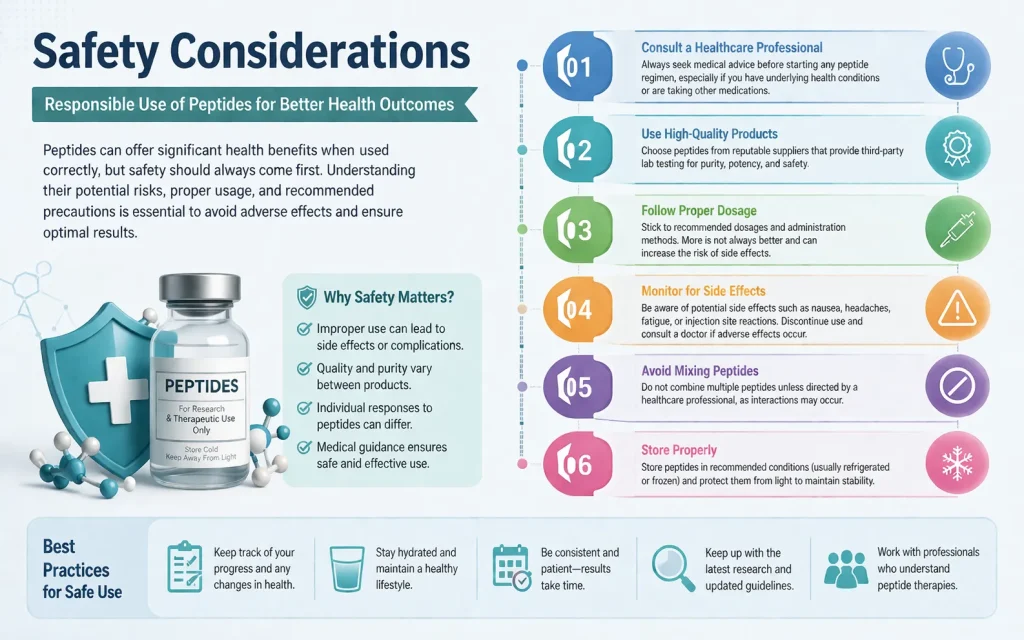
When it comes to peptides and GLP-1, safety should always be a top priority. Natural peptides are generally safe, but synthetic or unregulated products can cause side effects, including hormonal imbalances or unexpected reactions. GLP-1 medications, while effective, must be used under medical supervision, as they can lead to nausea, digestive issues, or other side effects in some individuals.
It’s important to follow prescribed dosages and avoid combining treatments without professional guidance. Additionally, not all peptides or GLP-1 therapies are suitable for everyone, especially those with pre-existing conditions. Understanding proper usage and sourcing high-quality products can greatly reduce risks. Ultimately, consulting a healthcare professional is essential before starting any peptide or GLP-1 regimen.
This infographic highlights the key safety considerations for using peptides and GLP-1 therapies.
Peptides:
Natural peptides are generally safe, but synthetic or unregulated peptides may cause side effects, such as hormonal imbalances or unexpected reactions. It’s important to source them from reputable manufacturers.
GLP-1:
GLP-1 medications are effective but require medical supervision. Common side effects include nausea, diarrhea, and digestive discomfort. They are not suitable for everyone, especially individuals with certain thyroid or gastrointestinal conditions.
Conclusion
In conclusion, while GLP-1 is technically a peptide, it is highly specialized compared to the broader category of molecular chains in the body. These chains serve diverse functions, from repairing tissues and supporting immunity to acting as signaling molecules, whereas GLP-1 has a very focused role in regulating blood sugar and appetite.
Understanding this distinction is key for anyone considering supplements or medical therapies. Peptides can provide benefits in areas such as muscle growth, skin health, and general wellness, while GLP-1 is primarily used in metabolic treatments like diabetes management and weight loss. Misconceptions often arise because both are small protein fragments, but their mechanisms and effects differ significantly.
Safety and proper medical guidance are essential when using either. By knowing the differences and specific applications, individuals can make informed choices that support their health goals. Overall, bioactive compounds and GLP-1 each have unique advantages, and using them appropriately ensures optimal outcomes.
GLP-1 is a specific peptide hormone that regulates insulin secretion, appetite, and digestion. Meanwhile, molecular chains can be used for general health, muscle repair, skin improvement, and targeted medical therapies. GLP-1 receptor agonists are targeted medications for diabetes and weight management. Misusing either without guidance can lead to side effects, so it’s important to consult healthcare professionals before starting any therapy.
In short, GLP-1 is a type of peptide, but most protein fragments are not GLP-1. Each serves a unique role, and understanding these distinctions ensures proper and safe use for health and medical purposes.
FAQs (Frequently Asked Questions)
1. Are all peptides beneficial?
Benefits depend on the type and dosage. Not all peptides are suitable for supplementation.
2. Can GLP-1 be taken as a supplement?
No, GLP-1 must be administered as a prescription medication.
3. Do peptides promote weight loss like GLP-1?
Some peptides may influence metabolism, but GLP-1 directly reduces appetite and slows digestion.
4. Is GLP-1 safe for everyone?
GLP-1 medications should only be used under medical supervision due to potential side effects.
5. Can peptides increase insulin-like GLP-1?
Only certain insulinotropic peptides can affect insulin. Most do not.
6. Are peptides naturally produced in the body?
Yes, many peptides are naturally synthesized in tissues and organs.
7. How do GLP-1 receptor agonists work?
They mimic natural GLP-1 to regulate blood sugar and appetite.
8. Are peptides legal for use in fitness?
Some are legal supplements, but synthetic peptides for hormone modulation may be regulated or banned in sports.