
GLP-1 receptor agonists, such as semaglutide and liraglutide, have become widely used for managing type 2 diabetes and weight control. However, their safety during pregnancy remains a critical concern. This article explores current research, medical guidance, and safe alternatives for pregnant women considering GLP-1 therapy.
Research on GLP-1 receptor agonists in pregnant women is extremely limited, making it difficult to predict the full range of effects on fetal development. These medications are designed to influence hormonal and metabolic pathways, which are critical for both maternal and fetal health, and altering them could lead to unintended consequences.
Some animal studies have reported delayed fetal growth, organ development changes, and skeletal abnormalities when GLP-1 drugs were administered. Additionally, GLP-1 medications can cause reduced appetite, nausea, and gastrointestinal side effects, which may impact the mother’s nutritional intake, a crucial factor during pregnancy.
Due to these uncertainties, healthcare providers typically recommend discontinuing GLP-1 therapy before conception and switching to well-studied alternatives like insulin or metformin, which have established safety profiles. Careful monitoring of blood glucose and fetal growth is essential to ensure both maternal and fetal well-being throughout the pregnancy.
1. What Are GLP-1 Medications?
GLP-1 (Glucagon-Like Peptide-1) receptor agonists are a class of medications primarily used to manage type 2 diabetes and support weight loss. They work by stimulating the pancreas to release insulin in response to blood sugar, slowing gastric emptying, and reducing appetite. Common examples include liraglutide, semaglutide, dulaglutide, and exenatide.
These medications not only help control blood glucose but may also provide cardiovascular benefits in people with diabetes. While highly effective in adults, GLP-1 drugs can interfere with metabolic and hormonal pathways, which raises safety concerns during pregnancy. As a result, their use in expectant mothers is generally not recommended.
GLP-1 (Glucagon-Like Peptide-1) receptor agonists are a class of medications that:
- Help lower blood sugar by stimulating insulin release.
- Slow gastric emptying to promote satiety and weight loss.
- Support cardiovascular health in people with type 2 diabetes.
Some commonly prescribed GLP-1 medications include:
| Medication Name | Typical Use | Route of Administration |
| Liraglutide | Type 2 diabetes, weight management | Subcutaneous injection |
| Semaglutide | Type 2 diabetes, weight management | Subcutaneous injection or oral |
| Dulaglutide | Type 2 diabetes | Subcutaneous injection |
| Exenatide | Type 2 diabetes | Subcutaneous injection |
While these drugs are effective for adults, pregnancy introduces additional risks, making their use controversial.
2. Why GLP-1 Medications Are Not Recommended During Pregnancy?
GLP-1 medications are not recommended during pregnancy primarily due to limited human safety data. Clinical trials rarely include pregnant women, so the potential effects on fetal development are largely unknown.
Animal studies have suggested risks such as delayed fetal growth, organ development issues, and skeletal abnormalities. These drugs also influence hormonal and metabolic pathways, which are critical during pregnancy, and may lead to unintended consequences.
In addition, GLP-1 medications can cause nausea, reduced appetite, and gastrointestinal side effects, potentially affecting maternal nutrition and fetal growth. Medical guidelines, including those from the American Diabetes Association, advise discontinuing these drugs if pregnancy occurs. Safer alternatives, like insulin therapy and lifestyle management, are preferred to maintain blood sugar control without compromising fetal health.
Careful monitoring and early consultation with a healthcare provider are essential for women who were on GLP-1 therapy before pregnancy.
- Limited Human Data:
Clinical trials rarely include pregnant women, so the safety profile for fetuses is unknown. - Animal Studies:
Preclinical research has suggested potential fetal growth restriction or malformations in some cases. - Drug Class Effects:
GLP-1 agonists slow digestion and can alter nutrient absorption, which may not be safe for fetal development. - Guideline Recommendations:
- The American Diabetes Association (ADA) advises discontinuing GLP-1 medications if pregnancy occurs.
- Alternative diabetes management strategies, such as insulin or lifestyle changes, are preferred.
3. Potential Risks to Mother and Baby
Using GLP-1 medications during pregnancy may pose significant risks for both the mother and the developing baby. For the fetus, potential complications include low birth weight, delayed growth, and developmental abnormalities, as suggested by animal studies, though human data are limited.
“The potential risks of GLP-1 medications to both mother and baby can be visually understood in the infographic below, which highlights key concerns and safety considerations during pregnancy.”
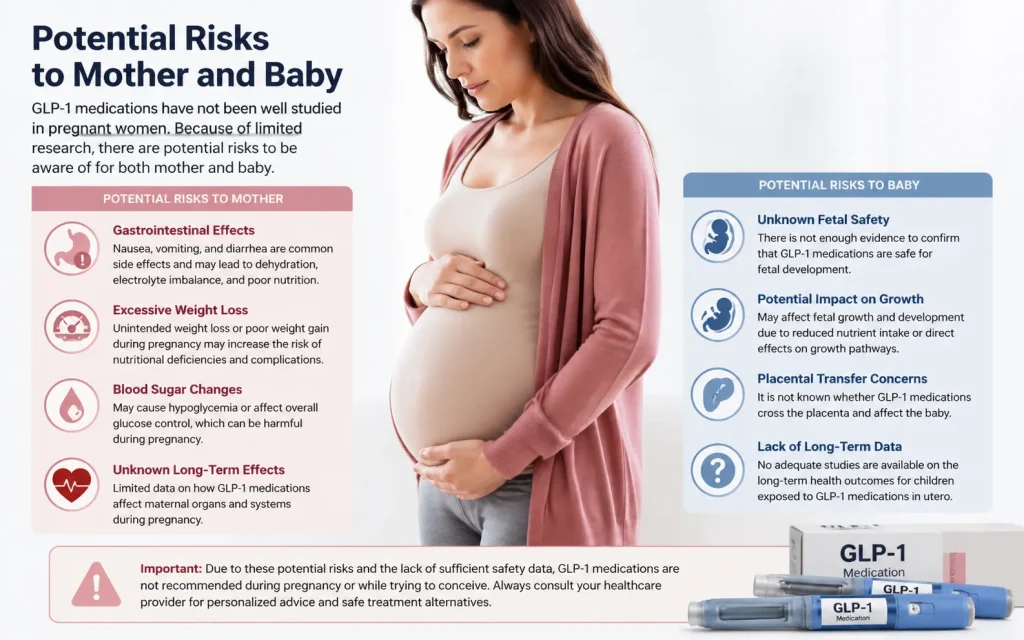
The medications may also affect organ formation and metabolic programming, with unknown long-term effects on the child. For the mother, GLP-1 drugs can cause nausea, vomiting, and reduced appetite, which may lead to inadequate nutrition during a critical period.
Additionally, there is a risk of hypoglycemia if used alongside other diabetes medications, as well as gastrointestinal discomfort that can affect overall health. These potential risks underline why medical guidelines strongly advise discontinuing GLP-1 therapy before conception and during pregnancy.
Instead, safer alternatives such as insulin or lifestyle modifications should be used under close medical supervision to ensure optimal maternal and fetal health.
Using GLP-1 medications during pregnancy may carry risks, including:
- For the fetus:
- Low birth weight
- Developmental abnormalities (based on animal studies)
- Unknown long-term metabolic effects
- For the mother:
- Hypoglycemia
- Gastrointestinal side effects
- Nutritional deficiencies due to reduced appetite
4. Safe Alternatives During Pregnancy
During pregnancy, managing blood sugar and maintaining maternal health requires safer alternatives to GLP-1 medications. Insulin therapy is the preferred option for women with type 2 diabetes or gestational diabetes, as it effectively controls blood glucose without known harm to the fetus.
Lifestyle modifications are also essential, including a balanced diet rich in protein, fiber, and essential vitamins, as well as regular, pregnancy-safe physical activity to support healthy weight and blood sugar levels. In some cases, metformin may be used under medical supervision, as it has a more established safety profile in pregnancy.
Close monitoring of blood glucose levels and fetal development ensures both mother and baby remain healthy throughout pregnancy. Pregnant women should work closely with a multidisciplinary healthcare team, including an obstetrician, endocrinologist, and dietitian, to personalize treatment and avoid any potential complications.
Pregnant women managing diabetes or obesity have safer options, including:
- Lifestyle modifications
- A balanced diet rich in protein, fiber, and essential nutrients
- Regular, low-impact exercise approved by a healthcare provider
- Insulin therapy
- Preferred for controlling blood sugar in gestational diabetes
- No known harm to the fetus when used appropriately
- Oral medications with proven safety
- Metformin is sometimes used under medical supervision
5. Practical Advice for Women Planning Pregnancy
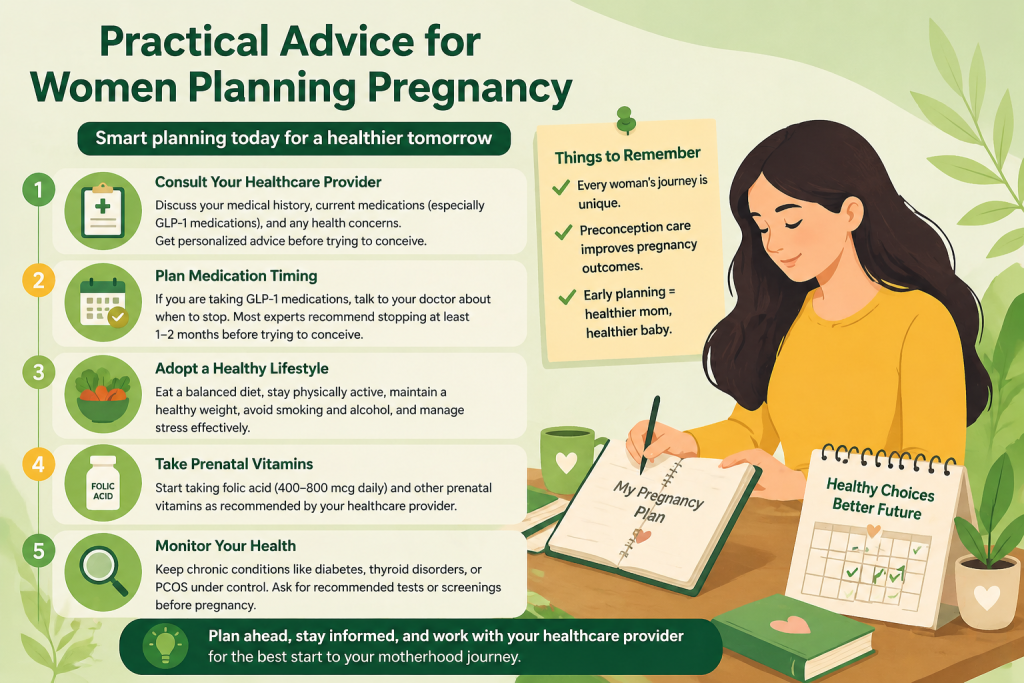
Women who are taking GLP-1 medications and planning to conceive should take proactive steps to ensure a healthy pregnancy. First and foremost, discontinue GLP-1 therapy under the guidance of a healthcare provider. Switch to safer alternatives such as insulin or metformin, and focus on lifestyle measures like a balanced diet, regular exercise, and adequate hydration.
It is also important to monitor blood sugar levels closely before and during pregnancy to prevent complications for both mother and baby. Prenatal vitamins and nutrient-rich foods should be included to support fetal development. Scheduling a preconception consultation with an obstetrician or endocrinologist can help develop a personalized plan for managing diabetes or weight concerns safely.
Finally, maintaining regular follow-ups throughout pregnancy ensures timely adjustments to therapy and optimal maternal-fetal health.
If you are taking GLP-1 medications and planning to become pregnant:
- Stop GLP-1 therapy before conception.
- Consult your healthcare provider for safer alternatives.
- Monitor blood sugar levels regularly.
- Ensure adequate nutrition and prenatal vitamins.
6. Key Takeaways
In summary, GLP-1 medications are not considered safe during pregnancy due to limited human studies and potential risks to fetal development, including growth restriction and developmental abnormalities. These drugs may also impact maternal nutrition, appetite, and gastrointestinal health, which are vital during pregnancy.
Women planning to conceive should discontinue GLP-1 therapy and consult their healthcare provider for safer alternatives, such as insulin therapy, metformin under medical supervision, and lifestyle modifications. C
Lose monitoring of blood sugar levels and fetal growth throughout pregnancy is essential, and a multidisciplinary approach involving obstetricians, endocrinologists, and dietitians can help ensure the best possible outcomes for both mother and baby.
- GLP-1 medications are not recommended during pregnancy.
- Animal studies indicate potential fetal harm.
- Safer alternatives include insulin and lifestyle adjustments.
- Women planning pregnancy should discontinue GLP-1 therapy and seek medical guidance.
- Continuous monitoring is essential for maternal and fetal health.
Frequently Asked Questions (FAQs)
1. Can GLP-1 cause miscarriage?
There’s no definitive human data, but animal studies suggest a potential risk to fetal development, so it’s advised to avoid during pregnancy.
2. Is it safe to continue GLP-1 if pregnancy is unplanned?
No. Women who become pregnant should stop GLP-1 immediately and consult their doctor.
3. How long should I wait after stopping GLP-1 before conceiving?
Most doctors recommend waiting at least a few weeks, depending on the specific medication’s half-life.
4. Can GLP-1 be used for gestational diabetes?
No. GLP-1 drugs are not approved for gestational diabetes; insulin is the preferred treatment.
5. Are there any oral GLP-1 medications safe in pregnancy?
Currently, no oral or injectable GLP-1 drugs are considered safe during pregnancy.
6. What alternatives help with weight management in pregnancy?
Focus on balanced nutrition, regular physical activity, and prenatal guidance. Weight loss medications should generally be avoided.
7. Can breastfeeding mothers use GLP-1 medications?
Safety in breastfeeding is not established, so consult your pediatrician and obstetrician.
8. What if I accidentally took GLP-1 before knowing I was pregnant?
Contact your healthcare provider immediately. They may recommend monitoring fetal development through ultrasounds.
9. Are there long-term effects on children exposed to GLP-1 in utero?
Currently, human data is insufficient, making it unsafe to assume long-term safety.
Conclusion
GLP-1 medications are highly effective for managing diabetes and weight in adults, but they are not safe during pregnancy. Limited research, potential fetal risks, and medical guidelines consistently recommend discontinuing GLP-1 therapy before or during pregnancy.
Pregnant women or those planning pregnancy should focus on safe alternatives, including insulin therapy and lifestyle modifications, while maintaining close supervision from healthcare professionals. By taking these precautions, both maternal and fetal health can be optimized without compromising treatment outcomes.
GLP-1 medications, while effective for managing diabetes and supporting weight loss in adults, are not recommended during pregnancy due to limited safety data and potential risks to the developing fetus. Animal studies have indicated possible growth restrictions and developmental issues, making it unsafe to continue these medications while pregnant.
For women planning pregnancy, it is crucial to discontinue GLP-1 therapy and explore safer alternatives, such as insulin therapy, metformin under medical supervision, and lifestyle modifications. Maintaining proper nutrition, monitoring blood sugar levels, and receiving regular prenatal care are essential for maternal and fetal well-being. Working closely with a multidisciplinary healthcare team ensures that both mother and baby remain healthy throughout pregnancy.
Ultimately, prioritizing safety and expert guidance can help achieve positive pregnancy outcomes while managing underlying health conditions effectively.