Introduction
In recent years, products marketed as “GLP‑1 patches” have exploded in online ads, social media, and alternative health stores. They claim to deliver the benefits associated with GLP‑1 medications — like weight loss or improved blood sugar control — without injections or pills. But do these patches actually work?
In this comprehensive guide, we’ll explore:
- What GLP‑1 actually is
- How real GLP‑1 medications work
- What so‑called GLP‑1 patches contain
- Scientific evidence for or against them
- Safety, regulation, and alternatives
By the end, you’ll have a clear understanding of whether GLP‑1 patches are legit or just another marketing trend.
1. What Is GLP‑1? A Quick Overview
GLP‑1 stands for glucagon‑like peptide‑1, a hormone naturally produced in the gut after eating. It helps regulate blood sugar by:
- Stimulating insulin release
- Slowing gastric emptying
- Increasing feelings of fullness
This mechanism is why GLP‑1 receptor agonist medications — like semaglutide and tirzepatide — became breakthrough treatments for type 2 diabetes and obesity. It is a naturally occurring hormone made mainly by endocrine cells in the intestinal tract when you eat food; it is also produced in some areas of the brain.
GLP‑1 is part of a group of hormones called incretins that help regulate your metabolism. Its key functions include stimulating insulin release from the pancreas when glucose levels are high, reducing glucagon release (which raises blood sugar), slowing gastric emptying, and increasing feelings of fullness, all of which help control blood sugar and appetite after meals.
Most of the active GLP‑1 produced in the gut is rapidly broken down in the body by the enzyme DPP‑4, resulting in a very short natural half‑life of only a few minutes, which is why medically modified GLP‑1 receptor agonists with longer action are used for treating type‑2 diabetes and obesity.
GLP‑1’s effects go beyond glucose control — research suggests it may also have cardiovascular and neuroprotective influences, and it is being studied for potential roles in multiple metabolic and chronic diseases beyond diabetes.
2. How Are Real GLP‑1 Medications Administered?
Currently (as of 2026):
✔️ FDA‑approved GLP‑1 drugs — such as injectable semaglutide and tirzepatide — are administered via subcutaneous injection or prescription oral forms.
✔️ No FDA‑approved transdermal (patch) form exists.
This is because the molecules are too large to penetrate intact skin by passive diffusion. The skin’s outer layer is an effective barrier, especially for big peptide drugs. Without specialized delivery systems (e.g., microneedles), transdermal delivery isn’t realistic for these compounds.
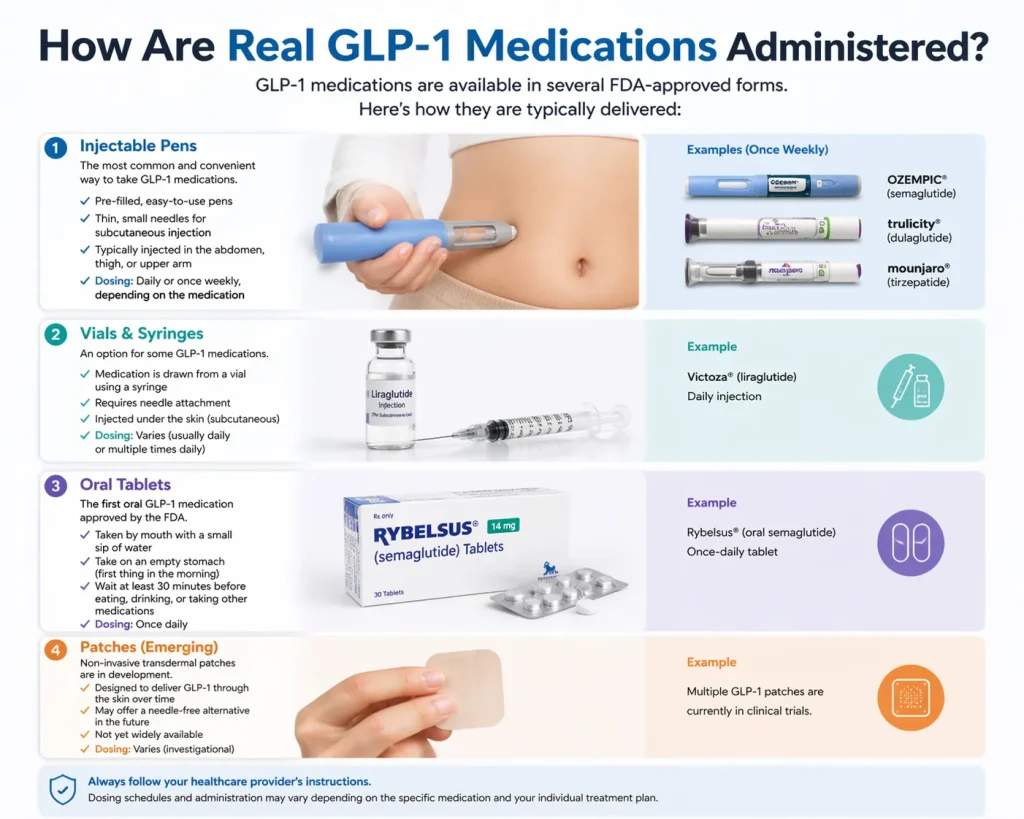
Real GLP‑1 medications, known as GLP‑1 receptor agonists, are designed to mimic the hormone GLP‑1 but last much longer in the body. Here’s how they are typically administered:
1. Injection
- The most common route is subcutaneous injection (under the skin), usually in the abdomen, thigh, or upper arm.
- Frequency varies:
- Daily injections: e.g., liraglutide
- Weekly injections: e.g., semaglutide, dulaglutide
- Some pens are prefilled and allow self-administration at home.
2. Oral
- A few newer GLP‑1 drugs are available in pill form, such as oral semaglutide.
- Must be taken on an empty stomach with a small amount of water and no food for at least 30 minutes to ensure proper absorption.
3. Healthcare Monitoring
- Started under a doctor’s supervision to adjust doses gradually, minimizing side effects like nausea.
- Blood sugar and kidney function are often monitored.
3. What Are “GLP‑1 Patches” Actually Made Of?
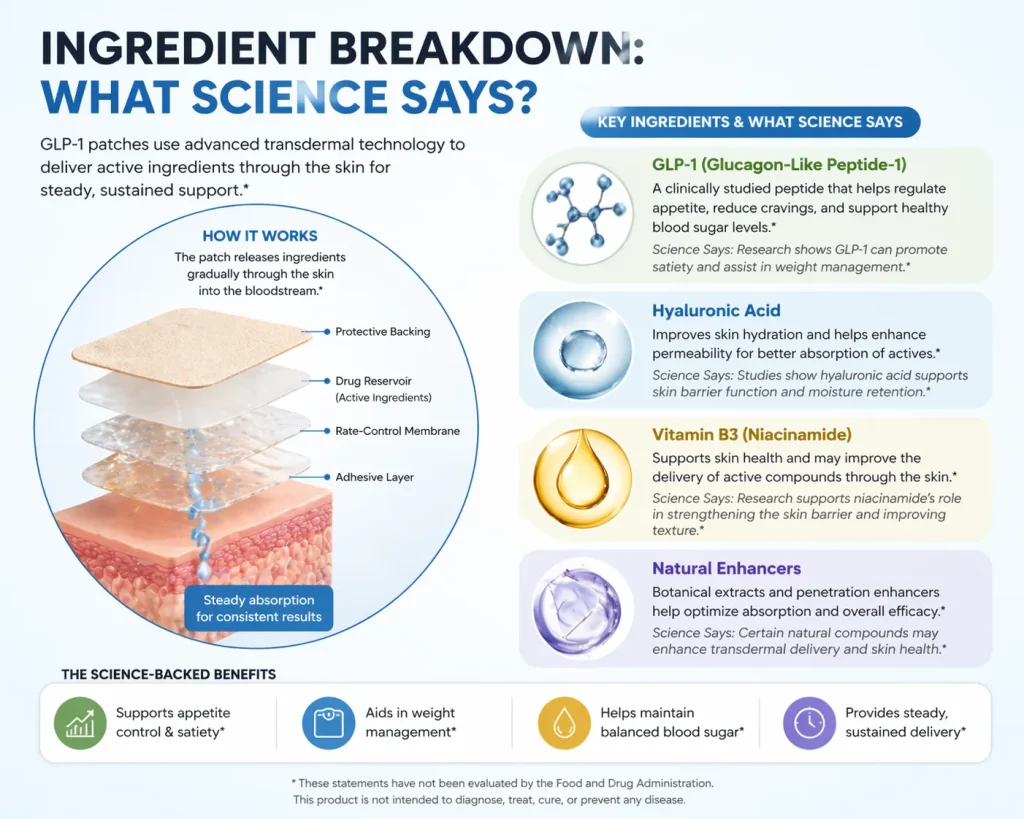
Most products marketed as “GLP‑1 patches” do not contain real GLP‑1 or any pharmaceutical-grade hormone. Instead, they typically include a mix of herbal extracts, vitamins, minerals, or other dietary supplements that are claimed to support weight loss, appetite control, or blood sugar regulation.
Common ingredients may include green tea extract, garcinia cambogia, bitter orange, or other plant-derived compounds, but none of these can replicate the complex hormonal effects of GLP‑1 in the body.
These patches rely on transdermal delivery, which is ineffective for large peptide molecules like GLP‑1, meaning the active ingredients in these products do not reach the bloodstream in sufficient amounts to impact metabolism meaningfully. As a result, “GLP‑1 patches” are largely considered marketing gimmicks, lacking credible clinical evidence for efficacy or safety.
You might be wondering: if real GLP‑1 medication isn’t in these patches, then what is? The answer is:
Most commercially sold patches — marketed as GLP‑1 patches — do not contain any pharmaceutical GLP‑1 receptor agonists.
Instead, they typically include:
Common Ingredients
- Herbal extracts — like green tea extract, berberine, cinnamon
- Supplements — such as L‑carnitine, vitamin complexes
- Plant‑based compounds — sometimes claimed to “stimulate natural GLP‑1 production”
Despite these labels, there is no clinical evidence that these ingredients, when delivered through the skin, provide the same metabolic effects as true GLP‑1 medication.
Important: These products may be marketed as “GLP‑1 support” or “weight loss patches,” but they are not regulated as medications and don’t undergo the safety and efficacy testing required of real drugs.
4. Do GLP‑1 Patches Work? The Evidence (or Lack Thereof)?
Scientific Reality
📌 No peer‑reviewed clinical studies show that over‑the‑counter GLP‑1 patches deliver therapeutic results for weight loss or diabetes.
📌 There is no FDA‑approved transdermal GLP‑1 patch on the market anywhere, including the US and UK.
Why They Don’t Work
- Large Molecule Size
- GLP‑1 receptor agonists are proteins/peptides that are too big to pass through skin without advanced delivery technology.
- Skin Barrier Limits
- The skin’s outer layer (stratum corneum) effectively blocks molecules larger than about 500 daltons — and GLP‑1 molecules exceed that by a wide margin.
- Marketing vs. Science
- Claims that patches stimulate natural GLP‑1 production are speculative and not proven in clinical trials.
There is currently no solid scientific evidence that “GLP‑1 patches” as sold online or in stores actually work to deliver real GLP‑1 medication or produce the same effects as approved GLP‑1 drugs like semaglutide or tirzepatide.
Products marketed as GLP‑1 patches almost never contain pharmaceutical GLP‑1 receptor agonists and instead include herbal extracts, vitamins, or other supplements that haven’t been shown to enter the bloodstream in meaningful amounts through the skin or to mimic GLP‑1’s metabolic effects.
Real GLP‑1 medications are large peptide molecules that are too big to pass through intact skin, which is why all FDA‑approved GLP‑1 therapies are delivered by injection or, in limited cases, as specialized oral tablets. Because of this, and the lack of peer‑reviewed clinical trials demonstrating safety or effectiveness, the claims made by patch manufacturers are not supported by credible evidence, and health experts consider them unproven at best and misleading at worst.
5. Ingredient Breakdown: What Science Says?
Even if a patch contains berberine, green tea extract, or garcinia cambogia:
✔️ These may have modest metabolic effects when taken orally in certain contexts, per some studies.
❌ There’s no evidence these compounds are effectively absorbed through the skin or replicate GLP‑1 drug effects.
Also, products with unclear formulations may vary widely in quality and dose — making their effects unpredictable.
6. Potential Risks and Safety Issues.
Although most GLP‑1 patch products are marketed as harmless supplements, there are important safety considerations:
Unregulated Formulations
- Because these patches aren’t FDA‑regulated medicines, there’s no guarantee of ingredient quality or purity.
Possible Skin Reactions
- Some users report irritation, redness, or allergic reactions from adhesive patches.
False Sense of Security
- Believing you’re getting clinically effective treatment when you’re not can delay proper care.
Always consult a healthcare professional before using any new supplement or weight‑loss aid.
7. Why People Are Attracted to GLP‑1 Patches?
People are attracted to “GLP‑1 patches” mainly because they promise the benefits of GLP‑1 drugs—weight loss, appetite suppression, and better blood sugar control—without injections or prescriptions.
The idea of a simple, painless patch is appealing to those who dislike needles, want convenience, or are looking for a quick solution to weight management. Marketing often emphasizes “natural ingredients” and portrays the patch as a modern, high-tech alternative to medication, which can make it seem safer or more accessible than prescription GLP‑1 drugs.
Additionally, social media and influencer promotions amplify the perception that these patches are effective, even though scientific evidence is lacking, making them attractive despite their unproven status.
These patches often appeal to consumers because:
- They’re marketed as “needle‑free alternatives.”
- They’re available without a prescription.
- Social media influencers often promote them.
But popularity does not equal effectiveness — especially when the underlying science doesn’t support the claims.
8. What Does Actually Works for Weight Management?
If your goal is weight loss or better blood sugar control, evidence‑based options include:
✔️ Lifestyle Changes
- Balanced diet
- Regular physical activity
✔️ Proven Medications
- GLP‑1 receptor agonists like semaglutide or tirzepatide — prescribed by a doctor
- These have been shown in clinical trials to significantly reduce weight and improve metabolic outcomes.
9. Bottom Line: GLP‑1 Patches — Legit or Not?
Bottom line: GLP‑1 patches are not legitimate substitutes for prescription GLP‑1 medications. They do not contain real GLP‑1 hormones and cannot replicate the effects of FDA-approved GLP‑1 drugs, which require injections or specialized oral formulations to work.
Most patches are made of herbal extracts, vitamins, or other supplements that have no proven ability to influence blood sugar, insulin, or appetite in the way GLP‑1 does.
While the idea of a convenient, needle-free patch is appealing, current scientific evidence shows these products are largely marketing gimmicks and should not be relied on for weight loss or diabetes management. Only clinically tested GLP‑1 medications under medical supervision are effective and safe for these purposes.
Short answer:
❌ GLP‑1 patches do not work in the way real GLP‑1 medications work.
❌ They do not contain real pharmaceutical‑grade GLP‑1 receptor agonists.
❌ There is no scientific evidence proving they deliver therapeutic effects through the skin.
Instead, these products are best classified as supplement‑based patches with unproven effectiveness.
10. FAQs
Q1: Are any GLP‑1 patches approved by major health regulators?
No. None are approved by the FDA, MHRA (UK), or similar agencies.
Q2: Can these patches help at all if paired with diet/exercise?
There’s no reliable evidence that they provide meaningful benefits over lifestyle changes alone.
Q3: Why aren’t GLP‑1 medicines available as patches yet?
Because peptides like GLP‑1 are structurally large and unstable, making safe and effective skin absorption extremely challenging without advanced technology.
Conclusion
GLP‑1 patches may sound attractive, but as of 2026, they’re not proven or approved treatments for weight loss or metabolic conditions. If you’re curious about GLP‑1 therapy, consult with a healthcare professional about evidence‑based options that are safe and effective — and be cautious of marketing claims that aren’t backed by science.