Introduction
GLP‑1 pills have rapidly become a trending topic in health, wellness, and medical communities — especially among people looking to manage weight and control blood sugar levels. But do GLP‑1 pills really work? And are they safe for long‑term use?
GLP‑1 pills not only assist with blood sugar and weight management but also show promising benefits for long-term metabolic health. Emerging studies indicate potential improvements in cardiovascular risk factors, including reduced blood pressure and better cholesterol profiles.
They may also help with insulin resistance, which is a key factor in type 2 diabetes development. For many patients, GLP‑1 therapy supports sustainable lifestyle changes, as reduced appetite and cravings make adherence to a healthy diet easier. Additionally, ongoing research is exploring GLP‑1’s role in reducing inflammation and improving gut hormone balance, which may have further health benefits beyond weight and glucose control.
GLP‑1 pills are increasingly considered a complementary therapy for people struggling to achieve results through diet and exercise alone. They help create a more controlled eating pattern by promoting satiety and reducing snacking tendencies. Moreover, these medications are being studied for their long-term effects on liver health and metabolic syndrome, highlighting their broader impact on overall wellness.
As research continues, GLP‑1 therapy may become a cornerstone in integrated approaches to weight management and chronic disease prevention.
1. What Are GLP‑1 Pills?
GLP‑1 stands for glucagon‑like peptide‑1, a hormone naturally produced in the gut. It plays a key role in:
- Stimulating insulin secretion
- Reducing glucagon (the hormone that raises blood sugar)
- Slowing stomach emptying
- Reducing appetite
In medical use, GLP‑1 medications were first developed to treat type 2 diabetes. Recently, researchers found that GLP‑1 therapies also promote weight loss, which led to a surge in interest in oral GLP‑1 pills.
GLP‑1 pills are part of a class of medications called incretin mimetics, which mimic the natural gut hormones that regulate blood sugar. Unlike traditional diabetes medications that only lower glucose, GLP‑1 pills work by addressing multiple aspects of metabolism, including insulin secretion, appetite, and digestion.
They are available in various formulations and doses, tailored to individual patient needs. Some GLP‑1 pills are specifically approved for weight management, even in people without diabetes, reflecting their versatile role in health. These pills are designed for daily oral administration, offering a convenient alternative to injectable GLP‑1 therapies. Over time, they may help reduce the risk of diabetes complications by maintaining steadier blood sugar levels.
Additionally, ongoing studies are exploring their potential to support cardiovascular health and overall metabolic balance, making them a promising option for long-term wellness strategies.
2. How Do GLP‑1 Pills Work? (Mechanism Explained)
GLP‑1 pills work by mimicking the body’s natural GLP‑1 hormone, which is released in the gut after eating. They bind to GLP‑1 receptors in the pancreas to enhance insulin secretion only when blood sugar is elevated, reducing the risk of hypoglycemia.
At the same time, they suppress glucagon release, a hormone that signals the liver to produce glucose, helping to stabilize blood sugar levels. GLP‑1 pills also slow gastric emptying, meaning food stays longer in the stomach, which promotes a feeling of fullness and reduces overall calorie intake. In addition, they act on the brain’s appetite centers to diminish hunger signals, supporting healthier eating patterns.
Emerging research suggests they may also improve insulin sensitivity in peripheral tissues, contributing to better long-term glucose control. By targeting multiple pathways simultaneously, GLP‑1 pills provide a comprehensive approach to managing blood sugar and supporting weight loss.
“This image visually illustrates the mechanism of GLP‑1 pills, making it easier to understand how they work and their possible side effects.”
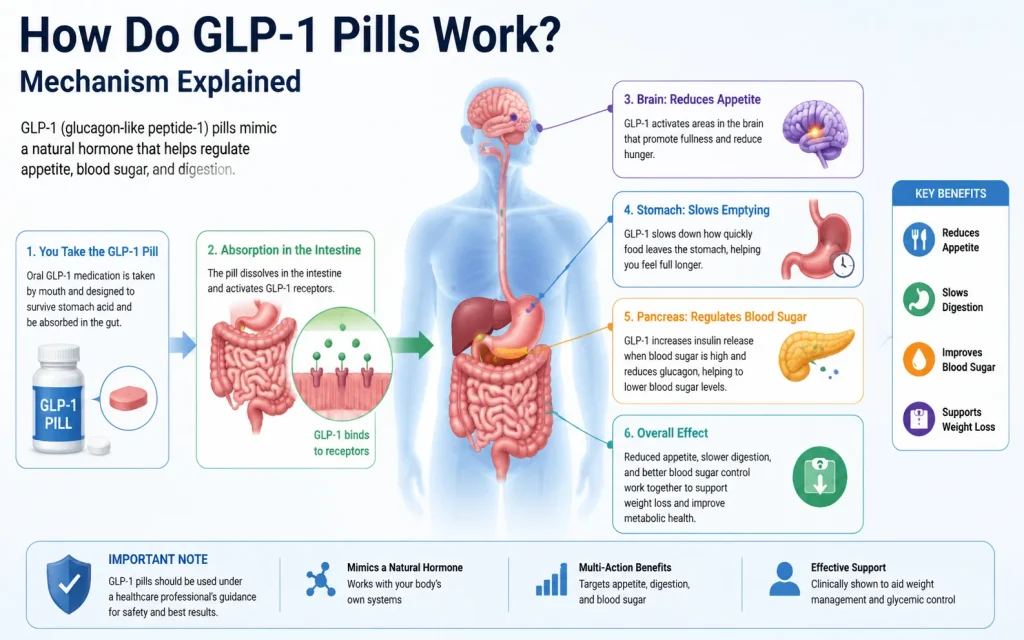
GLP‑1 pills mimic the body’s natural GLP‑1 hormone. Once ingested, they act by:
- Increasing insulin release when blood sugar is high
- Lowering glucagon levels, reducing glucose output
- Slowing gastric emptying, so food stays in the stomach longer
- Sending hunger‑reducing signals to the brain
📌 This combination results in better blood sugar control and lowered appetite — which is why GLP‑1 pills are popular for both diabetes management and weight loss.
3. Effectiveness — What Research Shows
Clinical studies have consistently shown that GLP‑1 pills provide meaningful improvements in blood sugar control and weight management. Participants in multiple trials often experience a reduction in HbA1c levels by 1–1.5%, which is significant for diabetes management.
Weight loss varies depending on dose and duration, but many patients lose 5–10% of their body weight within 3–6 months. Research also indicates improvements in waist circumference, which is a key marker of metabolic health. Some studies suggest that GLP‑1 therapy may lower cardiovascular risk, including reducing blood pressure and improving cholesterol levels.
Beyond metabolic outcomes, patients report reduced appetite and cravings, which helps maintain long-term adherence to healthier eating habits. Long-term observational studies are still ongoing, but current evidence strongly supports GLP‑1 pills as an effective adjunct to lifestyle interventions for both weight and glucose control.
Multiple clinical studies demonstrate that GLP‑1 pills have measurable benefits:
Key Evidence‑Backed Outcomes:
- Reduced HbA1c levels in people with type 2 diabetes
- Weight loss of 5–15% in many study participants
- Improved metabolic markers, such as cholesterol and insulin sensitivity
- Reduced appetite and calorie intake
📌 Example: In several controlled trials, participants using GLP‑1 therapy lost significantly more weight than placebo groups over 6–12 months.
4. Who Can Benefit Most?
GLP‑1 pills are particularly beneficial for individuals with type 2 diabetes who need improved blood sugar control. They are also effective for people with overweight or obese seeking medically supervised weight loss. Those who struggle with appetite control or frequent cravings may find GLP‑1 therapy helpful in establishing healthier eating patterns.
Additionally, patients with insulin resistance or metabolic syndrome can experience improved glucose regulation. People who have tried diet and exercise alone but haven’t achieved desired results often see the greatest benefits when GLP‑1 pills are combined with lifestyle changes.
GLP‑1 pills can benefit people who:
✔ Have type 2 diabetes
✔ Struggle with obesity or being overweight
✔ Need improved blood sugar control
✔ Want appetite management support
✔ Have tried diet and exercise with limited results
However, GLP‑1 therapy isn’t suitable for everyone — including people with certain medical conditions or pregnant individuals.
5. GLP‑1 Pills vs Injectables
Here’s a comparison to help you understand different formats of GLP‑1 treatment:
| Feature | GLP‑1 Pills | Injectable GLP‑1 |
| Delivery | Oral capsule | Subcutaneous injection |
| Convenience | High | Moderate (self‑injection) |
| Absorption | Varies per formulation | Rapid & predictable |
| Common Use | Weight & mild glucose control | Strong glucose & weight control |
| Side Effects | Mild GI symptoms | GI symptoms + injection‑site reactions |
| Patient Preference | Often preferred | Less preferred by needle‑averse |
6. Benefits of GLP‑1 Pills (Professional Breakdown)
GLP‑1 pills help regulate blood sugar by enhancing insulin release and suppressing glucagon when needed, promoting steady glucose levels. They also slow stomach emptying and reduce appetite, supporting natural, sustainable weight loss.
Additional benefits include improved lipid profiles, better insulin sensitivity, and potential cardiovascular support. Oral formulations increase convenience and adherence, making it easier to combine therapy with healthy lifestyle habits for long-term metabolic health.
1. Effective Blood Sugar Control
GLP‑1 pills improve insulin secretion and reduce glucose production — lowering average blood sugar levels.
2. Weight Loss Support
They help suppress appetite and reduce calorie intake, promoting gradual and sustained weight loss.
3. Improved Metabolic Health
Studies show improvements in cardiovascular markers, such as:
- Lower LDL cholesterol
- Reduced blood pressure
- Better insulin sensitivity
4. Convenience & Compliance
Oral pills are often easier to take regularly than injections, increasing adherence for many patients.
5. Fewer Complications
When monitored medically, GLP‑1 pills can be safer than some weight‑loss drugs with harsher side effects.
7. Potential Side Effects & Risks
While GLP‑1 pills are generally well-tolerated, they can cause mild gastrointestinal side effects such as nausea, bloating, diarrhea, or mild stomach discomfort, especially during the first few weeks of treatment. Some users may also experience dizziness or headaches.
Rare but more serious risks include pancreatitis, gallbladder issues, or severe allergic reactions. It’s important to consult a healthcare provider before starting therapy, particularly for individuals with a history of pancreatic or thyroid problems. Careful monitoring and gradual dose adjustments can help minimize side effects, making the treatment safer and more effective over time.
Overall, when used under medical supervision, GLP‑1 pills provide a favorable balance of benefits and manageable risks.
“This image visually illustrates the potential effects of GLP‑1 pills, making it easier to understand how they work and their possible side effects.”
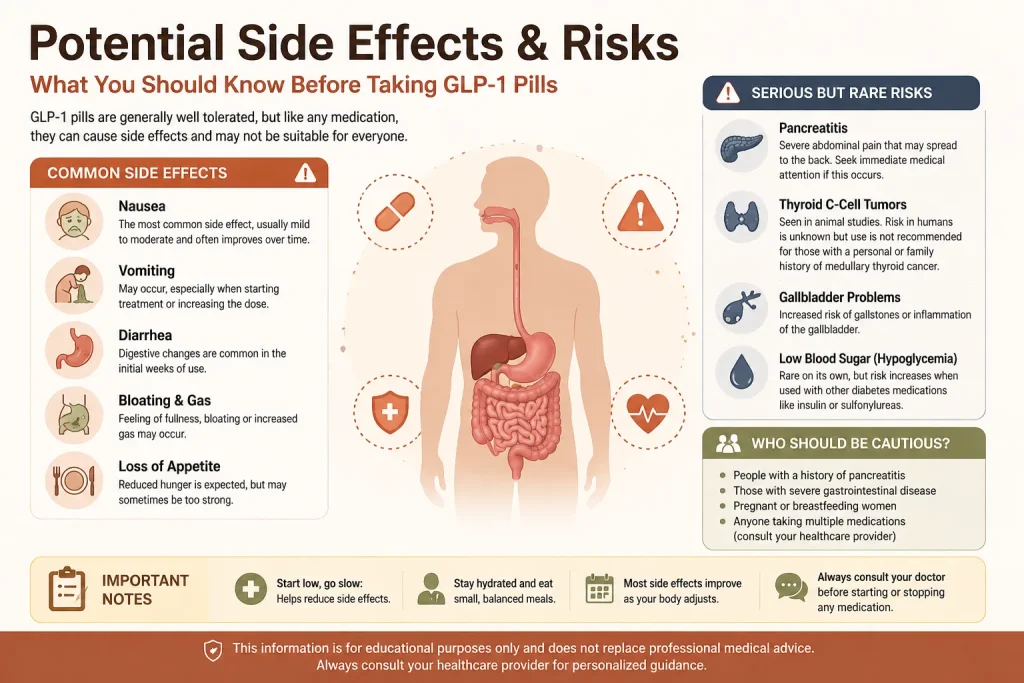
Like any medication, GLP‑1 pills can cause side effects. Most are mild and temporary:
Common:
- Nausea
- Bloating
- Diarrhea
- Mild stomach discomfort
Less Common:
- Dizziness
- Headache
- Reduced appetite (initial phase)
Important: Rare but serious side effects exist, such as pancreatitis or gallbladder disease. Always consult a medical professional before starting treatment.
8. Real User Results — What People Report
Many users of GLP‑1 pills report noticeable improvements in both appetite control and weight management. Common experiences include reduced cravings, smaller portion sizes, and steadier energy levels throughout the day.
Patients with type 2 diabetes often observe better blood sugar readings and fewer glucose spikes, while those using the pills for weight management note gradual, sustainable weight loss. Some users also report improvements in overall well-being, including enhanced motivation to maintain healthy lifestyle habits.
While individual results vary, consistent use under medical supervision generally leads to positive and measurable changes in metabolic health and eating patterns.
Many users share:
✔ Lower food cravings
✔ Steadier blood sugar readings
✔ Sustainable weight loss
✔ Improved energy levels
User experiences vary — and not everyone responds the same way.
Frequently Asked Questions (FAQs)
1. Do GLP‑1 pills really make you lose weight?
Yes, research shows they can support weight loss by reducing appetite and improving calorie control.
2. Are GLP‑1 pills safe?
Generally, yes, but you should discuss risks with a healthcare provider, especially if you have digestive or pancreatic issues.
3. How long until they work?
Benefits often start within weeks, but full effects may take 2–3 months.
4. Can normal people take GLP‑1 pills for weight loss?
Only under medical supervision — they are prescription medications.
5. Do GLP‑1 pills have side effects?
Mild gastrointestinal effects are most common. Severe side effects are rare.
6. How do they compare to diets?
They can support diet efforts, but they’re not a replacement for healthy eating and exercise.
7. Do GLP‑1 pills affect appetite?
Yes, they reduce appetite by acting on hunger signals in the brain.
8. Will weight return after stopping?
Some people regain weight if lifestyle habits aren’t maintained.
9. Are they approved by regulatory authorities?
Several GLP‑1 medications are approved for diabetes and weight loss by major health authorities.
Professional Tips from Doctors & Nutritionists
✔ Monitor blood glucose regularly
✔ Track weight and body measurements
✔ Adjust doses based on response and tolerance
✔ Don’t mix with other appetite‑suppressing drugs without guidance
Conclusion
So, do GLP‑1 pills work? Yes — when used responsibly and under medical supervision. They offer a scientifically backed approach to improving blood sugar control and supporting weight loss. However, they should complement — not replace — healthy lifestyle habits.
In summary, GLP‑1 pills represent a scientifically backed option for supporting both blood sugar management and weight loss. By targeting multiple pathways—such as insulin secretion, glucagon suppression, gastric emptying, and appetite regulation—they provide a comprehensive approach to metabolic health. Real-world users and clinical studies alike show that these medications can lead to meaningful improvements in glucose control, weight reduction, and overall wellness.
While mild gastrointestinal side effects are common, serious risks are rare when therapy is monitored by a healthcare professional. GLP‑1 pills work best as part of a broader lifestyle plan, including balanced nutrition, regular exercise, and consistent medical guidance.
For individuals struggling with type 2 diabetes, obesity, or insulin resistance, they offer an effective, convenient, and sustainable tool to achieve health goals. As research continues, GLP‑1 therapy may further establish itself as a cornerstone in modern metabolic and weight management strategies.
With smooth integration into your health plan, GLP‑1 pills can be an effective tool on your journey toward better metabolic health.