Introduction
Glucagon‑like peptide‑1 receptor agonists (commonly called GLP‑1 medications) are among the most talked‑about treatments today for weight management and type 2 diabetes. These drugs — including brands like Ozempic, Wegovy, Mounjaro, and others — have changed how clinicians address obesity and blood sugar control. But a key question many people have is: “Do you have to take GLP‑1 forever?”
GLP‑1 receptor agonists have become a major tool in the fight against obesity and type 2 diabetes, offering hope for lasting weight loss and improved blood sugar control. Many patients see impressive results, but a common concern remains: how long must these medications be used?
While some may consider them a temporary aid, research suggests that stopping GLP‑1 therapy often leads to weight regain and a return of appetite signals. Understanding how these drugs work, their long-term benefits, and potential challenges is crucial for anyone considering or currently using them. T
His guide explores everything from dosing schedules to lifestyle integration, helping you make informed decisions about your health journey with GLP‑1 medications.
This comprehensive guide explains what GLP‑1 drugs are, how they work, why long‑term use is often recommended, what happens if you stop them, safety considerations, and how to approach treatment decisions with your healthcare provider.
1. What Are GLP‑1 Medications?
GLP‑1 medications are a class of drugs designed to mimic a hormone called glucagon‑like peptide‑1. This hormone helps regulate appetite, slow digestion, and promote insulin release when blood glucose is elevated — making these drugs useful for diabetes and weight loss.
GLP‑1 medications, or glucagon-like peptide-1 receptor agonists, are a modern class of drugs designed to help manage blood sugar levels and support weight loss. They mimic a natural hormone in the body that regulates insulin release, appetite, and digestion. By slowing gastric emptying and promoting feelings of fullness, these medications help reduce calorie intake while improving glucose control.
Widely prescribed for type 2 diabetes and obesity, GLP‑1 drugs have gained attention for their dual benefit of metabolic improvement and sustainable weight management. Their unique mechanism makes them an important part of long-term health strategies, often combined with lifestyle modifications.
How They Work
- Increase insulin secretion when blood sugar is high
- Decrease glucagon production, reducing glucose release
- Slow gastric emptying — leading to longer feelings of fullness
- Suppress appetite — often leading to lower calorie intake
Common GLP‑1 Drugs (Examples)
| Drug Name | Brand Examples | Primary Use |
| Semaglutide | Ozempic, Wegovy | Weight loss, Type 2 diabetes |
| Tirzepatide | Zepbound, Mounjaro | Weight loss, Type 2 diabetes |
| Liraglutide | Saxenda, Victoza | Weight loss, Type 2 diabetes |
| Exenatide | Byetta, Bydureon | Type 2 diabetes |
| Dulaglutide | Trulicity | Type 2 diabetes |
| Taken daily or weekly depending on the specific medication. |
2. How Long Do You Typically Use GLP‑1 Drugs?
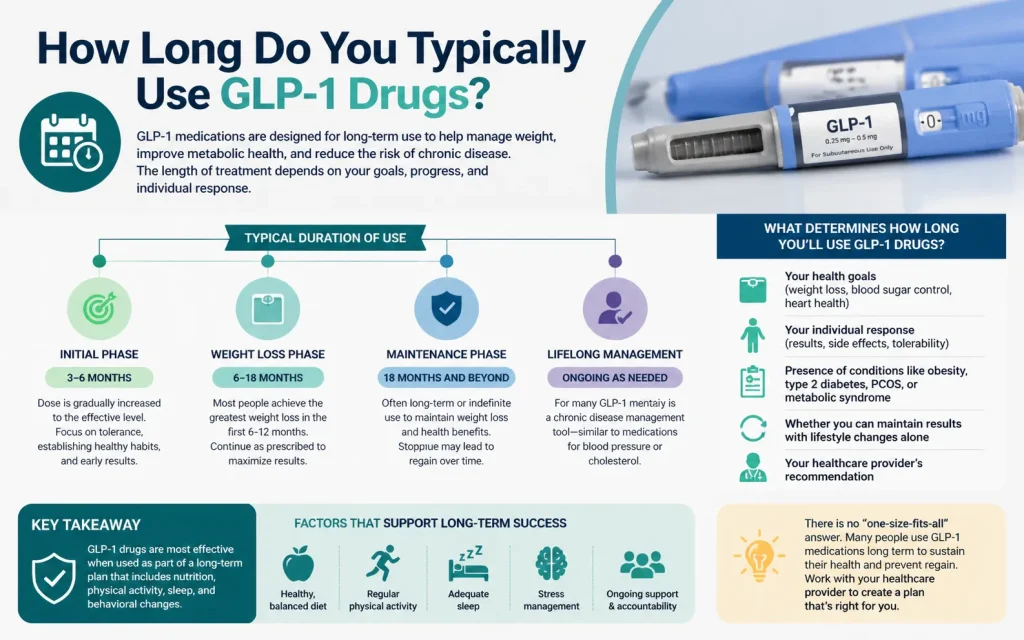
The duration of GLP‑1 therapy varies depending on individual health goals and medical conditions. Some people may use these medications for a short-term boost in weight loss or blood sugar control, while others require long-term treatment to maintain their results.
Clinical studies show that discontinuing GLP‑1 drugs often leads to weight regain and increased appetite, which is why many healthcare providers recommend continued use for chronic conditions like obesity and type 2 diabetes. The treatment plan is highly personalized, considering factors like response to the medication, lifestyle habits, and potential side effects.
Regular monitoring and consultation with a healthcare provider are essential to determine the optimal duration for each patient.
Short‑Term vs Long‑Term Use
Many clinical trials and doctors prescribe GLP‑1 drugs on a long‑term basis:
✔️ Some guidelines suggest up to 2 years of weight loss therapy (e.g., NICE in the UK for semaglutide)
✔️ For people with chronic conditions like obesity or type 2 diabetes, treatment may be indefinite — similar to blood pressure or cholesterol medications.
The infographic below shows the typical phases and duration of GLP‑1 therapy, along with factors influencing long-term results.
3. Why They Don’t Work Like a “One‑Time Cure.”
GLP‑1 drugs suppress appetite and reduce food intake while they are active in the body. Once you stop them, these effects quickly diminish, and hunger, cravings, and weight rebound often return because the underlying biological drivers of weight remain.
Does Weight Come Back After Stopping GLP‑1?
Many people wonder what happens if they stop GLP‑1 therapy after achieving weight loss. Research indicates that weight often returns gradually once the medication is discontinued, because the body’s appetite-regulating hormones and metabolism may revert toward pre-treatment levels.
The degree of weight regain varies based on factors like dietary habits, physical activity, and how long the medication was used. Some individuals can maintain a portion of their weight loss if they adopt strong lifestyle strategies, while others may regain most of the weight.
Understanding this pattern is important for planning long-term strategies alongside GLP‑1 therapy to sustain results.
This is one of the biggest concerns for users.
What Research Shows
- A systematic review found that after stopping GLP‑1 therapy, weight frequently rebounds, regaining much of the lost weight within 12–18 months.
- On average, 60–75% of weight lost may return after cessation if lifestyle and metabolic factors aren’t fully controlled.
- Regain can occur because appetite hormones and metabolic adaptations push the body toward previous weight.
Real‑World Patterns
Some people maintain weight loss after stopping, especially if they:
✔️ Adopted strong lifestyle changes
✔️ Used gradual tapering rather than abrupt cessation
✔️ Have supportive metabolic and behavioral habits
That means weight regain is common but not guaranteed for everyone — it depends on individual physiology, behavior, and support.
4. Benefits Beyond Weight Loss
GLP‑1 medications offer several health advantages that extend beyond just shedding pounds. They help improve blood sugar control, making them especially valuable for individuals with type 2 diabetes.
Many studies show they can lower the risk of cardiovascular complications, including heart attacks and strokes. Additionally, these drugs contribute to better blood pressure and cholesterol levels, supporting overall metabolic health. By promoting feelings of fullness and reducing appetite, they also make it easier to stick to healthier eating habits.
These multiple benefits make GLP‑1 therapy a powerful tool for long-term health improvement, not just short-term weight management.
GLP‑1 drugs aren’t just for shedding pounds — they also offer important health effects:
Key Benefits
- Improved blood sugar control in type 2 diabetes
- Reduced risk of cardiovascular events in some patients
- Lowered blood pressure and cholesterol levels
- Increased feelings of fullness and decreased appetite
For people with diabetes, stopping GLP‑1 medications without switching to another therapy may lead to worsening blood sugar control.
5. Safety and Side Effects
GLP‑1 medications are generally considered safe when used under medical supervision, but like all drugs, they may cause side effects. The most common issues are gastrointestinal, including nausea, vomiting, diarrhea, and constipation, especially during the first few weeks of treatment.
Less common but more serious risks include pancreatitis, gallbladder problems, and changes in blood sugar that can affect vision in diabetic patients. Most side effects are mild and temporary, often improving as the body adjusts to the medication.
Regular check-ups with a healthcare provider are essential to monitor for complications and ensure the treatment remains safe and effective.
Like any medication, GLP‑1 drugs have potential side effects.
Common Side Effects
- Nausea, vomiting, diarrhea
- Constipation or abdominal discomfort
- Reduced appetite
These are mostly related to gastrointestinal effects.
Less Common but Serious Risks
- Rare cases of pancreatitis
- Gallbladder issues
- Changes in vision for diabetic patients with rapid blood sugar shifts
People considering stopping or starting GLP‑1 therapy should always discuss risks and benefits with their clinician.
6. Strategies for Long‑Term Success
Sustaining the benefits of GLP‑1 therapy requires a combination of medical treatment and lifestyle adjustments. Consistent healthy eating habits, including high-protein and fiber-rich meals, can help control appetite and maintain weight loss.
The infographic below clearly illustrates strategies for achieving long-term success with GLP‑1 therapy.
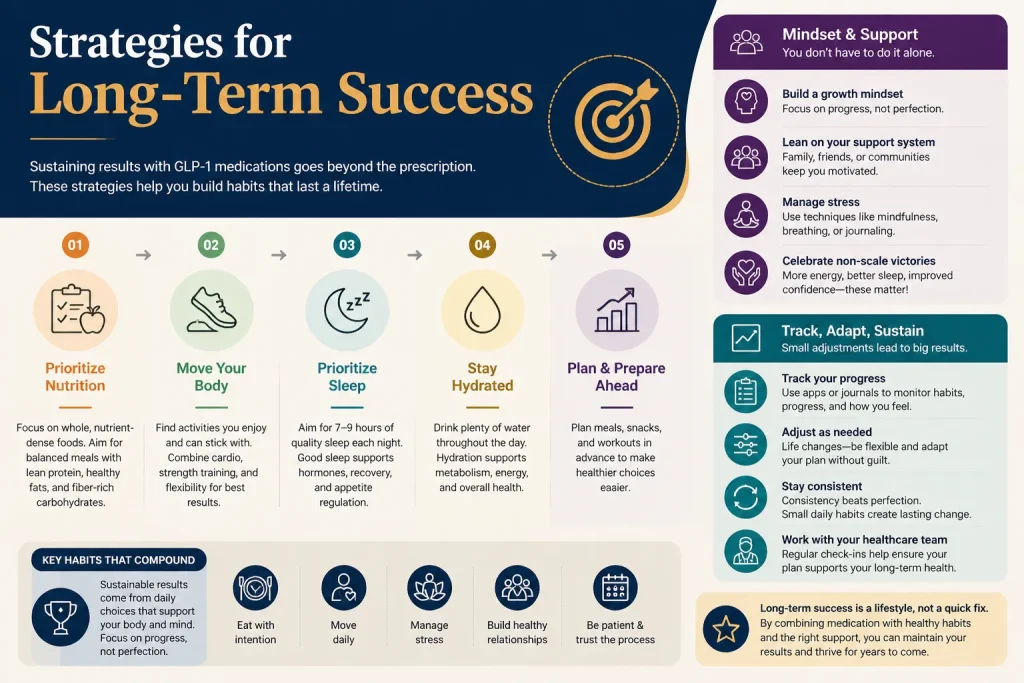
Regular physical activity supports metabolism, preserves muscle mass, and improves overall health. Behavioral support, such as counseling or support groups, can reinforce motivation and adherence. Tracking progress through food diaries, weight logs, and activity monitoring helps identify patterns and make timely adjustments.
For many, combining GLP‑1 therapy with these strategies maximizes results and improves the likelihood of long-term maintenance.
Whether you plan on staying on GLP‑1 drugs or wish to stop them in the future, success often comes from combining medical therapy with lifestyle strategies.
Lifestyle Support Tips
✔️ Balanced diet high in protein and fiber
✔️ Regular physical activity
✔️ Behavioral counseling or support groups
✔️ Tracking food, habits, and weight progress
Supplements That May Help While on GLP‑1
Some evidence suggests certain supplements can support nutrition during weight loss therapy:
- Protein for muscle maintenance
- Fiber for digestive regularity
- Electrolytes to prevent mineral imbalance
- Vitamin D & calcium for bone health
- Iron & B vitamins if dietary intake is low
- Probiotics for gut health
These can be individualized with professional guidance.
Quick Summary – Why Long‑Term Use is Often Recommended
- GLP‑1 drugs mimic hormones that reduce appetite and enhance satiety.
- Weight often returns after stopping because the body increases hunger hormones and lowers metabolism.
- Some people can keep weight off with strong lifestyle changes.
- For chronic conditions like obesity and diabetes, long‑term treatment may be needed, like other chronic medications.
- Monitoring, support, and regular medical review are key.
Frequently Asked Questions (FAQs)
1. Do you have to take GLP‑1 drugs forever?
Not strictly forever, but many people benefit from long‑term use because stopping often leads to weight regain and loss of appetite control. Medical personalization is crucial.
2. Can you stop GLP‑1 drugs after losing weight?
Yes, but weight may return if lifestyle strategies aren’t firmly established. Discuss plans with your clinician.
3. How long does weight regain take after stopping?
Research suggests much of the weight regain may happen within 1–1.5 years after discontinuation in many cases.
4. Is weight regain guaranteed after stopping?
No — some people maintain loss, especially with strong lifestyle changes and gradual tapering.
5. Are GLP‑1 drugs safe long‑term?
They are widely prescribed for long‑term use but come with side effects that require monitoring. Discuss risks with your doctor.
6. Can you taper off GLP‑1 instead of stopping suddenly?
Some clinicians recommend tapering the dose to help the body adjust and improve maintenance. Individual outcomes vary.
7. Do GLP‑1 drugs improve diabetes control?
Yes — they improve blood sugar regulation and can reduce cardiovascular risk in diabetes patients.
8. Do GLP‑1 drugs require lifestyle changes too?
Absolutely — diet, exercise, and behavior support greatly enhance results and help long‑term maintenance.
9. Are there alternatives to GLP‑1 therapy?
Lifestyle modifications, bariatric surgery, and other medications may be used depending on individual needs.
Conclusion
GLP‑1 receptor agonists have transformed the treatment of obesity and type 2 diabetes by helping people lose weight and improve metabolic health. However, they do not typically cure obesity permanently if you stop treatment abruptly. Most evidence suggests weight regain is common after discontinuation, especially without strong lifestyle habits.
For many individuals, long‑term or even lifelong use under medical supervision — paired with nutritional, physical, and behavioral support — may be the most effective path for lasting health benefits. Your decision to continue, taper, or stop GLP‑1 therapy should always be made in close consultation with a qualified healthcare provider who can tailor the plan to your unique needs.