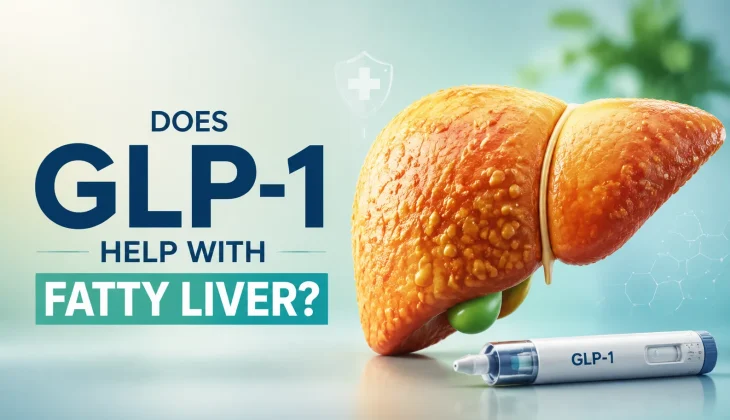
Fatty liver disease, clinically known as non-alcoholic fatty liver disease (NAFLD), has become increasingly common worldwide. Characterized by the buildup of fat in the liver, it can progress to liver inflammation, fibrosis, and even cirrhosis if left unchecked. Lifestyle changes such as diet and exercise are standard interventions, but recent research is highlighting potential pharmacological solutions. Among these, GLP-1 receptor agonists (GLP-1 RAs) have garnered significant attention.
Fatty liver disease affects millions worldwide, often silently, and is closely linked to obesity and metabolic disorders. Researchers are increasingly interested in GLP-1 receptor agonists as a potential strategy to combat liver fat accumulation. By mimicking the body’s natural GLP-1 hormone, these medications not only improve blood sugar regulation but also influence weight management and appetite.
Emerging evidence suggests that GLP-1 therapy may reduce liver inflammation and fat content, making it a promising adjunct to lifestyle changes. Unlike traditional treatments that rely solely on diet and exercise, GLP-1 offers a pharmacological boost to metabolic health. Patients have reported gradual improvements in liver enzymes and overall energy levels. Additionally, GLP-1’s effects on insulin sensitivity may indirectly protect the liver from further fat accumulation.
While it’s not a cure, integrating GLP-1 with a balanced diet and regular exercise can enhance liver outcomes. Ongoing clinical trials continue to investigate its long-term benefits specifically for fatty liver and NASH. For those struggling with stubborn liver fat, GLP-1 therapy represents a hopeful and scientifically backed option.
In this article, we explore the question: Does GLP-1 help with fatty liver? We’ll dive into the science, potential benefits, and current clinical insights.
1. Understanding GLP-1
GLP-1 (glucagon-like peptide-1) is a hormone naturally produced in the gut. It plays a key role in regulating blood sugar by enhancing insulin secretion and reducing glucagon release. GLP-1 receptor agonists are medications that mimic this hormone, commonly used to treat type 2 diabetes and obesity.
GLP-1, or glucagon-like peptide-1, is a hormone naturally produced in the gut after eating. It plays a crucial role in regulating blood sugar by signaling the pancreas to release insulin and suppressing glucagon, the hormone that raises blood sugar. Beyond its effects on glucose metabolism, GLP-1 influences appetite and satiety, helping people feel fuller for longer. This makes it a key player in weight management and obesity prevention. GLP-1 receptor agonists are medications designed to mimic this hormone, offering therapeutic benefits for conditions like type 2 diabetes and obesity.
Recent research indicates that these medications may also impact liver health by reducing fat accumulation and inflammation. Their dual role in metabolism and weight control positions GLP-1 as a promising tool for addressing fatty liver. While natural GLP-1 levels vary among individuals, medications provide a consistent and controlled effect. Overall, understanding GLP-1 helps explain why it’s gaining attention in the management of fatty liver disease and other metabolic disorders.
Key Functions of GLP-1 include:
- Stimulating insulin release after meals
- Suppressing appetite and promoting weight loss
- Slowing gastric emptying for better blood sugar control
Given its metabolic effects, researchers have investigated GLP-1’s impact on liver fat accumulation.
2. How Fatty Liver Develops
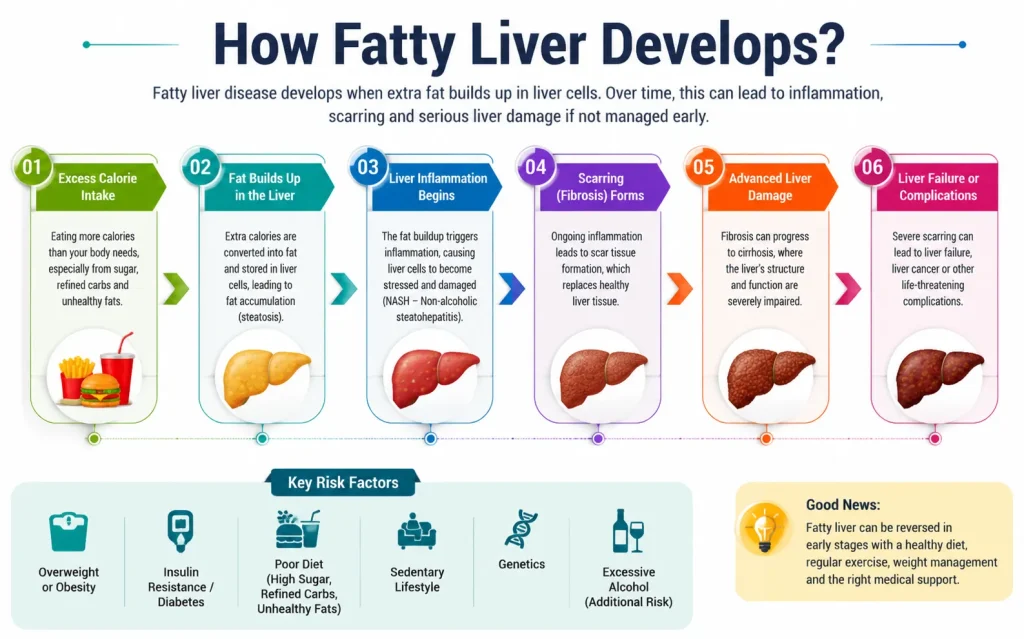
Fatty liver, or hepatic steatosis, develops when excess fat accumulates within liver cells, disrupting normal liver function. This condition is often linked to obesity, insulin resistance, and type 2 diabetes, all of which interfere with the liver’s ability to process and store fat properly. Poor dietary habits, particularly high intake of sugar, refined carbohydrates, and unhealthy fats, further contribute to fat buildup.
Genetics can also play a role, making some individuals more susceptible even without obvious lifestyle triggers. Over time, the excess fat can cause inflammation, a condition known as non-alcoholic steatohepatitis (NASH), which increases the risk of fibrosis and cirrhosis. Sedentary lifestyles exacerbate the problem by reducing the body’s ability to burn excess fat efficiently. Hormonal imbalances, including insulin and leptin resistance, also drive liver fat accumulation.
Early stages of fatty liver are often silent, with few noticeable symptoms, making it crucial to monitor liver health proactively. Detecting and addressing the condition early through lifestyle changes or medical interventions can prevent progression to severe liver disease.
Fatty liver occurs when fat, mainly triglycerides, accumulates in liver cells. Causes include:
- Obesity and excess visceral fat
- Insulin resistance and type 2 diabetes
- High-fat or high-sugar diets
- Genetic predisposition
Left untreated, fatty liver can lead to non-alcoholic steatohepatitis (NASH), liver fibrosis, or even liver failure. Managing fat accumulation and improving liver metabolism are essential for prevention and treatment.
This image illustrates the step-by-step development of fatty liver, highlighting the key stages and risk factors.
3. Can GLP-1 Help with Fatty Liver?
GLP-1 receptor agonists have shown promising potential in managing fatty liver by targeting multiple underlying mechanisms. One of the primary ways they help is by promoting weight loss, which directly reduces fat accumulation in the liver. In addition, GLP-1 improves insulin sensitivity, helping the body regulate blood sugar more efficiently and preventing excess fat from being stored in liver cells.
Research also suggests that GLP-1 may have anti-inflammatory effects, reducing liver inflammation that can lead to fibrosis and more severe liver disease. Clinical studies have reported improvements in liver enzyme levels and reductions in liver fat among patients using GLP-1 therapies. While GLP-1 is not a cure for fatty liver, it can serve as an effective complement to lifestyle interventions like diet and exercise.
Patients who struggle to achieve significant results through lifestyle changes alone may particularly benefit from this therapy. The combination of metabolic, anti-inflammatory, and weight-loss effects positions GLP-1 as a multifaceted approach to liver health. Ongoing trials continue to explore its long-term efficacy and potential to prevent disease progression.
Recent studies suggest that GLP-1 receptor agonists can positively influence liver health. The mechanisms include:
- Weight Loss – GLP-1 helps reduce appetite and caloric intake, leading to weight reduction, which is crucial for reducing liver fat.
- Improved Insulin Sensitivity – By enhancing insulin activity, GLP-1 reduces the amount of fat stored in the liver.
- Anti-Inflammatory Effects – GLP-1 may decrease liver inflammation, slowing disease progression.
A 2022 clinical study showed that patients with NASH treated with GLP-1 RAs experienced significant reductions in liver fat and improvements in liver enzyme levels.
Table: Comparison of GLP-1 Effects vs Traditional Lifestyle Intervention
| Parameter | Lifestyle Changes (Diet & Exercise) | GLP-1 Receptor Agonists (Medication) |
| Weight Loss | Moderate to high | Moderate to high |
| Liver Fat Reduction | Moderate | Moderate to significant |
| Insulin Sensitivity | Improved | Improved |
| Appetite Control | Relies on self-discipline | Directly reduced |
| Anti-inflammatory Effects | Limited | Potential benefit |
This table highlights that GLP-1 therapy may complement traditional interventions, particularly for patients struggling to achieve weight loss or liver fat reduction through lifestyle changes alone.
4. Benefits of GLP-1 for Fatty Liver
GLP-1 receptor agonists offer several benefits for individuals with fatty liver. By supporting weight loss and reducing visceral fat, they help decrease the amount of fat stored in the liver. Improved insulin sensitivity further prevents fat buildup and supports overall metabolic health.
Many patients also experience reductions in liver enzymes, such as ALT and AST, which are markers of liver stress and inflammation. GLP-1’s ability to suppress appetite and promote satiety makes maintaining a healthy diet easier, enhancing long-term liver health. Additionally, the therapy may provide anti-inflammatory effects that help slow the progression of liver damage.
Unlike lifestyle interventions alone, GLP-1 offers a pharmacological advantage, particularly for those struggling to achieve significant results through diet and exercise. Combined with healthy habits, GLP-1 can support sustainable improvements in liver function and overall well-being.
- Sustainable Weight Loss – GLP-1 aids in appetite suppression and caloric control.
- Reduction in Liver Enzymes – Many studies report decreased ALT and AST levels after GLP-1 therapy.
- Metabolic Improvements – Better blood sugar control indirectly reduces liver fat accumulation.
- Convenience – Injectable GLP-1 medications are generally taken once weekly, supporting adherence.
5. Minimal Side Effects
While GLP-1 receptor agonists are generally considered safe, they may cause some mild side effects, particularly when starting therapy. The most common reactions include nausea, vomiting, or mild gastrointestinal discomfort, which often subside as the body adjusts to the medication. Some individuals may experience mild diarrhea or constipation, but these are usually temporary.
Injection site reactions, such as redness or swelling, can occur but are typically minor. Rarely, more serious complications, such as pancreatitis, have been reported, which is why regular medical monitoring is recommended. GLP-1 is not suitable for everyone, including people with a history of certain thyroid or pancreatic conditions. Despite these potential side effects, most patients tolerate the medication well, especially when doses are gradually increased.
Proper guidance from a healthcare professional can help minimize risks and enhance benefits. Overall, the side effect profile is considered manageable compared to the potential advantages for liver health and metabolic support.
This image highlights the minimal and mostly temporary side effects of GLP-1 therapy and explains why they are generally well tolerated
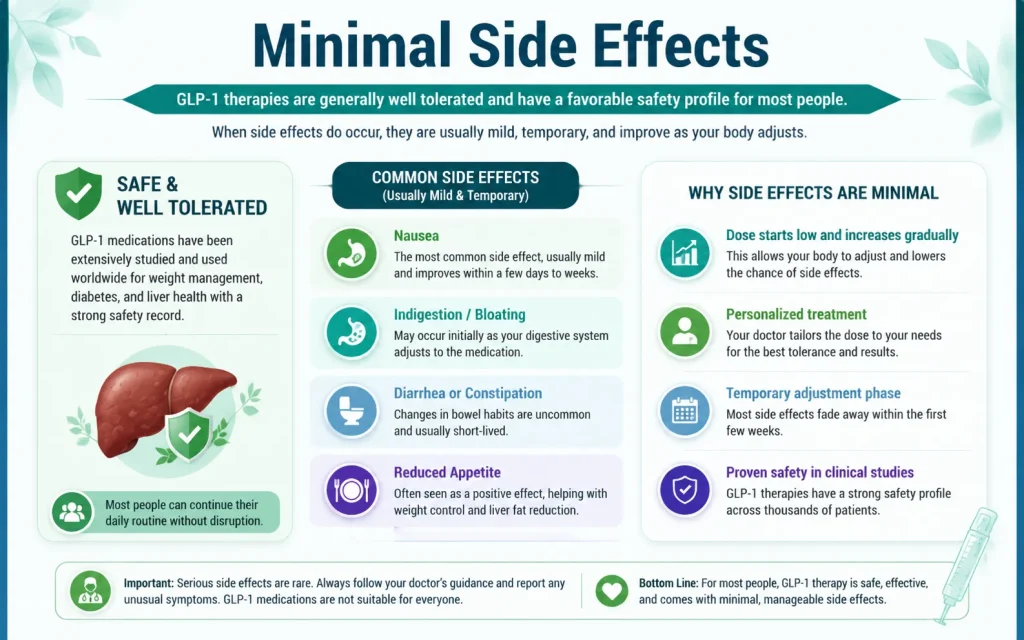
While GLP-1 is generally safe, minor side effects can include:
- Nausea or mild gastrointestinal discomfort
- Injection site reactions
- Rarely, pancreatitis (requires monitoring)
6. Clinical Evidence
Clinical studies increasingly support the use of GLP-1 receptor agonists for fatty liver management. Several trials have shown that patients with non-alcoholic fatty liver disease (NAFLD) or NASH who received GLP-1 therapy experienced significant reductions in liver fat content. Improvements in liver enzymes, such as ALT and AST, were also reported, indicating decreased liver stress and inflammation.
In addition to liver-specific benefits, GLP-1 therapy consistently led to weight loss and better glycemic control, both of which contribute to improved liver health. The LEAN trial, for example, demonstrated that liraglutide improved liver histology in patients with NASH over 48 weeks. Meta-analyses have confirmed these benefits, showing reductions in liver fat and fibrosis markers compared to placebo. Researchers are also exploring newer GLP-1 agonists, such as semaglutide, for their potential to further improve liver outcomes.
While long-term data are still emerging, the evidence so far suggests that GLP-1 can be an effective adjunct to lifestyle interventions. These findings highlight the growing role of GLP-1 therapy in comprehensive fatty liver management.
Several studies support GLP-1 therapy for NAFLD/NASH:
- LEAN Trial (2016): NASH patients on liraglutide showed improved liver histology after 48 weeks.
- Meta-Analysis (2021): GLP-1 RAs significantly reduced ALT and liver fat percentage compared to placebo.
- Ongoing Research: Multiple trials are investigating semaglutide and other GLP-1 agonists specifically for liver health.
7. Conclusion
In summary, GLP-1 receptor agonists show significant promise in supporting fatty liver management. By promoting weight loss, improving insulin sensitivity, and potentially reducing liver inflammation, they address several key factors that contribute to liver fat accumulation. While GLP-1 is not a standalone cure, it serves as a valuable complement to lifestyle interventions such as a balanced diet and regular exercise.
Clinical studies have demonstrated measurable improvements in liver fat, enzyme levels, and metabolic health among patients using GLP-1 therapy. Its generally manageable side effect profile makes it suitable for many individuals under medical supervision. For those struggling to achieve meaningful liver health improvements through lifestyle changes alone, GLP-1 offers a pharmacological boost.
Ongoing research continues to explore its long-term benefits and potential to prevent disease progression. Ultimately, combining GLP-1 therapy with healthy habits provides a comprehensive approach to maintaining liver function and overall wellness. As awareness grows, GLP-1 could play an increasingly important role in the fight against fatty liver disease.
So, does GLP-1 help with fatty liver? The evidence suggests yes. GLP-1 receptor agonists offer a multi-faceted approach to reducing liver fat, improving insulin sensitivity, and supporting weight loss. They are not a standalone cure but can be a powerful complement to lifestyle interventions.
Patients interested in GLP-1 therapy should consult a healthcare professional to assess suitability, potential side effects, and long-term management strategies. By combining medication with a healthy diet, exercise, and routine monitoring, managing fatty liver becomes a more achievable goal.
Frequently Asked Questions (FAQs)
1. Does GLP-1 cure fatty liver?
No, GLP-1 does not cure fatty liver. It helps reduce liver fat and improves metabolic function, which may slow disease progression.
2. How long does it take to see results in the liver?
Clinical studies show improvements in liver fat and enzymes after 12–24 weeks of GLP-1 therapy.
3. Is GLP-1 only for people with diabetes?
No. While originally developed for diabetes, GLP-1 medications are also used for obesity management and metabolic health.
4. Can lifestyle changes replace GLP-1 therapy?
Lifestyle interventions are foundational. GLP-1 therapy complements diet and exercise, especially for those struggling with weight loss.
5. Are there any dietary restrictions with GLP-1?
No strict restrictions, but a balanced diet supports better results. Avoid excessive sugar and unhealthy fats.
6. Does GLP-1 affect liver fibrosis?
Emerging research suggests GLP-1 may reduce liver inflammation, which can indirectly slow fibrosis progression.
7. Can GLP-1 be used long-term?
Yes, many patients use GLP-1 for years under medical supervision, but regular monitoring is recommended.
8. Is GLP-1 therapy expensive?
GLP-1 medications can be costly, though insurance coverage varies depending on the indication.