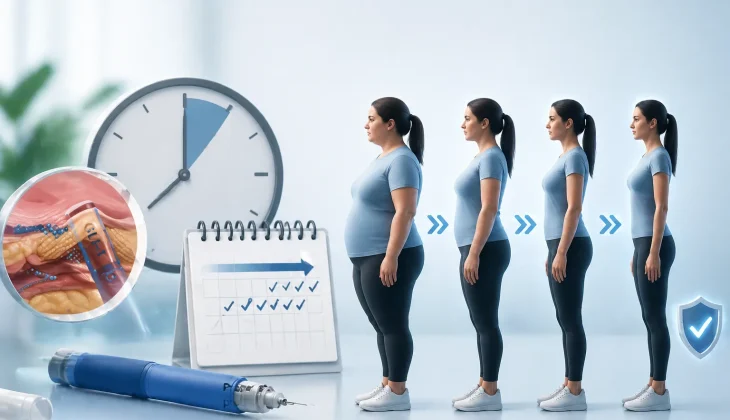
GLP-1 (Glucagon-Like Peptide-1) receptor agonists are widely used for managing type 2 diabetes and supporting weight loss. These medications work by mimicking the natural GLP-1 hormone in the body, improving insulin secretion, slowing gastric emptying, and promoting feelings of fullness.
While GLP-1 medications like semaglutide, liraglutide, dulaglutide, and tirzepatide are highly effective, many patients wonder: how long does it take for GLP-1 to kick in? Understanding the onset of action, expected timelines, and factors affecting results is crucial for realistic expectations and optimal outcomes.
GLP-1 medications do not produce immediate visible effects, but their action begins shortly after the first dose. Patients often notice the initial kick in of the medication within hours to a few days as it starts influencing insulin response, appetite, and digestion, gradually impacting blood sugar and weight management.
Most patients notice subtle changes in appetite or post-meal blood sugar within the first few days, which indicates the GLP-1 kick-in is beginning. However, more significant improvements, such as consistent glucose control and weight loss, typically develop over several weeks. The speed and magnitude of results can vary depending on the specific medication, dosage, lifestyle, and individual metabolism.
Tracking progress and being consistent with doses helps patients understand when GLP-1 kicks in and how effectively the therapy is working. By combining GLP-1 treatment with healthy eating and regular activity, patients can achieve the best results safely and effectively.
1. What Is GLP-1 and How Does It Work?
GLP-1 is a hormone naturally secreted by the intestines in response to food intake. GLP-1 receptor agonist medications are designed to mimic this hormone and help regulate blood sugar levels and appetite. Key mechanisms include:
- Stimulating insulin secretion: Helps reduce blood glucose after meals.
- Slowing gastric emptying: Increases satiety and reduces calorie intake.
- Suppressing glucagon release: Reduces glucose production by the liver.
- Promoting weight loss: Through appetite control and delayed stomach emptying.
These mechanisms explain why patients experience both improved blood sugar control and gradual weight reduction. However, the time it takes for these effects to kick in can vary depending on the individual and the specific GLP-1 medication used.
GLP-1, or Glucagon-Like Peptide-1, is a naturally occurring hormone that helps regulate blood sugar and appetite. GLP-1 receptor agonist medications are designed to mimic this hormone, enhancing insulin secretion when blood sugar is high and slowing the release of glucose from the liver. They also delay gastric emptying, which promotes feelings of fullness and helps with weight management.
By targeting multiple pathways, GLP-1 medications support both blood sugar control and appetite regulation. Popular GLP-1 drugs include semaglutide, liraglutide, dulaglutide, and tirzepatide. These medications are typically injectable and require proper storage to maintain effectiveness. Understanding how GLP-1 works helps patients manage expectations and optimize their therapy outcomes.
2. Timeline for GLP-1 Kick In
The timeline for GLP-1 medications to kick in can vary depending on the specific drug, dosage, and individual factors. Typically, patients may notice subtle changes in appetite and post-meal blood sugar within the first few hours to days.
Over the next 1–4 weeks, these effects become more consistent, with gradual improvements in glucose control and a noticeable reduction in hunger. By 4–8 weeks, many patients start to see moderate weight loss and improved energy levels. Full benefits, including optimal blood sugar stabilization and significant weight management, often occur between 8–12 weeks of consistent use.
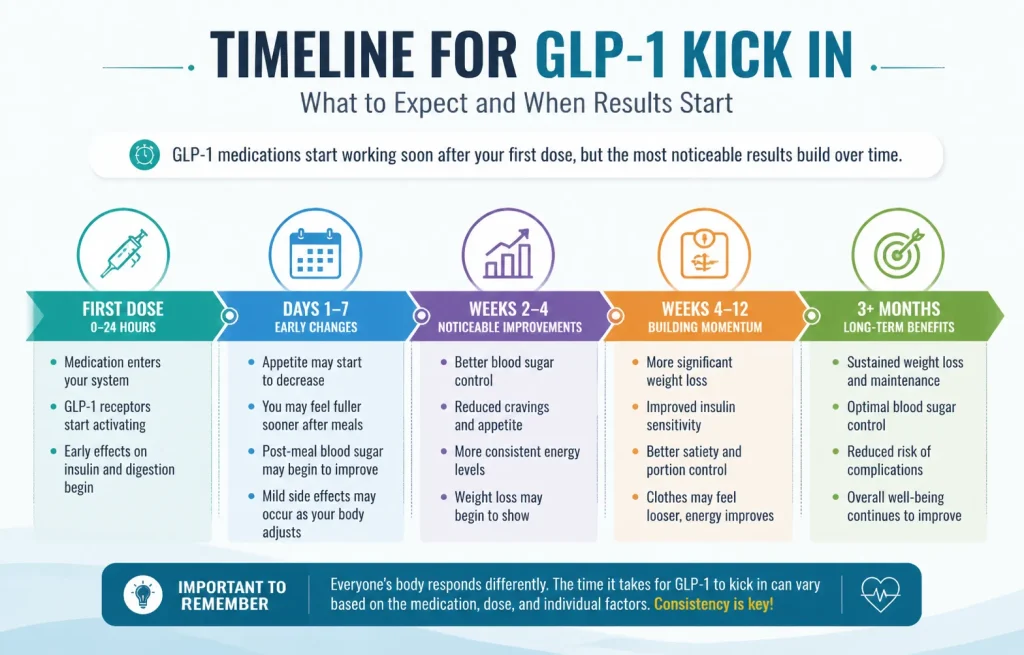
Individual response can differ based on metabolism, lifestyle, and adherence. Tracking progress during this period helps patients understand how the medication is working. Patience and consistency are key to achieving the best results with GLP-1 therapy.
The onset of GLP-1 effects can be categorized into short-term (hours to days) and long-term (weeks to months) effects.
Short-Term Effects (Hours to Days)
- After the first injection, GLP-1 medications begin acting in the digestive system within hours.
- Patients may notice a slight reduction in appetite and less frequent hunger cues.
- Blood sugar response after meals can improve slightly within the first few days.
Medium-Term Effects (1–4 Weeks)
- Regular use leads to more consistent blood sugar control.
- Appetite suppression becomes noticeable, and some patients experience modest weight loss.
- GI side effects like nausea or mild bloating may occur during this period, but typically resolve as the body adjusts.
Long-Term Effects (4–12 Weeks)
- Optimal blood sugar reduction and significant weight management are usually observed after 8–12 weeks of consistent use.
- Patients often report improved energy levels, reduced sugar cravings, and better satiety.
⚠️ Note: Individual response varies due to genetics, diet, activity level, and adherence to medication schedules.
3. Expected Timeline of GLP-1 Effects
Understanding the expected timeline of GLP-1 effects helps set realistic expectations for patients. While some results, like reduced appetite, can appear quickly as the medication begins to kick in, most benefits take several weeks to develop.
Blood sugar improvements often show up first, indicating the initial GLP-1 kicks in, followed by gradual weight loss and better satiety. The timeline can vary depending on the specific medication, dose, and individual factors such as metabolism and lifestyle.
Monitoring progress during these weeks allows patients to see when GLP-1 kicks in and observe subtle changes, which helps them stay motivated. Patience and consistency are key to achieving the full benefits of GLP-1 therapy.
Here is a Table to understand:
| Time Period | Expected Effects | Notes |
| Hours–1 Day | Initial appetite suppression, slight blood sugar improvement | Mild effects; body begins to respond |
| 1–4 Weeks | More consistent blood sugar control, noticeable reduction in appetite | GI adjustment may occur (nausea, bloating) |
| 4–8 Weeks | Moderate weight loss, improved post-meal glucose levels | Continued adherence needed for optimal results |
| 8–12 Weeks | Significant blood sugar improvement, weight management, increased satiety | Peak benefits for most patients |
4. Factors Affecting GLP-1 Kick In
Several factors can influence how quickly GLP-1 medications begin to show results. The specific type of GLP-1 drug and its formulation play a major role, as some act faster than others. Dosage and gradual titration affect both effectiveness and the speed of onset. Individual metabolism, age, and overall health can also impact how the body responds.
Lifestyle choices, including diet quality and physical activity, significantly affect results. Consistency in taking the medication as prescribed ensures the body has enough exposure to produce noticeable effects. Tracking progress and adjusting habits accordingly can help optimize outcomes and achieve the best results from GLP-1 therapy.
Several variables influence how quickly GLP-1 medications show results:
- Type of Medication:
- Semaglutide (Ozempic®) often shows noticeable effects after 4 weeks.
- Liraglutide (Victoza®) may take 6–8 weeks for full benefits.
- Dulaglutide (Trulicity®) generally provides results within 4–6 weeks.
- Tirzepatide (Mounjaro®) shows gradual effects, typically evident by week 6.
- Dosage and Titration:
- Many GLP-1 medications start at a lower dose to minimize side effects.
- Dose escalation over weeks improves both safety and effectiveness.
- Diet and Lifestyle:
- Following a healthy diet and regular exercise accelerates weight loss and glucose improvements.
- Individual Metabolism:
- Age, genetics, and baseline metabolic rate affect the speed and magnitude of response.
- Consistency:
- Daily or weekly adherence as prescribed is critical for timely results.
5. Tips to Maximize GLP-1 Effectiveness
To get the most benefit from GLP-1 medications, it’s important to follow some practical strategies. Taking the medication consistently as prescribed ensures steady results and helps the GLP-1 kick in effectively while minimizing side effects.
Pairing treatment with a balanced diet and regular exercise can accelerate weight loss and enhance blood sugar control, supporting how quickly the medication kicks in. Monitoring blood sugar regularly allows for timely adjustments and better overall management. Gradually increasing the dose, if recommended by a healthcare provider, can improve effectiveness and help the GLP-1 kick in smoothly while reducing gastrointestinal discomfort.
Staying patient and tracking progress helps maintain motivation, as noticeable results may take several weeks. Combining these habits creates the ideal environment for GLP-1 medications to work safely and produce optimal kick-in effects.
- Take medications as prescribed: Skipping doses delays effects.
- Combine with diet: Focus on balanced meals, low in refined sugars.
- Exercise regularly: Physical activity enhances insulin sensitivity and weight loss.
- Monitor blood sugar: Track improvements and consult your doctor for dose adjustments.
- Stay patient: Effects build gradually; initial changes may be subtle.
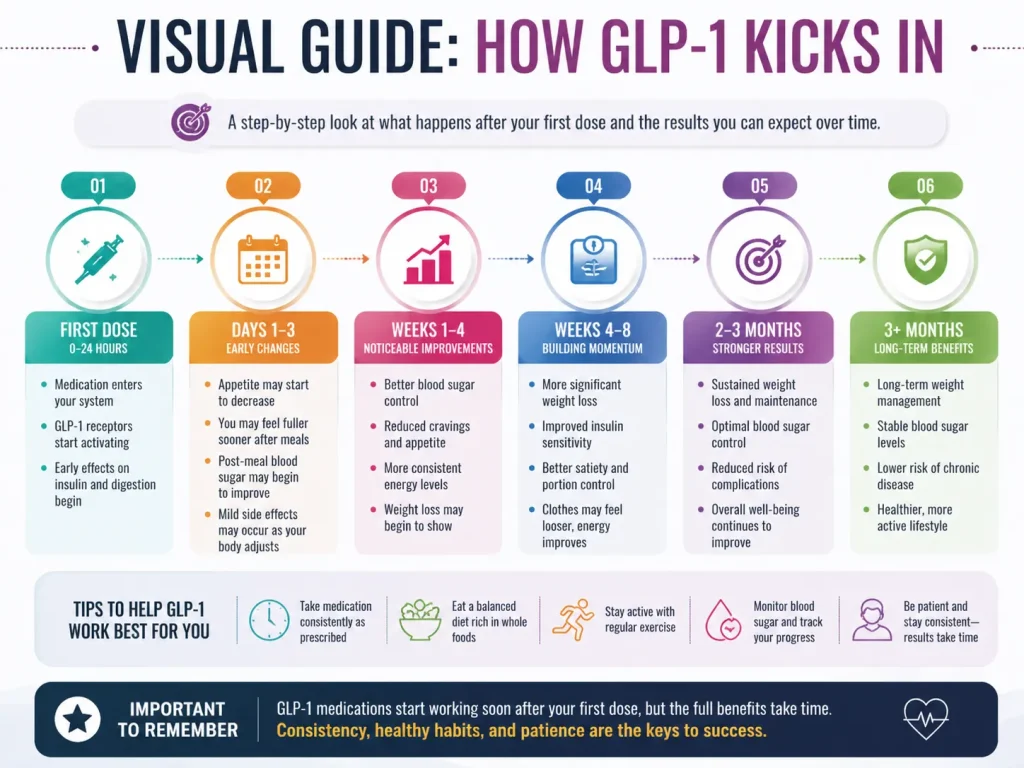
6. Visual Guide: How GLP-1 Kicks In
A visual guide can help patients understand the progression of GLP-1 medication effects over time. After the first dose, initial changes like reduced appetite and minor improvements in post-meal blood sugar can be observed.
Over the following weeks, consistent use leads to more stable blood glucose levels and noticeable appetite suppression. Weight management benefits often become evident around 4–8 weeks. Using charts, timelines, or infographics can clearly illustrate these stages, making it easier for patients to track their progress.
Visual cues also highlight safe storage, correct injection techniques, and dose schedules. This approach enhances understanding, supports adherence, and motivates patients to maintain consistent therapy.
A professional infographic can show:
- GLP-1 injection pen.
- Timeline from first dose to noticeable effects.
- Blood sugar stabilization and appetite reduction.
- Gradual weight change over weeks.
- Safe medication use symbols.
This helps patients understand the process visually and manage expectations effectively.
Frequently Asked Questions (FAQs)
1. How soon does GLP-1 start lowering blood sugar?
Initial effects can appear within hours to a few days, though significant changes may take several weeks.
2. When will I notice weight loss?
Most patients begin to see moderate weight loss after 4–8 weeks of consistent use.
3. How soon does GLP-1 kick in after the first injection?
The initial effects of GLP-1, or the first “kick in,” can often be noticed within hours to a few days. Appetite suppression and minor blood sugar improvements are usually the first signs. Full benefits, including consistent glucose control and weight management, typically appear over several weeks.
4. Can lifestyle changes affect how fast GLP-1 kicks in?
Yes, adopting healthy eating habits and regular physical activity can enhance how quickly GLP-1 kick in. While the medication starts working on its own, combining it with diet and exercise can accelerate results and improve overall effectiveness.
5. Do I need lifestyle changes to see results?
Yes, combining GLP-1 therapy with a balanced diet and regular exercise improves both speed and effectiveness.
6. Can side effects affect the medication’s kick in?
Mild side effects such as nausea or bloating are common during the initial weeks and do not indicate inefficacy.
7. Is dose adjustment important?
Gradual titration of the dose helps minimize side effects and ensures optimal effectiveness.
8. Can GLP-1 be combined with other medications?
Generally, yes, but you should consult your healthcare provider to avoid interactions.
9. Will skipping doses delay results?
Yes, missing doses can slow the onset of effects and reduce overall effectiveness.
10. How long should I continue GLP-1 therapy?
Long-term use is usually safe and effective, but duration should be guided by your healthcare provider.
Key Takeaways
- GLP-1 medications begin working within hours for appetite suppression but require weeks for full effects.
- Blood sugar control often improves before noticeable weight loss.
- Individual factors, dose, lifestyle, and adherence influence the speed of action.
- Patience, proper use, and healthy habits maximize medication benefits.
- Visual timelines and infographics can help patients track and understand progress.
Conclusion
Understanding how long GLP-1 takes to kick in helps patients set realistic expectations and stay motivated. While initial appetite suppression may appear quickly, significant weight loss and blood sugar control typically occur over 4–12 weeks.
By combining consistent medication use with lifestyle changes, monitoring progress, and following professional guidance, patients can achieve optimal results. GLP-1 therapy is a powerful tool when used correctly, providing effective, safe, and reliable support for diabetes management and weight loss goals.
Understanding the timeline for GLP-1 to kick in helps set realistic expectations and keeps patients motivated. While initial effects like appetite suppression may appear quickly, significant benefits for blood sugar control and weight loss take several weeks.
Consistent use, combined with healthy lifestyle habits, maximizes effectiveness. Being patient and tracking progress ensures safe, reliable, and lasting results from GLP-1 therapy.
Remember: patience, adherence, and lifestyle integration are key to seeing GLP-1’s full benefits.