
Weight management is a common challenge, and recent advances in medical science have introduced GLP1 (Glucagon-Like Peptide-1) as a promising solution. GLP-1 medications have become increasingly popular for weight loss due to their ability to regulate appetite, improve metabolism, and support sustainable results. This article covers everything you need to know about GLP-1, including how long it stays in your system, its benefits, and tips for safe and effective use.
1. What is GLP-1?
GLP-1, or Glucagon-Like Peptide-1, is a naturally occurring hormone in the body. It plays a critical role in regulating blood sugar and appetite. In recent years, synthetic GLP-1 receptor agonists have been developed as medications to help with:
- Weight management
- Appetite suppression
- Blood sugar control in type 2 diabetes
How GLP-1 Works for Weight Loss
GLP-1, or Glucagon-Like Peptide-1, works for weight loss by mimicking a naturally occurring hormone in the body that regulates appetite and blood sugar. It slows down stomach emptying, which helps you feel full for longer periods, reducing overall calorie intake.
Additionally, GLP1 signals the brain to suppress hunger, making it easier to resist cravings and stick to a healthy eating plan. It also improves insulin sensitivity and stabilizes blood sugar levels, which prevents sudden spikes and crashes that often lead to overeating. By targeting both appetite and metabolic function, GLP1 provides a comprehensive approach to achieving sustainable weight loss when combined with proper diet and lifestyle changes.
GLP-1 medications mimic the natural hormone’s effects, which include:
- Slowing down stomach emptying – Helps you feel full for longer periods.
- Reducing appetite – Decreases hunger and cravings.
- Regulating blood sugar – Promotes stable blood sugar levels, reducing sugar-related weight gain.
2. How Long Does GLP-1 Stay in Your System?
The duration of GLP-1 in your system depends on the type of medication used. Common GLP1 receptor agonists include semaglutide (Ozempic, Wegovy) and liraglutide (Saxenda).
Duration Based on Medication
- Semaglutide (Ozempic/Wegovy):
- Half-life: ~7 days
- Stays in system: up to 4–5 weeks after last dose
- Liraglutide (Saxenda):
- Half-life: ~13 hours
- Stays in system: ~2 days after last dose
Common GLP1 receptor agonists, such as semaglutide (brand names Ozempic and Wegovy) and liraglutide (Saxenda), differ in their half-lives and elimination times. Semaglutide has a long half-life of approximately seven days, meaning it can remain active in the body for several weeks after the last dose, typically around 4–5 weeks.
Liraglutide, on the other hand, has a shorter half-life of about 13 hours, so it is usually cleared from the system within 1–2 days. Understanding these timelines is important for managing dosage schedules, planning treatment cycles, and anticipating how the medication interacts with your metabolism and weight loss efforts.
Tip: “Half-life” refers to the time it takes for the medication’s concentration to reduce by half. Full elimination usually takes about 5 half-lives.
3. Benefits of GLP-1 for Weight
GLP-1 offers multiple benefits for individuals seeking weight loss, making it a powerful tool when combined with a healthy lifestyle. It helps control appetite by reducing hunger signals to the brain, which makes it easier to stick to a calorie-controlled diet.
By slowing stomach emptying, GLP1 increases satiety, allowing you to feel full for longer periods and naturally consume fewer calories. It also improves blood sugar regulation and insulin sensitivity, supporting metabolism and preventing excess fat storage. Beyond weight loss, GLP-1 may contribute to cardiovascular health by lowering blood pressure and improving cholesterol levels.
Clinical studies have shown that GLP1 therapy can help patients achieve sustainable weight loss, often in the range of 10–20% of body weight, making it an effective solution for long-term health and wellness.
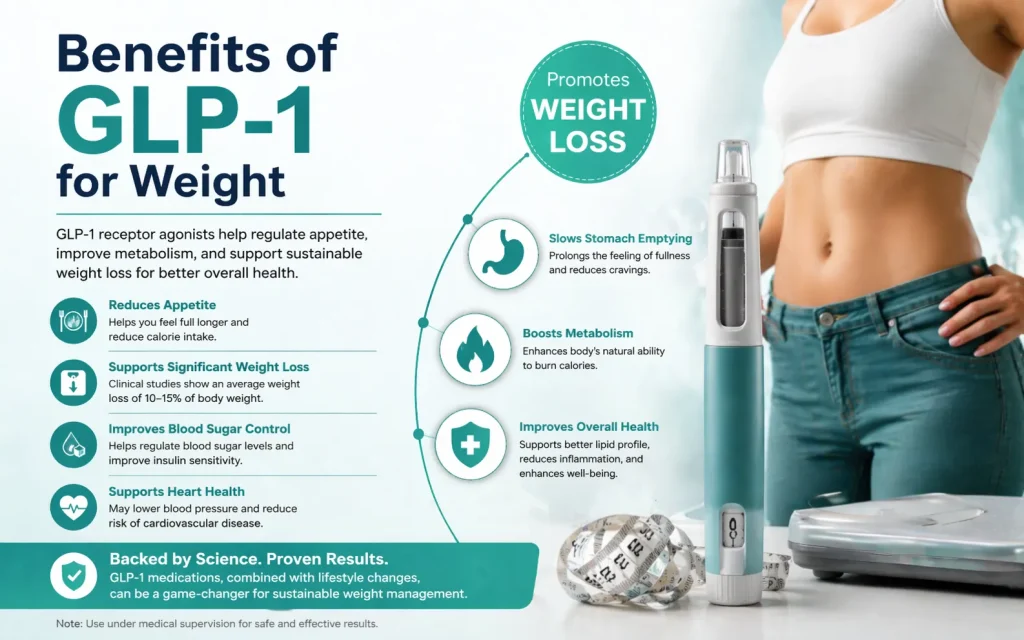
GLP-1 medications are effective due to multiple mechanisms that promote fat loss and overall health. Benefits include:
3.1 Appetite Control
GLP-1 reduces hunger signals in the brain, making it easier to stick to a healthy eating plan.
3.2 Improved Metabolism
By regulating blood sugar and insulin sensitivity, GLP1 supports fat breakdown and prevents fat storage.
3.3 Sustainable Weight Loss
Studies show that GLP-1 can help patients lose 10–20% of body weight over 6–12 months when combined with diet and exercise.
3.4 Cardiovascular Health
GLP1 medications may reduce blood pressure, cholesterol, and inflammation, contributing to overall heart health.
3.5 Diabetes Management
For individuals with type 2 diabetes, GLP-1 helps control blood sugar, reducing the risk of diabetes-related complications.
4. How to Maximize GLP-1 Effectiveness
To maximize the effectiveness of GLP-1 therapy, it is essential to combine the medication with healthy lifestyle habits. Maintaining a balanced diet rich in lean proteins, whole grains, and vegetables while minimizing processed foods and sugary drinks enhances the appetite-suppressing effects of GLP1. Regular physical activity, including both aerobic exercises and strength training, supports metabolism and promotes fat loss. Staying well-hydrated helps regulate hunger and improves overall metabolic function. Additionally, following the prescribed dosage and schedule recommended by your healthcare provider ensures optimal results while minimizing side effects.
By integrating these strategies, patients can achieve more consistent and sustainable weight loss outcomes alongside GLP1 therapy.
4.1 Maintain a Balanced Diet
- Focus on lean proteins, whole grains, and vegetables
- Limit processed foods and sugary drinks
- Eat small, frequent meals to reduce hunger
4.2 Regular Physical Activity
- Engage in 150 minutes of moderate exercise per week
- Include strength training for muscle maintenance
4.3 Stay Hydrated
- Drink at least 2–3 liters of water daily
- Helps with appetite control and metabolism
4.4 Follow Prescribed Dosage
- Never increase the dose without consulting your healthcare provider
- Adherence ensures optimal results and reduces side effects
5. Possible Side Effects of GLP-1
Although generally safe, GLP1 medications may cause mild to moderate side effects:
- Nausea or vomiting
- Diarrhea or constipation
- Headaches
- Rarely, pancreatitis
While GLP-1 medications are generally well-tolerated, they can cause some side effects, especially during the initial stages of treatment.
Common side effects include nausea, vomiting, diarrhea, and constipation, which often subside as the body adjusts to the medication. Some patients may experience headaches or mild dizziness. Although rare, more serious side effects such as pancreatitis or gallbladder issues can occur, making it essential to monitor symptoms and consult a healthcare provider if any concerning signs appear.
Gradually increasing the dosage and taking the medication with food can help minimize discomfort and improve overall tolerance.
Pro Tip: Gradual dose escalation and taking medications with food can minimize side effects.
6. Who Can Use GLP-1 for Weight Loss?
GLP-1 therapy is suitable for:
- Adults with a BMI ≥30 (obese)
- Adults with BMI ≥27 with weight-related health issues such as diabetes, hypertension, or high cholesterol
Always consult a healthcare professional before starting GLP1 therapy to ensure safety and effectiveness.
This therapy is primarily recommended for adults who are struggling with obesity or weight-related health conditions. It is generally suitable for individuals with a body mass index (BMI) of 30 or higher, as well as those with a BMI of 27 or higher who also have comorbidities such as type 2 diabetes, high blood pressure, or high cholesterol.
GLP-1 can be an effective tool for people who have not achieved sufficient weight loss through diet and exercise alone. However, it is crucial to consult a healthcare professional before starting GLP1 therapy to ensure it is safe, appropriate, and tailored to an individual’s medical history and lifestyle.
7. Lifestyle Tips Alongside GLP-1
GLP-1 works best when combined with a healthy lifestyle:
- Sleep well: 7–8 hours per night to support metabolism
- Manage stress: Stress increases cortisol, which can hinder weight loss
- Track progress: Monitor weight, measurements, and habits regularly
For optimal results with GLP-1 therapy, integrating healthy lifestyle habits is essential. Adequate sleep of 7–8 hours per night helps regulate hormones that control appetite and metabolism.
Managing stress through techniques such as meditation, deep breathing, or light exercise can prevent stress-related weight gain by keeping cortisol levels in check. Regular physical activity, including both cardiovascular exercises and strength training, supports fat loss and muscle maintenance.
Additionally, tracking your progress through weight, measurements, or food journals can help you stay accountable and make informed adjustments to your diet and exercise routine. Combining these lifestyle strategies with GLP1 therapy enhances its effectiveness and supports long-term, sustainable weight management.

8. Frequently Asked Questions (FAQs)
Q1: Can I stop GLP-1 once I reach my target weight?
Some patients may regain weight if therapy stops abruptly. Maintenance with diet and exercise is crucial.
Q2: Is GLP1 addictive?
No, GLP-1 is not addictive but helps regulate appetite naturally.
Q3: How fast will I see results?
Many see weight loss within 4–8 weeks, but significant results usually appear after 3–6 months.
Q4: Can GLP-1 replace diet and exercise?
No, GLP-1 enhances weight loss efforts but is most effective when combined with lifestyle changes.
Q5: Can GLP-1 help with long-term weight maintenance?
Yes, GLP-1 can support long-term weight maintenance when combined with a healthy diet and regular exercise. Patients who continue therapy while following lifestyle habits are more likely to sustain their weight loss over months and years.
Q6: Are there any dietary restrictions while using GLP-1?
There are no strict restrictions, but it is recommended to eat a balanced diet with lean proteins, whole grains, fruits, and vegetables. Avoiding excessive sugary or processed foods can enhance the medication’s appetite-suppressing effects.
Q7: Can GLP-1 be used alongside other weight loss medications?
Combining GLP-1 with other medications should only be done under the guidance of a healthcare professional, as interactions or overlapping effects could increase side effects or complications.
Q8: Is GLP-1 therapy safe for people without diabetes?
Yes, GLP-1 therapy has been approved for weight management in non-diabetic adults with obesity or overweight-related conditions, but a doctor’s assessment is necessary to ensure safety and suitability.
9. Key Takeaways
- GLP-1 is a revolutionary tool for safe and effective weight loss
- Duration in the system depends on the type of medication
- Benefits include appetite control, metabolism improvement, and heart health
- Maximum results are achieved when combined with a healthy lifestyle
- Always consult a healthcare professional before starting therapy
Conclusion:
GLP-1 medications offer a scientifically backed and clinically proven method for effective weight management, particularly for individuals struggling with obesity or weight-related health conditions.
By targeting both appetite regulation and metabolic function, GLP1 helps reduce hunger, increase satiety, and stabilize blood sugar levels, making it easier to achieve and maintain a calorie deficit without feeling deprived. When combined with consistent lifestyle changes—such as a balanced diet, regular physical activity, stress management, and adequate sleep—GLP-1 therapy can significantly enhance weight loss results and support long-term health goals.
Clinical studies have demonstrated that patients using GLP-1 can achieve a sustainable weight reduction of 10–20% of body weight over several months, with additional benefits including improved cardiovascular markers, reduced risk of type 2 diabetes complications, and better overall metabolic health.
It is important to note that GLP-1 is not a standalone solution; its effectiveness is maximized when used as part of a comprehensive weight management program under medical supervision. By adhering to prescribed dosages, monitoring progress, and maintaining healthy habits, individuals can leverage GLP-1 therapy to overcome weight loss plateaus, enhance energy levels, and support long-term wellness.
Ultimately, GLP-1 provides a powerful, science-backed tool that, when used responsibly, can transform weight management strategies and improve quality of life for those committed to sustainable health changes.