
In the world of modern diabetes care and weight management, two terms have become increasingly common: GLP1 and Ozempic. Many people ask, “Is GLP1 the same as Ozempic?” The short answer is no, but they are closely related.
Understanding this relationship fully can help you make better health decisions and avoid confusion when researching treatments. In this extensive guide, we’ll break down what each term means, how they work, their similarities and differences, scientific evidence, benefits, risks, and more.
What Is GLP1? A Complete Explanation
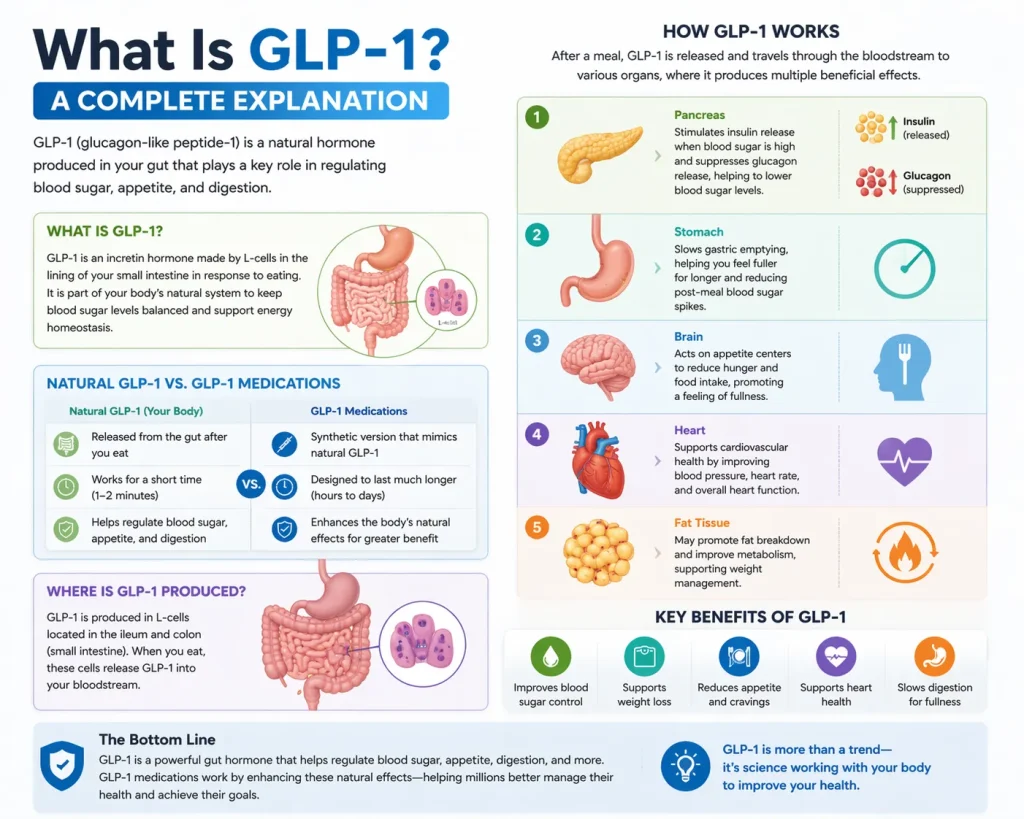
GLP1 (Glucagon-Like Peptide 1) is a naturally occurring hormone produced in the small intestine. When you eat food, especially carbohydrates and protein, special cells in your gut release GLP1 into the bloodstream. Its main job is to help regulate blood sugar levels, appetite, and digestion.
Several critical roles of GLP1 include:
- Stimulating insulin release: It signals the pancreas to release insulin when blood sugar rises after eating.
- Suppressing glucagon: Glucagon is a hormone that increases blood sugar by instructing the liver to release stored glucose. GLP1 helps suppress this.
- Slowing gastric emptying: This means food releases into the intestines more slowly, helping you feel full longer.
- Signaling satiety to the brain: GLP1 communicates with receptors in the brain’s appetite centers to reduce hunger.
When natural GLP1 is working well, it helps maintain a healthy balance of blood sugar and supports proper appetite regulation. However, in many people with type 2 diabetes or obesity, GLP1 activity may not be sufficient, which has led to the development of medications that mimic its effects.
What Is Ozempic? The Medication Explained
Ozempic is the brand name for the drug semaglutide, a synthetic GLP1 receptor agonist. Unlike the hormone your body makes naturally, Ozempic is a medication developed in a laboratory specifically to help people manage type 2 diabetes and sometimes support weight loss under medical supervision.
Ozempic is a prescription medication primarily used to manage type 2 diabetes. Its active ingredient, semaglutide, is a glucagon-like peptide-1 (GLP-1) receptor agonist, which helps regulate blood sugar by stimulating insulin production when glucose levels are high and reducing the amount of sugar produced by the liver.
Ozempic is administered as a once-weekly injection and is also associated with weight loss, which has made it popular in treating obesity alongside diabetes management. Patients taking Ozempic should follow their healthcare provider’s guidance, as it can have side effects such as nausea, vomiting, or, in rare cases, more serious complications like pancreatitis.
How Ozempic Works in the Body?
Ozempic mimics the effects of natural GLP1 by binding to the same receptors in the pancreas, brain, and digestive system. Because semaglutide is modified to resist breakdown, it stays active in the body much longer — typically about one week per dose — compared to natural GLP1, which is quickly broken down in minutes.
By activating GLP1 receptors consistently, Ozempic results in:
- Increased insulin production when blood sugar is elevated.
- Reduced glucagon release.
- Slowed digestion and gastric emptying.
- Lowered appetite and reduced cravings.
These mechanisms help people control their blood sugar and can contribute to weight loss over time.
GLP1 vs Ozempic: Core Differences
To clearly understand the relationship:
| Long-acting, weeks | GLP1 | Ozempic (Semaglutide) |
| Origin | Natural hormone | Synthetic medication |
| Production | Made by your gut | Manufactured by pharmaceutical company |
| Duration | Very short, minutes | Longacting, weeks |
| Medical Use | None as direct therapy | Prescription for diabetes/weight management |
| Regulatory Status | Not a drug | FDAapproved medication |
| Target | Hormonal regulation | Blood sugar & appetite control |
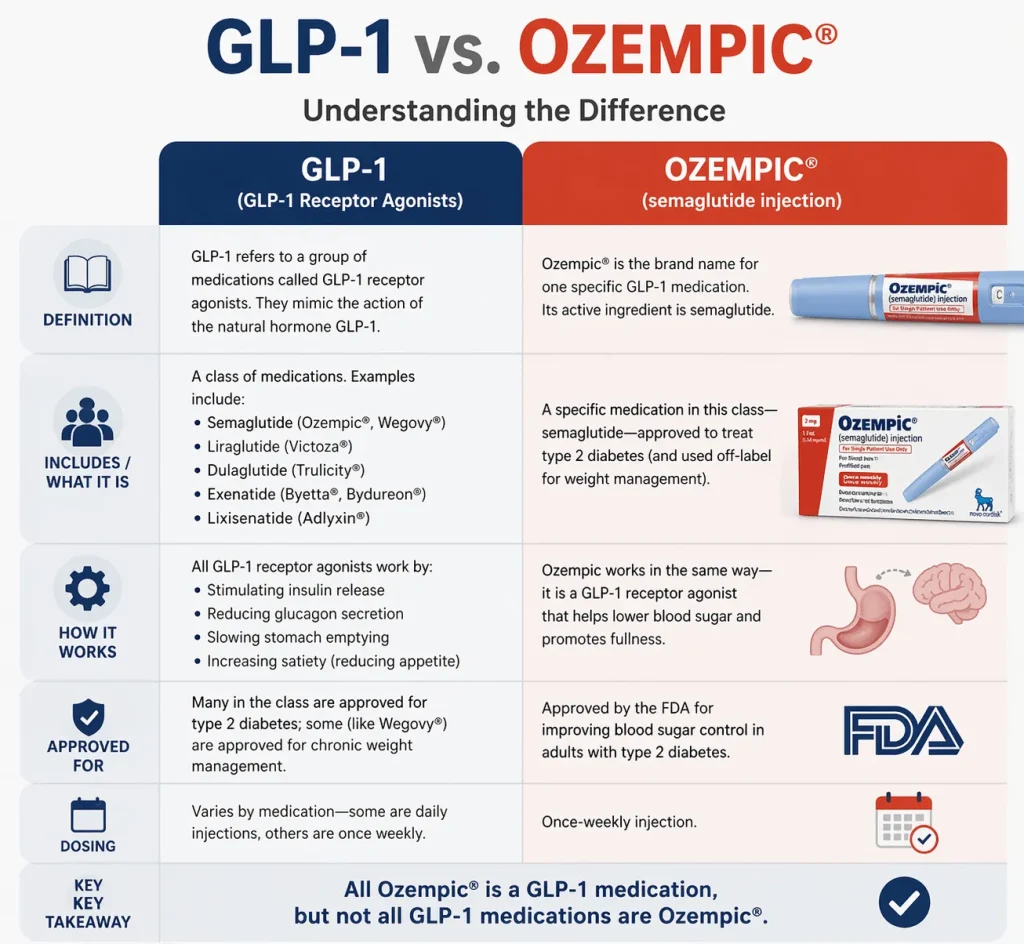
The most important point: Ozempic is not GLP1 — it is a drug that mimics GLP1’s actions and extends them over a much longer period.
Why the Confusion Between GLP1 and Ozempic Happens?
There are several reasons people assume GLP1 and Ozempic are the same:
1. Shared Mechanism Topic in Media
Many news outlets and blogs refer to “GLP1 drugs like Ozempic,” which can make readers think the terms are interchangeable. This is a common reporting shorthand, but it risks oversimplifying the science.
2. Doctor Shorthand
Healthcare providers sometimes say “we’ll start you on a GLP1,” meaning a GLP1 receptor agonist medication — which could be Ozempic, Wegovy, or another drug in the same class.
3. Social Conversations
On social media and forums, people often talk about “GLP1 meds” with Ozempic as the most famous example. Over time, this naming habit has reinforced the idea that they are the same, even though GLP1 refers to the natural hormone or entire drug class, while Ozempic refers to one specific product.
How GLP1 Medications (like Ozempic) Work: The Science?
Understanding how these medications affect the body helps clarify their purpose.
1. GLP1 Receptors in the Body
There are GLP1 receptors in multiple parts of the body:
- Pancreas: Improves insulin release.
- Brain: Reduces hunger and cravings.
- Gut: Slows digestion and increases satiety signals.
Through this broader network of actions, GLP1 receptor agonists help regulate energy balance and glucose metabolism more effectively than natural GLP1 alone.
2. Continuous Activation vs. Natural Fluctuations
Natural GLP1 spikes after a meal and then fades quickly. Ozempic, due to its design, provides a steady, continuous signal — this is a key reason it’s effective for chronic conditions like diabetes or weight management. “Continuous activation vs. natural fluctuations” usually refers to how certain systems—biological or otherwise—operate.
In a natural system, like the human body, processes often fluctuate in response to feedback, signals, or environmental changes. For example, insulin secretion naturally rises and falls depending on blood sugar levels. This is a natural fluctuation: the system adapts dynamically to need.
In contrast, continuous activation occurs when a system is persistently stimulated, regardless of moment-to-moment demand. Using the insulin example, a drug like Ozempic can create a more sustained effect on insulin secretion, reducing peaks and troughs compared with the body’s natural rhythms. While this can stabilize outcomes (like blood sugar), it can also bypass some normal regulatory signals, which may lead to side effects or altered long-term responsiveness.
Clinical Evidence: What Research Says
Scientific studies show that GLP1 receptor agonists are effective for various therapeutic goals:
1. Blood Sugar Control
Clinical trials demonstrate that semaglutide (Ozempic) significantly reduces HbA1c — a long-term measure of blood glucose — compared with placebo or other therapies, making it a standard option for type 2 diabetes.
2. Weight Loss Benefits
At higher doses (e.g., in a similar drug formulation called Wegovy), semaglutide has been shown to help patients lose 10–15% of body weight over time. This level of weight loss can have significant health benefits.
3. Extended Effects Beyond Weight
Some research notes additional benefits such as improved heart health and reduced inflammation — effects that continue to be studied.
Benefits of GLP1 Based Medications
People prescribed GLP1 receptor agonists commonly experience the following:
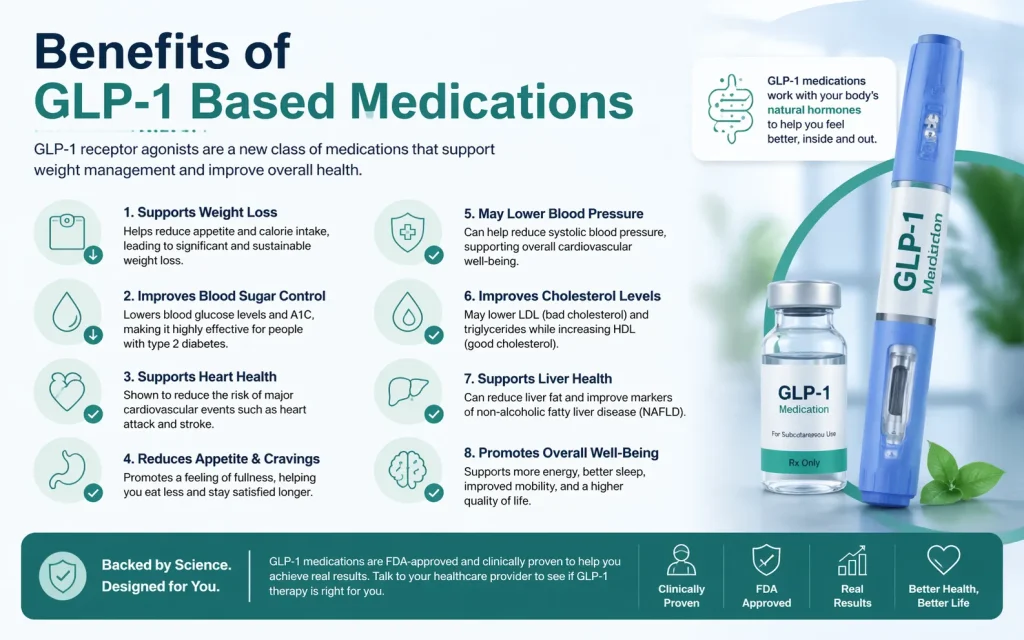
These drugs help bring glucose levels into a healthier range with a lower risk of dangerously low blood sugar compared to traditional insulin. By slowing stomach emptying and modifying appetite signals, many patients feel less hungry or less driven to snack. Although not FDA-approved in all doses for weight loss, many clinicians use medications like Ozempic off-label for this purpose.
Some evidence suggests improvements in heart-related risks among patients with type 2 diabetes treated with semaglutide. GLP-1–based medications, like Ozempic, offer several important benefits, especially for people with type 2 diabetes and obesity. They help lower blood sugar effectively by enhancing insulin release only when glucose levels are high and reducing glucose production by the liver.
They also promote weight loss by slowing stomach emptying and reducing appetite, which can improve metabolic health. Additionally, these medications have been shown to protect cardiovascular health, reducing the risk of heart-related complications in patients with diabetes.
Overall, GLP-1 therapies provide a targeted, multifaceted approach to managing blood sugar, supporting weight management, and improving overall metabolic outcomes.
Side Effects and Safety Considerations
Like all medications, Ozempic and related drugs come with potential side effects. Most commonly:
- Nausea
- Vomiting
- Diarrhea or constipation
- Abdominal discomfort
These are usually temporary and lessen as the body adjusts. Less common but serious concerns include pancreatitis, though such risks are rare and require immediate medical attention. GLP-1–based medications, including Ozempic, are generally well-tolerated, but they can cause side effects that patients should be aware of.
The most common include nausea, vomiting, diarrhea, and constipation, which often improve over time as the body adjusts. Some people may experience loss of appetite or mild stomach discomfort. Rare but more serious risks include pancreatitis, gallbladder problems, kidney issues, or severe allergic reactions.
Because GLP-1 drugs affect blood sugar regulation, patients taking other diabetes medications may need dose adjustments to avoid hypoglycemia (low blood sugar). Safety also involves regular monitoring, especially for people with a history of thyroid cancer, pancreatitis, or kidney disease.
Following a healthcare provider’s guidance on dosing and lifestyle habits is essential to maximize benefits while minimizing risks.
Other GLP1 Medications You Should Know
Ozempic is not the only medication in this class. Other examples include:
- Wegovy: Same active ingredient (semaglutide) but approved specifically for weight loss.
- Victoza: Another GLP1 medication for diabetes with a longer history.
- Rybelsus: Oral semaglutide (pill form).
Each has unique dosing and approved uses, but all work through GLP1 receptor activation. Besides Ozempic, there are several other GLP-1–based medications that are commonly used for managing type 2 diabetes and, in some cases, obesity:
- Victoza (liraglutide) – A daily injection that helps control blood sugar and supports weight loss, also shown to reduce cardiovascular risks.
- Trulicity (dulaglutide) – A once-weekly injection that improves glycemic control with relatively mild side effects.
- Byetta (exenatide) – A twice-daily injection that helps lower post-meal blood sugar spikes.
- Bydureon (exenatide extended-release) – A once-weekly version of Byetta with longer-lasting effects.
- Rybelsus (oral semaglutide) – The first GLP-1 therapy taken orally, offering similar benefits to Ozempic without injections.
These medications vary in dosing frequency, administration method, and specific benefits, so the choice depends on a patient’s lifestyle, blood sugar targets, and medical history.
Lifestyle and Treatment Integration
Medication works best when paired with healthy lifestyle choices:
Diet: Prioritize whole foods, balanced macronutrients, and fiber to support blood sugar control.
Exercise: Regular physical activity improves insulin sensitivity and overall metabolic health.
Sleep & Stress: Adequate sleep and stress management are key to hormonal balance.
Frequently Asked Questions
Can I use Ozempic if I don’t have diabetes?
Some clinicians may prescribe it off-label for weight management, but it should only be done under medical supervision.
Is Ozempic addictive?
No, it is not addictive, but effects on appetite can feel quite strong initially.
What happens if I stop taking it?
Blood sugar and appetite patterns are likely to revert to baseline unless lifestyle changes are maintained.
Conclusion: Key Takeaways
- GLP1 is a natural hormone that helps regulate blood sugar and appetite.
- Ozempic is a drug that mimics GLP1’s actions but lasts much longer in the body.
- They are not the same — one is biological, the other is a medicine that amplifies those processes.
- GLP1 receptor agonists like Ozempic have proven benefits in diabetes care and weight management, but require proper medical guidance and lifestyle integration.