GLP-1 (Glucagon-Like Peptide-1) receptor agonists are widely prescribed for type 2 diabetes and weight management. These medications mimic the natural hormone, which helps regulate insulin, reduce appetite, and slow gastric emptying. Despite their effectiveness, some patients ask: “Why is my treatment not working?”
Understanding the factors that influence medication effectiveness is key to achieving the desired results. This guide explains the main reasons therapy may not be effective and offers practical solutions.
Many patients start treatment with high hopes for improved blood sugar control and weight loss, only to find that results are slower or less noticeable than expected. While these medications are highly effective for many, individual responses can vary due to factors like genetics, metabolism, lifestyle habits, and interactions with other drugs.
Recognizing why therapy may not work as intended is essential for optimizing outcomes. It’s also important to remember that gradual improvements are normal, and combining medication with proper diet, exercise, and consistent use usually yields the best results. By identifying potential barriers and working closely with a healthcare provider, patients can tailor their approach to meet their unique needs and maximize the benefits of treatment.
1. Understanding GLP-1 Medications?
GLP-1 medications are a class of injectable drugs designed to mimic the natural hormone glucagon-like peptide-1, which is produced in the gut. This hormone plays a key role in regulating blood sugar by stimulating insulin release after meals and reducing glucagon production, which prevents excess glucose from entering the bloodstream.
In addition to blood sugar control, GLP-1 medications slow gastric emptying, helping patients feel full longer and supporting weight management. They are commonly prescribed for type 2 diabetes, but some formulations are also approved specifically for weight loss. Popular GLP-1 drugs include semaglutide, liraglutide, dulaglutide, and exenatide, each with unique dosing schedules and potency.
These medications have been shown not only to improve glucose control but also to provide cardiovascular benefits in certain patients. Because individual responses vary, monitoring and adjusting therapy with a healthcare provider is essential to maximize effectiveness. GLP-1 therapy represents a modern, targeted approach that addresses multiple aspects of metabolic health, making it a valuable option for many patients.
GLP-1 medications replicate the effects of the GLP-1 hormone, which naturally occurs in the intestines. They stimulate insulin production in response to meals, suppress glucagon, slow gastric emptying, and increase satiety. These combined effects improve blood sugar control and often support weight loss.
Common GLP-1 medications include:
- Semaglutide (Ozempic, Wegovy)
- Liraglutide (Victoza, Saxenda)
- Dulaglutide (Trulicity)
- Exenatide (Byetta, Bydureon)
Each medication has slightly different dosing schedules and potency, but all target GLP-1 receptors to help manage diabetes and obesity.
2. How GLP-1 Medications Help?
GLP-1 medications work by increasing insulin secretion when blood sugar is high and reducing glucagon production to prevent excessive glucose release. They also slow gastric emptying, helping you feel full longer, and support gradual weight loss. Some GLP-1 drugs have even shown cardiovascular benefits, such as improving blood pressure and reducing heart disease risk.
GLP-1 medications help the body regulate blood sugar in multiple ways. They stimulate the pancreas to release insulin when blood sugar rises, while simultaneously reducing glucagon production, which prevents the liver from releasing excess glucose.
By slowing gastric emptying, these medications help patients feel fuller for longer periods, naturally reducing calorie intake and supporting weight loss. Many patients also experience improved appetite control and fewer food cravings. In addition to metabolic benefits, some GLP-1 drugs have been shown to promote cardiovascular health by lowering blood pressure and improving heart function.
Because they target several pathways at once, GLP-1 medications provide a comprehensive approach to managing type 2 diabetes and obesity. However, individual responses can vary, and combining the therapy with a healthy lifestyle often yields the best results.
3. Signs That GLP-1 May Not Be Working
Even though GLP-1 medications are effective for many patients, there are signs that the therapy may not be delivering the expected results. One of the most noticeable indicators is little or no improvement in blood sugar levels despite consistent use.
Some patients may also experience a plateau in weight loss after an initial reduction or find that appetite and cravings remain strong. Persistent fatigue, low energy, or difficulty controlling hunger can also signal reduced effectiveness.
This image highlights common signs that GLP-1 medication may not be working effectively.
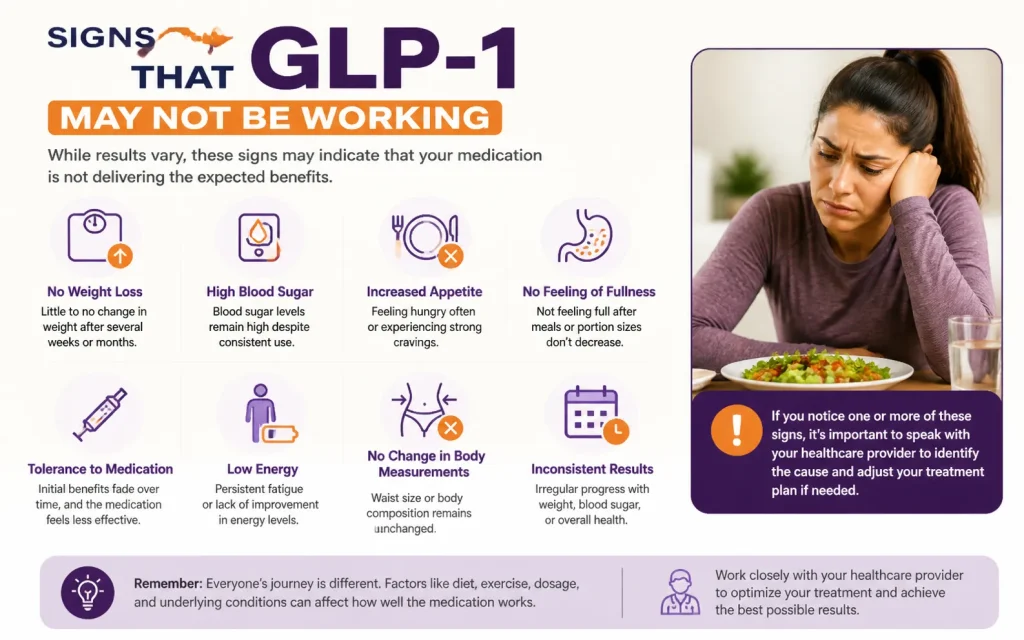
Additionally, side effects such as nausea, vomiting, or gastrointestinal discomfort may interfere with proper adherence, indirectly impacting results. Monitoring your progress regularly and keeping track of blood sugar, weight, and overall well-being can help identify if your GLP-1 therapy is underperforming. Recognizing these signs early allows for timely discussion with your healthcare provider to adjust dosage, lifestyle habits, or consider alternative therapies.
Patients may notice that their GLP-1 therapy is less effective if they observe:
- Little or no improvement in blood sugar levels
- Plateaued or minimal weight loss
- Persistent hunger or cravings despite taking the medication
- Side effects such as nausea or vomiting interfere with daily adherence
Recognizing these signs early allows for timely adjustments with your healthcare provider.
4. Key Reasons GLP-1 Medications May Not Work
There are several factors that can influence why GLP-1 medications may not work as expected for some patients. Dosage issues, such as starting too low or skipping injections, can reduce effectiveness. Lifestyle and dietary habits also play a significant role; high-calorie or high-sugar diets and lack of physical activity can counteract the medication’s benefits.
Individual differences in metabolism, genetics, and hormone levels may affect how the body responds. Certain medications or supplements may interfere with GLP-1’s action, and gastrointestinal issues like nausea or slow digestion can limit absorption. Even stress and sleep patterns can impact results, as they influence blood sugar regulation and appetite.
Understanding these factors and addressing them with your healthcare provider can help optimize therapy and achieve better outcomes.
1. Incorrect Dosage or Timing
Some patients start with a low dose and expect immediate results. GLP-1 medications often require gradual dose escalation to minimize side effects and maximize effectiveness. Missing doses or inconsistent timing reduces the drug’s impact.
2. Dietary and Lifestyle Factors
A high-calorie, high-sugar diet can counteract GLP-1 therapy, while a sedentary lifestyle may limit weight loss and blood sugar improvements. Alcohol and processed foods can further interfere with the medication’s action. Small dietary adjustments and regular activity enhance effectiveness.
Helpful lifestyle tips:
- Incorporate whole foods with fiber and lean protein
- Reduce processed foods and sugary beverages
- Include moderate exercise like walking, cycling, or resistance training
3. Individual Body Response
Genetics, metabolism, age, and pre-existing conditions affect how the body responds to GLP-1. Some patients may experience slower absorption or receptor differences, which reduces the medication’s impact.
4. Medication Interactions
Certain medications can interfere with GLP-1 effectiveness:
- Corticosteroids
- Thyroid medications
- Some antihypertensives
- Supplements or recreational drugs
Always review all medications and supplements with your doctor to prevent interactions.
5. Gastrointestinal Issues
GLP-1 slows gastric emptying, which may worsen nausea, vomiting, or diarrhea. Chronic digestive conditions such as gastroparesis or irritable bowel syndrome can reduce the medication’s absorption and effectiveness. Addressing these underlying issues can improve results.
5. Table: Factors That Affect GLP-1 Effectiveness
| Factor | Impact | Recommended Action |
| Dosage | Low or inconsistent dose | Follow prescribed schedule, escalate gradually |
| Diet & Lifestyle | Poor diet or sedentary habits | Maintain balanced diet and regular exercise |
| Body Response | Genetics and metabolism | Monitor response and adjust therapy with doctor |
| Medication Interactions | Some drugs reduce effectiveness | Review all medications |
| Gastrointestinal Health | Poor absorption | Treat underlying GI issues |
| Consistency | Irregular use | Take medication consistently |
| Stress & Hormones | Cortisol and stress reduce effectiveness | Manage stress and ensure proper sleep |
6. How to Maximize GLP-1 Effectiveness?
Maximizing the effectiveness of GLP-1 medications requires a combination of proper medication use and healthy lifestyle habits. Taking the injections consistently at the same time each day and following the prescribed dosing schedule ensures the drug reaches therapeutic levels.
Pairing therapy with a balanced diet rich in fiber, lean proteins, and low-glycemic carbohydrates enhances blood sugar control and supports weight management. Regular physical activity, including both cardio and resistance training, can improve insulin sensitivity and accelerate results. Monitoring your progress by tracking blood sugar, weight, and appetite helps identify any issues early.
Reducing stress, getting adequate sleep, and staying hydrated also contribute to better outcomes. Finally, working closely with your healthcare provider to adjust the dose or address potential interactions can further optimize therapy and help you achieve your goals.
Optimizing GLP-1 therapy involves multiple steps:
- Diet adjustments: Focus on fiber-rich vegetables, lean protein, and low-glycemic carbs.
- Regular exercise: Cardiovascular and strength training enhance insulin sensitivity and support weight loss.
- Proper medication use: Learn correct injection technique and rotate injection sites to prevent tissue irritation.
- Monitor progress: Track blood sugar, weight, and appetite to understand how well the medication works.
- Consult your doctor: Discuss dosage changes, side effects, or alternative therapies if results plateau.
Additional tips in bullet form:
- Keep a food and activity journal
- Avoid processed and sugary foods
- Stay hydrated to improve metabolism and digestion
7. Common Myths About GLP-1 Medications
There are several misconceptions about GLP-1 medications that can lead to unrealistic expectations or improper use. One common myth is that these drugs work the same for everyone, when in reality, individual responses vary based on metabolism, genetics, and lifestyle.
Another misconception is that diet doesn’t matter while taking GLP-1, but proper nutrition is essential for maximizing results. Some people believe GLP-1 is only useful for weight loss, overlooking its primary role in controlling blood sugar levels. Others assume that side effects, such as nausea or mild gastrointestinal discomfort, mean the medication isn’t working, when these are often temporary and manageable.
This image highlights common misconceptions about GLP-1 medications and clarifies the facts to help patients make informed decisions.
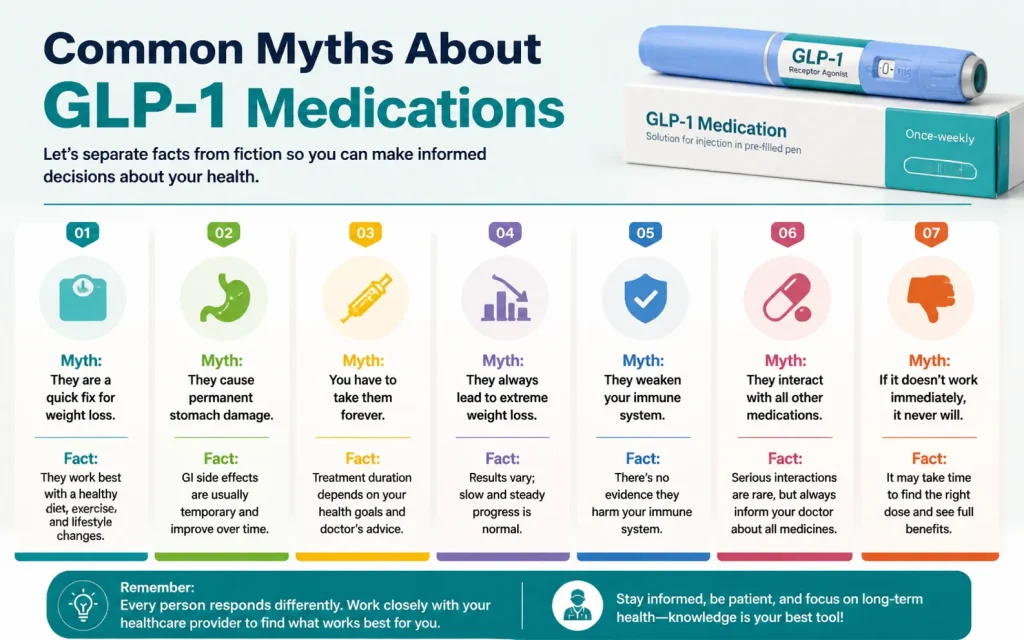
Dispelling these myths helps patients approach therapy realistically, maintain adherence, and achieve the best possible outcomes with their treatment.
- GLP-1 works the same for everyone: Individual responses vary.
- Diet doesn’t matter: A healthy diet maximizes results.
- GLP-1 is only for weight loss: Its main function is blood sugar regulation.
- Side effects mean it isn’t working: Mild side effects are common and often improve with time.
8. Monitoring Progress With GLP-1
Tracking progress ensures therapy is effective. Monitor blood sugar (fasting and post-meal), weight, and body composition weekly. Keep a food and activity journal to note appetite, cravings, and adherence. Sharing this information with your doctor helps adjust therapy for optimal results.
Monitoring your progress is essential to ensure that GLP-1 therapy is working effectively. Regularly checking blood sugar levels, both fasting and post-meal, allows you to see how well the medication is controlling glucose. Tracking your weight and body composition can highlight changes in fat and muscle mass over time, helping you understand the impact on your overall health. Keeping a food and activity journal helps identify patterns in appetite, cravings, and energy levels.
Noting side effects or gastrointestinal changes is also important, as these can affect adherence and overall effectiveness. By consistently recording these metrics and sharing them with your healthcare provider, you can make informed decisions about dose adjustments, lifestyle changes, or alternative therapies to maximize the benefits of GLP-1 medications.
When to Talk to Your Doctor
Contact your doctor if you notice:
- Persistent lack of results
- Severe side effects
- Considering alternative therapies
- Need for dose adjustments or combination therapy
Conclusion
If you are asking, “Why is my GLP-1 not working?”, multiple factors may be influencing the results. By understanding dosage, lifestyle, metabolism, consistency, and monitoring your progress, you can work with your healthcare provider to optimize therapy and achieve the best outcomes for blood sugar control and weight management.
In conclusion, GLP-1 medications offer significant benefits for blood sugar control and weight management, but their effectiveness can vary from person to person. Factors such as dosage, timing, diet, exercise, genetics, medication interactions, and gastrointestinal health all influence outcomes. Consistency in taking the medication, combined with a healthy lifestyle, is essential for achieving optimal results. Monitoring your progress, including blood sugar, weight, and appetite, allows you to identify areas for adjustment.
Working closely with your healthcare provider ensures that any issues can be addressed promptly, whether it involves changing dosage, managing side effects, or modifying lifestyle habits. Understanding these factors and taking proactive steps can help you maximize the benefits of GLP-1 therapy and achieve sustainable health improvements.
Frequently Asked Questions (FAQs)
1. How long does it take for GLP-1 to work?
Blood sugar improvements may appear in 2–4 weeks, while weight loss can take 8–12 weeks.
2. Can GLP-1 stop working over time?
Reduced effectiveness may occur due to tolerance or weight plateaus; dose adjustment may be needed.
3. Does diet affect GLP-1 effectiveness?
Yes, dietary habits strongly influence outcomes.
4. Are all GLP-1 medications the same?
No, they vary in potency, dosing, and side effects.
5. What if I experience side effects?
Side effects like nausea can affect adherence. Consult your doctor for dose adjustments.
6. Can other medications interfere with GLP-1?
Yes. Always review medications and supplements with your healthcare provider.
7. Is exercise mandatory?
Exercise is not required but enhances effectiveness.
8. What should I do if GLP-1 isn’t working?
Consult your doctor to review dose, lifestyle, and alternative therapies.
9. Can GLP-1 be used for weight loss only?
Yes, some formulations support weight loss even in non-diabetic patients, but blood sugar control remains the main purpose.