- GLP-1 medications suppress appetite and slow digestion, which lowers your available energy for intense workouts — making low-impact movement like Pilates a smarter starting point.
- Muscle loss is one of the biggest risks during GLP-1 weight loss, and Pilates functions as a bodyweight resistance workout that directly targets this problem.
- A structured GLP-1 Pilates routine includes moves like glute bridges, the Hundred, and single-leg stretches — all designed to preserve muscle and support fat loss without burning you out.
- Pilates works best when paired with two to four days of strength training per week, not used as a standalone solution.
- Timing your Pilates sessions around your energy levels and pairing them with adequate protein intake can significantly improve your results on GLP-1 medications.
Most people on GLP-1 medications are not exercising in a way that actually protects their body during weight loss — and that’s a problem worth addressing head-on.
GLP-1 receptor agonists such as semaglutide and tirzepatide have revolutionized the weight loss industry. They suppress hunger, slow down the emptying of the stomach, and help individuals consume significantly less calories. However, consuming fewer calories also means less energy, and less energy means you need to make your workouts more efficient, not more intense. This is precisely where a structured Pilates routine comes in handy. For those in search of a starting point that is backed by science, this GLP-1 exercise resource provides practical advice for developing exercise habits that are sustainable.
In this guide, we will show you how to set up a GLP-1 Pilates routine, explain why it’s effective, and provide tips on how to combine it with other exercises to maintain your muscle mass while shedding fat.
How GLP-1 Medications Alter Your Exercise Routine
GLP-1 medications function by imitating a hormone that your gut naturally produces after you eat. They send a signal to your brain that you’re full, slow down the rate at which food exits your stomach, and decrease your cravings. The end result is that most people eat significantly less — sometimes to the point of discomfort — particularly in the first few weeks of treatment.
Lower Calorie Intake Equals Less Energy for High-Intensity Exercises
When you significantly reduce your calorie intake, your body has less glycogen to use as fuel. Glycogen is the energy source for high-intensity exercises such as sprinting, heavy weightlifting, or HIIT. Starting an intense program while on a GLP-1 without modifying your strategy is a quick way to exhaustion, injury, or complete cessation.
Re-Form Physical Therapy’s founder, Tara Phaff, DPT, puts it simply: those on GLP-1s often report eating fewer calories because they don’t feel as hungry and their digestion slows down. If you’re eating a lot less, you shouldn’t be aiming to power through a tough workout. Instead, she suggests concentrating on supportive movement — short walks, light stretching, and gentle Pilates or yoga sessions, especially at the start.
It’s not about shying away from difficulty, but rather about picking the right type of difficulty. Low-impact resistance-based workouts allow you to maintain a regular training schedule without draining an already depleted energy reserve. During this phase, it’s not about how hard you push, but about how regularly you show up.
- High-intensity exercise demands glycogen your body may not have on a reduced-calorie GLP-1 diet
- Fatigue is common in the early weeks of GLP-1 treatment and can make intense workouts counterproductive
- Low-impact movement like Pilates supports adherence — the single most important factor in any fitness plan
- Supportive movement reduces nausea and discomfort that some GLP-1 users experience after eating
Muscle Loss Is a Real Risk Without Resistance-Based Movement
Here is something that does not get said enough: GLP-1 medications do not distinguish between fat and muscle when driving weight loss. Studies recommend pairing GLP-1 therapy with resistance training and adequate protein intake specifically because muscle loss is a documented risk. Losing muscle slows your metabolism, reduces functional strength, and undermines long-term health — even if the scale is moving in the right direction.
Why Is Low-Impact Exercise More Crucial When Taking GLP-1s?
Low-impact exercise is not synonymous with an easy workout. Instead, it refers to a type of exercise that doesn’t put a lot of stress on your joints, keeps your heart rate under control, and allows you to recover quickly enough to train again within 24 to 48 hours. This is particularly important when taking GLP-1s because recovery is largely nutrition-dependent. If you’re eating less, your body has fewer resources to repair muscle damage caused by high-impact training.
Pilates is an ideal solution. It’s based on resistance, utilizes controlled movement patterns, tests your core and major muscle groups, and can be performed at home without any equipment. It’s also scalable — beginner moves can be made significantly harder as your strength improves, meaning you don’t outgrow it.
The Reason Pilates is So Effective for GLP-1 Weight Loss
Pilates was first created by Joseph Pilates in the early 20th century as a method of controlled movements meant to build core strength, improve posture, and increase full-body muscular endurance. It has since become one of the most popular low-impact exercise methods worldwide — and for individuals taking GLP-1 medications, its benefits are especially suited to the difficulties of medically-assisted weight loss.
Pilates is unique not just because of its impact on your body, but also because of its method. It’s not like regular cardio. Pilates specifically works out the stabilizing muscles that are usually overlooked in standard gym exercises. It develops deep, functional strength that aids in everyday motion, lowers the risk of injury, and directly combats the muscle loss that GLP-1 drugs can speed up.
Pilates Strengthens Your Core Without Overworking Your Body
When we talk about the core, we’re not just talking about your abs. Your deep spinal stabilizers, pelvic floor, obliques, and lower back muscles are all part of your core. Pilates works out all of these muscles in every session. A stronger core can improve your posture, reduce back pain, and make all other forms of exercise more effective. For people who use GLP-1 and may be dealing with fatigue or reduced stamina, this type of targeted, efficient training is exactly what their bodies need.
It’s Also a Body-Weight Resistance Workout
One of the main reasons Pilates is a great addition to a GLP-1 fitness plan is because it uses your body weight as resistance. Every exercise in a Pilates routine, from glute bridges to single-leg stretches to side-lying leg lifts, creates muscular tension, stimulates muscle fibers, and triggers the same adaptive response as traditional resistance training. The difference is that you don’t need to put a heavy load on your joints or have a gym membership to do it.
Improvements in Posture, Muscle Control, and Body Shape
When you lose weight on a GLP-1, your body’s appearance and movements will naturally change. Pilates can directly affect the shape of your body by preserving lean muscle tissue as you lose fat. It also enhances neuromuscular control, which is the efficiency of communication between your brain and your muscles, leading to improved quality of movement in all physical activities. Many people who incorporate Pilates into their GLP-1 routine report feeling stronger, standing taller, and moving more smoothly, even as they lose a significant amount of weight. For more on maintaining muscle health during weight loss, check out this guide on vitamin D benefits.
The reason some people lose weight and feel fantastic, while others lose weight and feel drained, is often due to a combination of maintained muscle mass, improved posture, and improved body composition. Pilates plays a significant role in creating this positive difference.
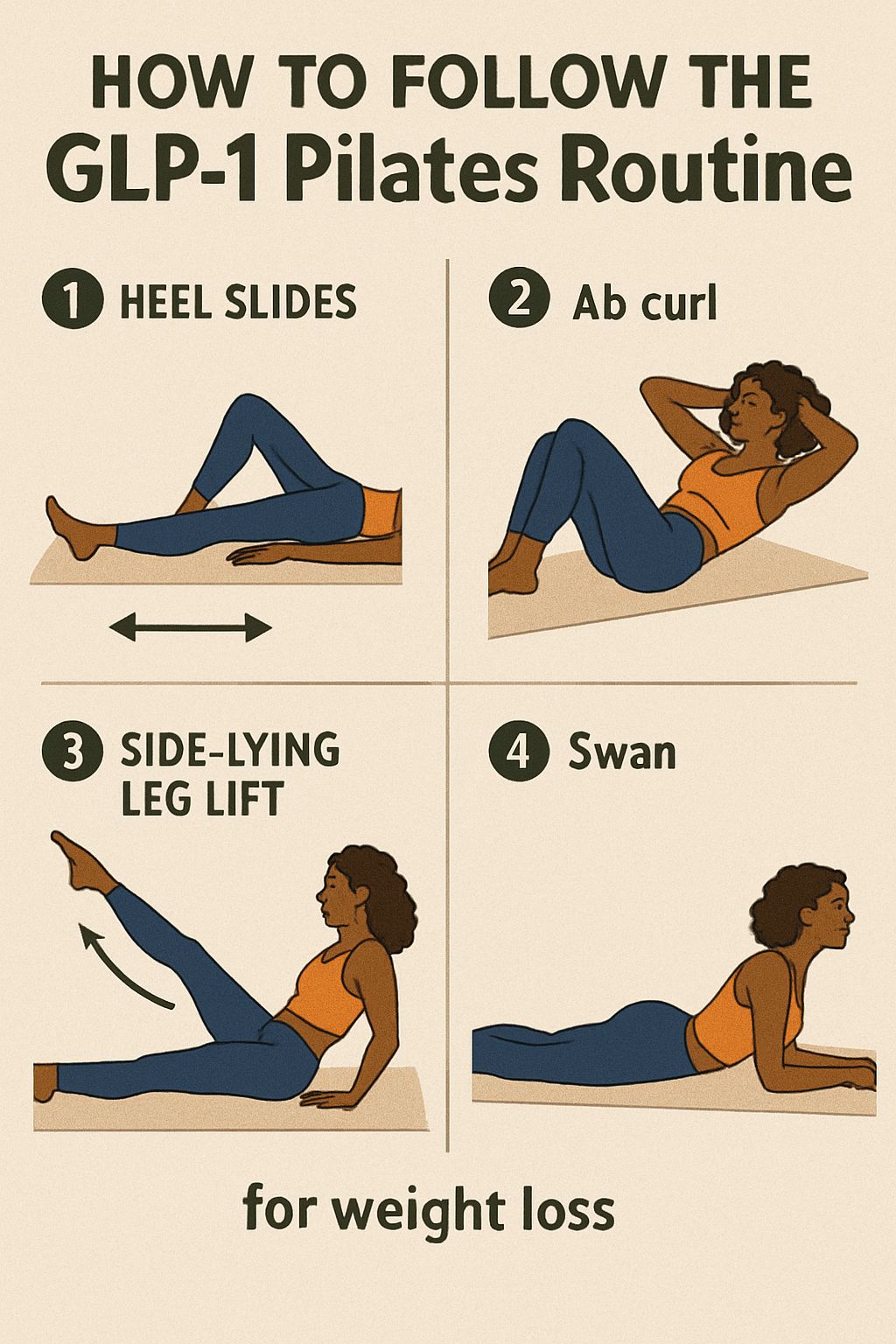
How to Follow the GLP-1 Pilates Routine
This workout is tailor-made for those taking GLP-1 medications. It focuses on the primary muscles that are most likely to weaken during calorie-reduced weight loss — your glutes, core, hip flexors, and legs — through measured, low-impact movements that can be performed on a mat in your own home. Try to do this routine three to four times a week, taking a 30 to 60 second break between exercises.
1. Pelvic Tilts
Start by laying on your back with your knees bent and your feet hip-width apart on the floor. Take a deep breath in to prepare, then exhale as you gently press your lower back into the mat by tilting your pelvis upward. Hold this position for two seconds, then release. This is your warm-up movement — it wakes up the deep core stabilizers and gets the lumbar spine ready for the work ahead. Do 10 to 12 slow, controlled reps before moving on.
2. Single-Leg Stretch
Get into a supine position and draw both knees into your chest. Elevate your head and shoulders just a bit off the mat, then stretch one leg out at a 45-degree angle while pulling the opposite knee toward your chest. Switch legs in a controlled, alternating rhythm. This move targets the hip flexors, lower abs, and obliques simultaneously — three muscle groups that directly support posture and spinal stability during weight loss.
Ensure your lower back stays in contact with the mat for the duration of the exercise. If you notice your back arching or your neck straining, raise the extended leg towards the ceiling to lessen the load. Do 10 repetitions per side for two sets. For additional tips on maintaining bone health during your workout, consider reading our guide on collagen peptides and bone health.
3. Glute Bridges
Start by lying on your back with your knees bent and your feet flat on the floor, about hip-width apart. Push through your heels and lift your hips up towards the ceiling, squeezing your glutes when you reach the top. Hold this position for two to three seconds, then slowly lower yourself back down. Glute bridges are one of the best bodyweight exercises for maintaining muscle mass in your glutes and hamstrings — two areas that can lose a lot of muscle when you lose weight quickly while taking GLP-1 medications.
If you want to challenge yourself, put a resistance band above your knees and push out as you lift your hips. This activates the gluteus medius — the side of your hip — that is essential for knee stability and walking properly. Try to do three sets of 12 to 15 reps.
4. The Hundred
Begin by lying on your back and raising your legs to a tabletop position, with your hips at a 90-degree angle and your knees stacked above your hips. Raise your head and shoulders from the mat, extend your arms along your sides, and start to pump your arms up and down in small, controlled movements. Inhale for five pumps and exhale for five pumps. This is one cycle. Do ten cycles to total 100 pumps. The Hundred strengthens your deep core, improves your breathing coordination, and slightly increases your heart rate to provide a mild cardiovascular stimulus without overloading your system.
5. Lateral Leg Lifts
Lay on your side with your body in a straight line, bottom arm extended under your head for support. Keep your top leg straight and foot flexed, slowly lift it to about 45 degrees, then lower it back down with control. This exercise directly targets the gluteus medius and outer hip — muscles that are critical for balance, hip stability, and injury prevention. Perform 15 reps on each side for two to three sets. Add a resistance band around your ankles to significantly increase the challenge as you progress.
How Many Times a Week Should You Do Pilates on a GLP-1?
Most people on a GLP-1 find that three to four Pilates workouts a week is the perfect amount. This frequency is sufficient to stimulate muscle maintenance and gradually build core strength, while still allowing for recovery — which is even more important when your calorie intake is lower than usual. Each workout should last between 20 and 40 minutes, depending on your fitness level and energy levels that day.
Between Pilates sessions, try to incorporate low-intensity activities such as walking. The American Heart Association suggests a minimum of 150 minutes of moderate-intensity activity each week. Walking is an easy way to reach this goal and it also supports heart health, regulates blood sugar, and promotes mental wellness. These are all areas that GLP-1 medications also improve, which makes this combination particularly effective.
How to Maximize Your Pilates Workout While on a GLP-1
Doing Pilates on its own is already a great start, but how you arrange everything else around it — your other exercises, when you eat, and how you rest — will determine how much muscle you keep and how good you feel throughout your GLP-1 weight loss journey. These three strategies make a big impact.
Even minor changes to your lifestyle outside of your Pilates workouts can drastically improve your results. The aim isn’t to push yourself harder — it’s to be more strategic by aligning your habits in a way that aids your body through a challenging metabolic process.
Combine Pilates and Strength Training for Optimal Muscle Maintenance
While Pilates is a fantastic addition to strength training, it cannot fully replace it if the goal is to maintain muscle mass. Dr. Adams, a fitness and metabolic health specialist, suggests that individuals taking GLP-1 medications should engage in two to four strength training sessions each week, concentrating on compound movements. These are exercises such as squats, deadlifts, and bench presses that work several large muscle groups simultaneously. By pairing two days of Pilates with two days of compound strength exercises, you can ensure that all of your muscles are worked throughout the week without overtaxing your ability to recover.
Work Out When You Feel Most Energetic
GLP-1 drugs can have different effects on energy levels, depending on who’s taking them, the dosage, and how long they’ve been in use. A lot of people say they feel their most energetic in the mid-morning — after they’ve shaken off the sleepiness of waking up but before the afternoon fatigue kicks in. If that time frame fits into your schedule, take advantage of it. The idea is to exercise when your body is most willing, not when the clock says it’s time.
It’s best not to schedule your Pilates workout right after a meal, particularly in the first few weeks of your GLP-1 treatment. Since these drugs slow down the emptying of the stomach, you might feel nauseous or very uncomfortable if you exercise too soon after eating. A break of at least 90 minutes to two hours between eating and your Pilates session usually works well for most people. Pay attention to your own body — if you listen carefully, it will tell you what it needs.
A typical weekly schedule for GLP-1 Pilates practitioners might look like this:
Monday: Pilates (30 min) + 20-minute walk
Tuesday: Strength training — compound lifts (45 min)
Wednesday: Pilates (30 min) or active rest (walking, light stretching)
Thursday: Strength training — compound lifts (45 min)
Friday: Pilates (30–40 min)
Saturday: Light walk or yoga (20–30 min)
Sunday: Full rest or gentle mobility work
This schedule provides three Pilates sessions, two strength training days, and built-in recovery — all without exceeding the energy output that a reduced-calorie diet can realistically support. Adjust as needed based on how you feel each week, particularly during the first month when your body is still adjusting to the medication.
Focus on Consuming Protein to Aid Muscle Repair
Protein is the most crucial nutrient when it comes to GLP-1 weight loss. When you’re eating less, it becomes much easier to miss your protein goals — and without enough protein, your body can’t repair and maintain the muscle tissue that you’re working so hard to preserve with Pilates and strength training. Most experts recommend at least 0.7 to 1.0 grams of protein per pound of body weight per day for people who are actively trying to lose weight. Make sure to include high-protein foods like eggs, Greek yogurt, cottage cheese, chicken, fish, and legumes in every meal, and consider taking a protein supplement if you’re having trouble reaching your daily goal with whole foods alone due to a decreased appetite. For additional support, explore the benefits of Vitamin D for muscle preservation during your weight loss journey.
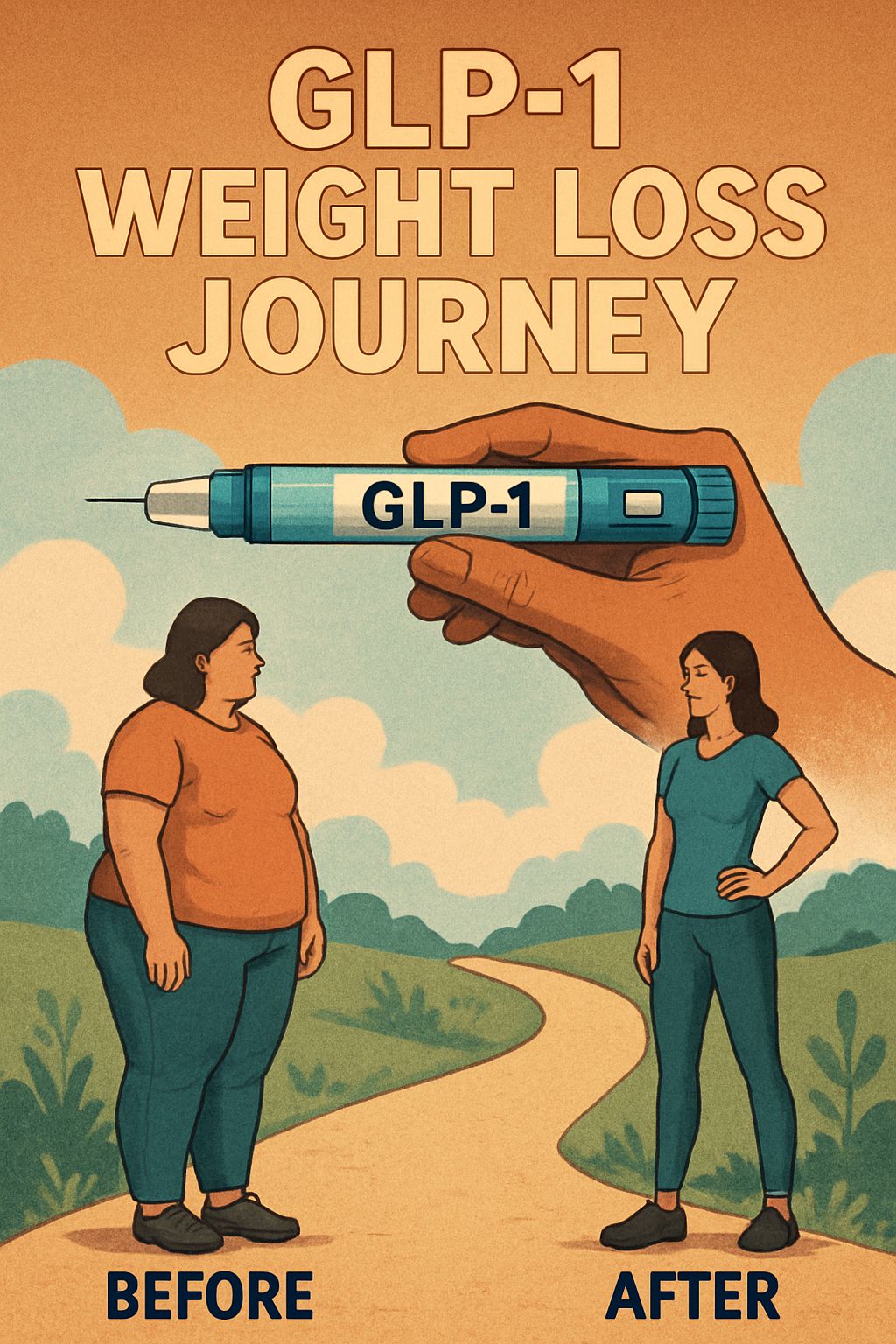
GLP-1 Weight Loss Journey: Pilates Isn’t Enough
While Pilates is a great addition to your GLP-1 workout regimen, it’s not the only thing you should be doing. For the best results while undergoing GLP-1 treatment, you should be combining Pilates with compound strength training, making sure to take enough steps every day, eating enough protein, and getting enough sleep. Pilates is great for keeping your body flexible, your core strong, and the quality of your movement high. Strength training, on the other hand, helps you build and maintain muscle mass, which keeps your metabolism running smoothly as you lose weight. Together, these two types of exercise create a comprehensive physical strategy that gives your GLP-1 medication the optimal environment to provide long-lasting, significant results.
Common Questions
Here are some of the questions that people often ask when they begin a Pilates routine while taking GLP-1 medication. We provide straightforward and practical answers.
Is it safe to do Pilates daily while taking GLP-1 medication?
While it’s possible, it’s not always the best idea. Even though Pilates is a low-impact exercise, your muscles still need time to recover and adjust, especially when you’re consuming fewer calories than usual. For most people on GLP-1 medication, it’s recommended to do Pilates three to four times a week. On days you’re not doing Pilates, it’s better to go for a gentle walk or do some stretching instead of doing another full Pilates session. Remember, recovery is part of the process, not a break from it.
Can Pilates Alone Be Enough Exercise During GLP-1 Weight Loss?
While Pilates is a fantastic way to begin and a great addition to a comprehensive fitness routine, it probably won’t be enough to fully prevent the muscle loss that can occur with quick, calorie-restricted weight loss on GLP-1 medications. Studies consistently suggest that GLP-1 therapy should be combined with dedicated resistance training — in other words, compound strength movements using external load — in addition to low-impact exercises like Pilates.
The best plan includes Pilates two to three times a week, combined with two days of compound strength training, daily walks, and enough protein. This mix tackles all the main physical risks of GLP-1 weight loss while keeping the total amount of exercise achievable and sustainable.
When Should I Do Pilates If I’m on GLP-1?
Most people on GLP-1 find that mid-morning is the best time to do Pilates. By this time, your energy levels have increased, any morning sickness has usually subsided, and you’ve had a little something to eat to give you the energy you need for your workout. However, the most important thing is to choose a time that works for you. If you’re more likely to do your Pilates routine at 8pm, then that’s the best time for you. It’s better to do Pilates at a time that’s not ideal than to skip it because you can’t do it at the “perfect” time.
One timing rule you should always stick to is not exercising within 90 minutes of a full meal. GLP-1 medications slow down digestion, and if you exercise too soon after eating, you could experience nausea, bloating, or cramping that could ruin your workout and your day.
Does Pilates Help Maintain Muscle Mass While Using a GLP-1?
Yes — Pilates is a bodyweight resistance exercise that stimulates muscle fibers, which in turn signals the body to maintain lean tissue. While it doesn’t preserve muscle as much as heavy compound lifting, it is much better than not doing any resistance training. For those who are new to exercise, recovering from an injury, or just not ready for a traditional gym program, a regular Pilates routine is a significant and evidence-based way to prevent muscle loss during GLP-1-assisted weight loss.
Is Any Equipment Necessary for This GLP-1 Pilates Routine?
You don’t need any equipment to get started. All the exercises in this routine — pelvic tilts, single-leg stretches, glute bridges, the Hundred, and side-lying leg lifts — can be done with just a yoga mat and enough floor space to lie down fully extended. This makes the routine truly accessible no matter what your budget, location, or gym access is.
Once you’ve built up some strength and the basic movements start to feel too easy, there are a few inexpensive ways to up the ante. For example, a fabric resistance band — like the ones in the Fit Simplify Resistance Loop Bands set — can be placed just above your knees during glute bridges or around your ankles during side-lying leg lifts to really get your glutes and hips working, without putting any extra stress on your joints.
As you become more proficient with your Pilates-inspired standing work, you can include a light pair of dumbbells like the Amazon Basics Neoprene Dumbbells, which weigh between 3 and 8 pounds. These additions will help keep your routine challenging as you get fitter, which is crucial for maintaining muscle mass throughout your GLP-1 weight loss journey.