Glucagon‑like peptide‑1 receptor agonists (GLP‑1s) — including drugs such as semaglutide (brand names like Wegovy or Ozempic), liraglutide (Saxenda or Victoza), and others — have grown in popularity for weight management and blood sugar control. But what about breastfeeding mothers? Can you take GLP‑1 medications while breastfeeding? This comprehensive guide breaks down the science, safety concerns, expert recommendations, and practical alternatives for nursing women.
GLP‑1 medications, including popular drugs like semaglutide and liraglutide, are increasingly used for managing blood sugar and supporting weight loss. For breastfeeding mothers, the safety of these medications is a major concern, as little is known about their transfer into breastmilk and potential effects on infants.
Nursing mothers naturally want to protect their baby while managing their own health, which can make medication decisions complicated. Current research on GLP‑1 use during lactation is limited, mostly based on animal studies and expert opinion rather than large clinical trials.
As a result, healthcare providers often recommend caution and suggest alternative approaches whenever possible. Understanding the risks, benefits, and safer options is essential for making informed decisions. This guide explores what is currently known and offers practical advice for mothers navigating these choices.
1. What Are GLP‑1 Medications? (Quick Overview)
GLP‑1 medications are a class of injectable drugs that help regulate blood sugar by enhancing insulin release and slowing digestion. They are also used for weight management in certain patients.
These medications mimic a naturally occurring hormone in the body, which makes them effective for both glucose control and appetite suppression. Common examples include semaglutide, liraglutide, and dulaglutide.
GLP‑1 receptor agonists are a class of injectable medications originally developed to help manage type 2 diabetes by:
- Stimulating insulin secretion when glucose is high
- Reducing glucagon (a hormone that raises blood sugar)
- Slowing gastric emptying
- Increasing feelings of fullness
Some GLP‑1 medications are also approved for weight loss at higher doses, which is why many people are asking: Is it safe to use them while breastfeeding?
Common GLP‑1 Medications
Here are some widely known GLP‑1 drugs:
- Semaglutide (Wegovy, Ozempic)
- Liraglutide (Saxenda, Victoza)
- Dulaglutide (Trulicity)
- Exenatide (Bydureon, Byetta)
- Albiglutide (Tanzeum — discontinued in many countries)
2. Why Breastfeeding Safety Matters
Breastfeeding safety is crucial because everything a mother consumes — including medications — can potentially affect her baby. Infants have developing organs and immune systems, making them more sensitive to certain substances.
Even small amounts of a drug that pass into breastmilk may impact the baby’s growth, digestion, or metabolism. Ensuring safety also helps maintain milk production and supports the overall health of both mother and child. Nursing mothers must balance their own health needs with the baby’s safety, which can make treatment decisions challenging.
Understanding how medications interact with breastmilk is essential for preventing unintended side effects. Consulting healthcare professionals is key to making informed choices while breastfeeding.
Breastfeeding is not just nutrition — it’s immunity, bonding, and optimal development for your baby. When you take any medication while nursing, you must consider:
- Whether the drug passes into breastmilk
- Whether it affects milk production
- Potential short‑ or long‑term effects on the infant
- How the baby metabolizes or absorbs the drug
Healthcare providers are particularly cautious when it comes to medications with limited research in lactating women, such as many newer GLP‑1 agents.
3. Current Research: GLP‑1 and Breastfeeding
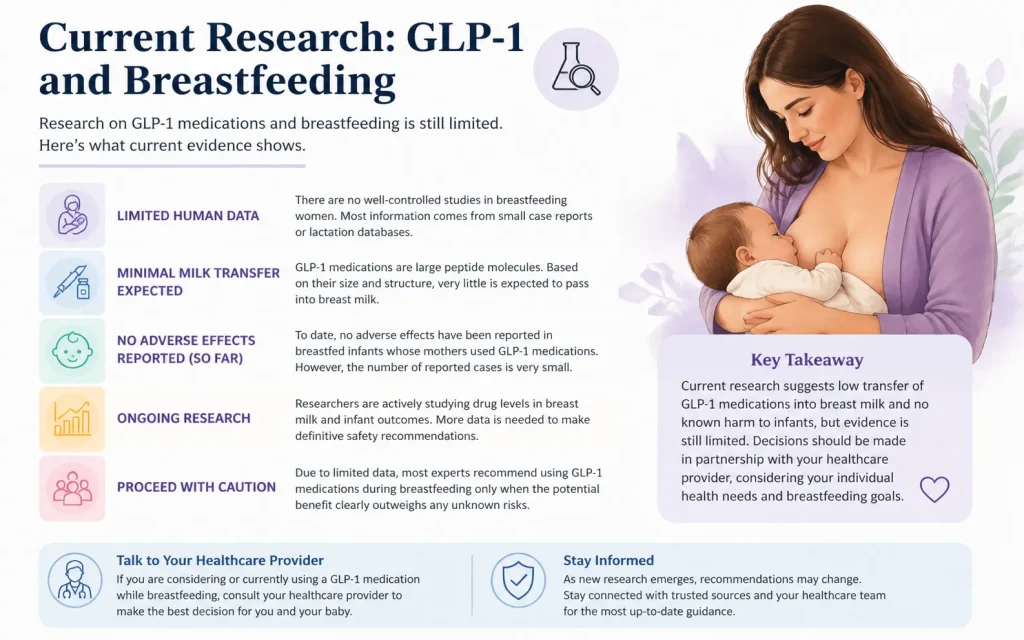
Research on the use of GLP‑1 medications during breastfeeding is extremely limited. Most available information comes from animal studies or isolated case reports, which provide only indirect insights. There are no large-scale human trials that clearly establish safety for nursing infants.
Because of this lack of data, healthcare providers usually advise caution and recommend avoiding these drugs while breastfeeding whenever possible. Some animal studies suggest potential transfer into milk and effects on offspring, but human implications remain uncertain. Until more research is conducted, decisions about GLP‑1 use during lactation must be made on an individual basis with guidance from medical professionals.
This uncertainty underscores the importance of exploring safer alternatives for mothers who need blood sugar or weight management support.
Limited Human Studies
Unfortunately, there are no definitive, high‑quality human clinical trials that evaluate the safety of GLP‑1 receptor agonists during breastfeeding. Most data comes from:
- Animal studies
- Case reports
- Expert opinion
Because of this limited evidence, most professional guidelines recommend avoiding GLP‑1 medications while breastfeeding unless there’s a compelling medical reason and close monitoring.
Animal Studies
In animal studies, GLP‑1 drugs have shown:
- Some transfer into milk or milk‑like fluids in animals
- Potential effects on nursing pups
- Limited metabolism compared to humans
However, animal studies don’t always directly apply to humans, so caution is still required.
4. Do GLP‑1 Drugs Pass Into Breastmilk?
The question of whether GLP‑1 drugs pass into breastmilk is not fully answered. These medications are large protein-based molecules, which may limit their transfer, but even minimal amounts could potentially affect a nursing infant.
Because human studies are lacking, the degree and impact of any transfer remain unknown. This uncertainty is why healthcare providers generally advise against using GLP‑1 medications while breastfeeding unless absolutely necessary.
Monitoring and caution are emphasized if a mother must take these drugs. Exploring safer alternatives is usually recommended to protect the baby’s health.
The short answer: We don’t know for certain.
GLP‑1 receptor agonists are large protein‑based molecules. Theoretically:
- Large molecules are less likely to transfer significantly into human breastmilk
- But even small amounts could have biological effects in infants
Because of this uncertainty, medical professionals generally err on the side of avoiding exposure until more research is available.
5. What Do Medical Organizations Say?
Medical organizations have not issued definitive guidelines specifically addressing GLP‑1 use during breastfeeding. Most professional recommendations are based on expert opinion and caution due to the lack of clinical data.
Generally, healthcare providers advise avoiding GLP‑1 medications while nursing unless there is a compelling medical need. In cases where treatment is necessary, careful monitoring of both mother and infant is strongly encouraged. Alternative therapies with more established safety profiles are often preferred.
Ultimately, decisions should be individualized, taking into account the mother’s health, the baby’s well-being, and available safer options. Consulting with an endocrinologist or lactation specialist is recommended before starting any new medication.
There is no standardized consensus across major lactation or endocrinology organizations specifically about GLP‑1 medications and breastfeeding. However:
Most clinicians recommend discontinuing GLP‑1 therapy when pregnancy is planned or confirmed
If breastfeeding, many suggest seeking alternative, safer options
Decisions should be individualized based on medical necessity
Always consult your healthcare provider before making medication choices while nursing.
6. Potential Risks for Infants
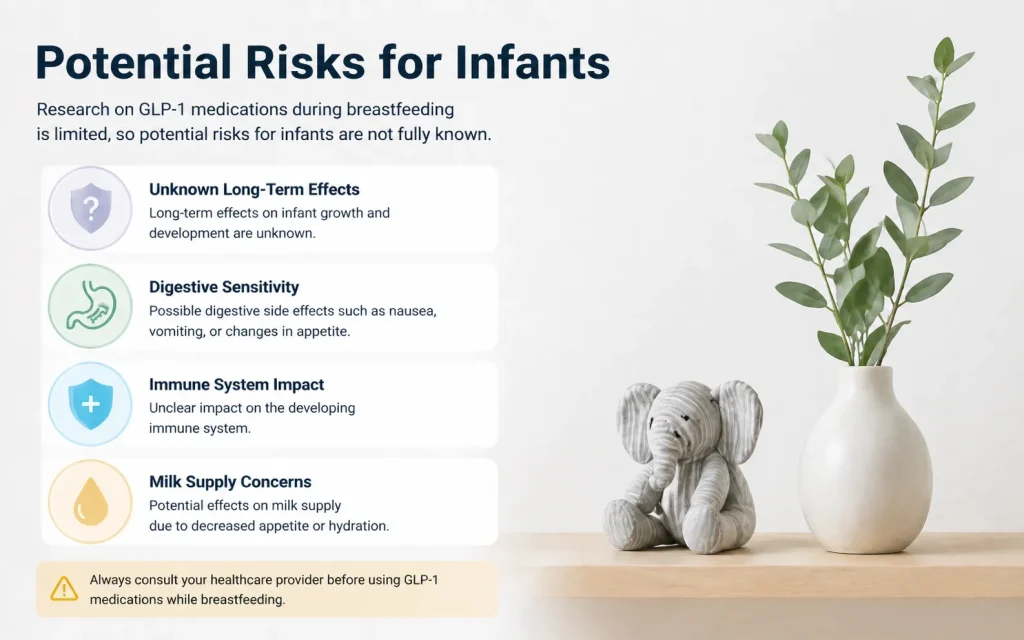
Potential risks of GLP‑1 medications for infants are largely theoretical due to limited research. Small amounts of the drug could pass into breastmilk and potentially influence the baby’s metabolism or hormone balance. T
here is also concern that these medications might affect digestion or appetite in nursing infants. Long-term effects on growth and development remain unknown. Because infants have immature organs, even minimal exposure could carry unforeseen consequences.
For these reasons, most healthcare providers recommend avoiding GLP‑1 drugs while breastfeeding. Monitoring the baby closely is essential if exposure occurs.
Because research is limited, experts raise theoretical concerns that include:
1. Drug Transfer Into Breastmilk
Even low levels could affect newborn metabolism or hormone regulation.
2. Impact on Infant Gut or Glucose Regulation
GLP‑1 drugs mimic hormones involved in insulin and digestion — and we don’t fully understand how this would affect a developing infant.
3. Unknown Long‑Term Effects
There’s simply not enough data to rule out delayed or subtle outcomes.
7. What About Weight Loss While Breastfeeding?
Weight management during breastfeeding requires a careful balance, as nursing mothers need sufficient calories to support milk production. Rapid weight loss or certain medications can interfere with lactation and may affect the baby’s nutrition.
GLP‑1 medications are generally not recommended for weight loss while breastfeeding due to limited safety data. Instead, mothers can focus on gradual, healthy weight loss through a balanced diet, regular physical activity, and proper hydration. Consulting a registered dietitian can provide personalized guidance.
Safe lifestyle adjustments often produce sustainable results without compromising the baby’s well-being. Patience and gradual progress are key during the postpartum period.
Lactation is energy‑intensive — breastfeeding burns approximately 300–500 extra calories per day. Many mothers want to lose weight safely while nursing.
Instead of medications like GLP‑1s, consider:
Safe Weight Loss Strategies
✔ Balanced diet rich in nutrients
✔ Hydration — especially while breastfeeding
✔ Moderate physical activity
✔ Adequate sleep
✔ Working with a registered dietitian
Medication for weight loss during breastfeeding should be individualized and supervised by a healthcare provider.
8. Medical Exceptions: When a GLP‑1 Might Be Needed
In rare cases, GLP‑1 medications might be considered for breastfeeding mothers with serious medical needs. For example, women with poorly controlled type 2 diabetes who do not respond to other treatments may require these drugs temporarily.
Severe insulin resistance or other metabolic conditions could also justify cautious use. Even in these situations, healthcare providers weigh potential benefits against possible risks to the infant. Close monitoring of both mother and baby is essential, and safer alternative medications are usually preferred first.
Decisions should always be individualized and made in consultation with an endocrinologist or lactation specialist.
GLP‑1 medications may be considered in special medical circumstances, such as:
- Type 2 Diabetes not controlled with other medications
- Severe insulin resistance
- Other endocrine disorders
Even then, the decision must involve:
- A discussion of risks vs. benefits
- Alternative treatments
- Close maternal and infant monitoring
In most cases, safer anti‑diabetes drugs are preferred during lactation.
9. Alternatives to GLP‑1 Medications While Breastfeeding
For breastfeeding mothers, safer alternatives to GLP‑1 medications are recommended to manage blood sugar or support healthy weight. Options include medications with established safety profiles, such as insulin and metformin, along with lifestyle approaches like a balanced diet, regular exercise, and proper hydration.
These strategies can help maintain maternal health without exposing the baby to unknown risks. Consulting a healthcare provider or dietitian can provide personalized guidance and ensure both mother and infant stay healthy.
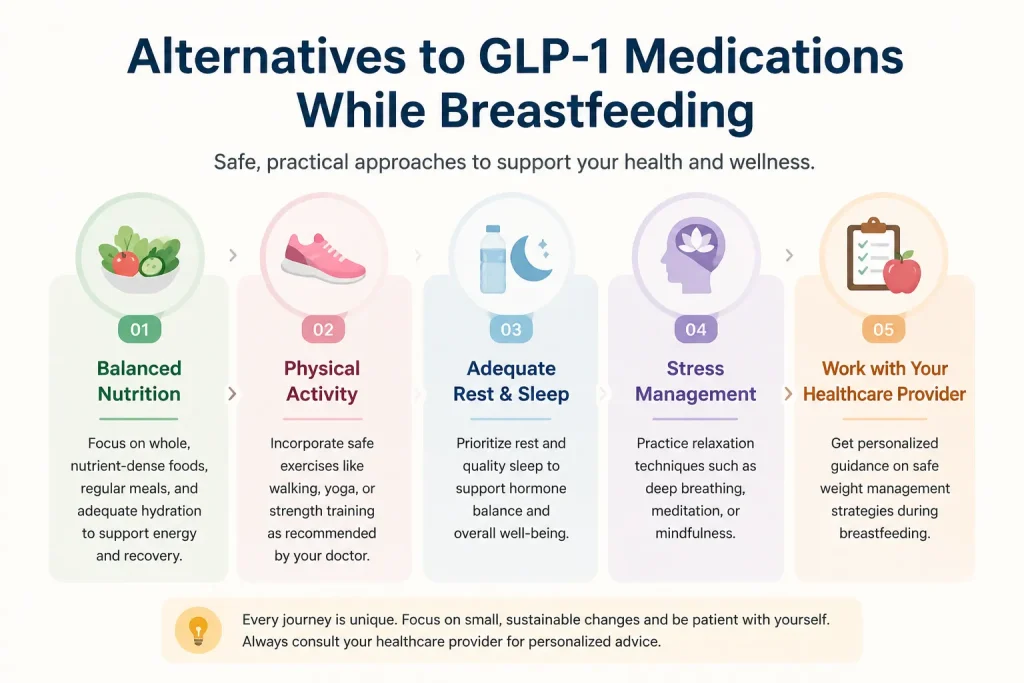
Here are possible alternatives for managing blood sugar or weight during nursing:
For Diabetes or Blood Sugar Control
- Metformin — widely studied in breastfeeding
- Insulin — does not pass into milk
- Lifestyle and diet changes
- Close glucose monitoring
For Weight Management
- Calorie‑controlled nutrient‑dense diet
- Walking or postpartum‑safe workouts
- Support groups or coaching
- Professional dietitian guidance
Always involve your clinician in these decisions.
Frequently Asked Questions (FAQs)
1. Can GLP‑1 medications pass into breastmilk?
Currently, there is no definitive human research showing whether GLP‑1 drugs pass into breastmilk.
These medications are large protein molecules, which may limit transfer, but even small amounts could have biological effects on a nursing infant. Because of the unknown risks, doctors generally advise caution and often recommend avoiding GLP‑1 use while breastfeeding.
2. Is it safe to use GLP‑1 drugs while breastfeeding?
GLP‑1 medications are not considered safe for breastfeeding due to the limited evidence on infant exposure.
Nursing mothers are encouraged to explore alternative treatments or focus on diet and lifestyle changes for managing blood sugar and weight. Safety for the baby is the priority, and medical supervision is essential if a GLP‑1 must be used.
3. Are there safer alternatives for diabetes management while breastfeeding?
Yes. Medications such as insulin and metformin have well-established safety profiles for nursing mothers. Combining these drugs with a balanced diet, exercise, and regular glucose monitoring can effectively manage blood sugar levels.
These alternatives help protect the baby while maintaining maternal health without the risks associated with GLP‑1 drugs.
4. Can GLP‑1 medications affect my baby’s development?
The potential effects of GLP‑1 drugs on infants are not fully understood. Theoretical risks include impacts on metabolism, digestive function, or hormone regulation.
Since infants have developing organs and systems, even low exposure could carry unknown consequences. This uncertainty is why healthcare providers typically advise avoiding these medications while nursing.
5. Can I restart GLP‑1 therapy after breastfeeding?
Yes. Many mothers can resume GLP‑1 therapy safely after they finish breastfeeding. Timing, dosage, and monitoring should be discussed with a healthcare provider to ensure optimal results.
Restarting therapy postpartum allows mothers to manage blood sugar or weight while avoiding potential risks to their nursing infant.
6. What signs should I watch for in my baby if I take GLP‑1?
If a nursing mother takes GLP‑1, she should closely monitor her baby for unusual drowsiness, irritability, poor feeding, or changes in stool and weight gain. Any concerning signs should prompt immediate consultation with a pediatrician.
Monitoring helps ensure early detection of potential adverse effects and ensures the baby’s safety.
Conclusion
Deciding whether to take GLP‑1 medications while breastfeeding is not straightforward. With limited clinical research and potential risks, medical professionals generally recommend avoiding GLP‑1 therapy during lactation unless clearly justified. Your health and your baby’s safety are both important — and there are well‑studied alternatives for blood sugar control and postpartum weight management.
Always talk to your doctor, endocrinologist, or lactation consultant before starting or stopping medications while nursing.