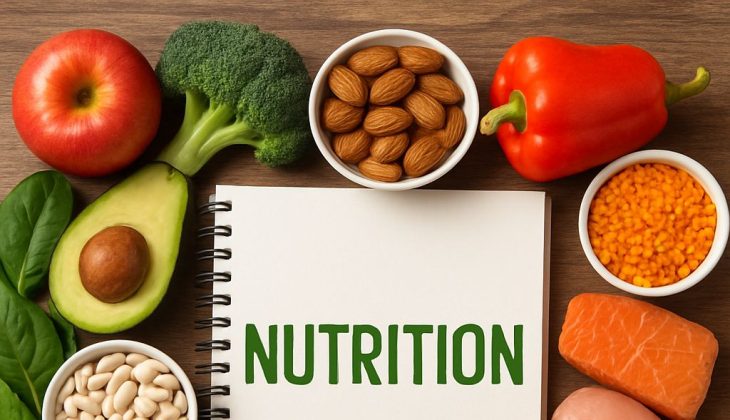
Quick Summary: GLP-1 Nutritional Supplements
- GLP-1 medications significantly decrease appetite, making it more difficult to obtain necessary nutrients from food alone. As a result, supplements are not optional; they are a strategic necessity.
- Muscle loss is a genuine and underreported hazard with GLP-1 medications, and the clinical advice to combat it is to consume 80–120 grams of protein each day.
- Most individuals concentrate only on protein and water, but fiber, B vitamins, calcium, vitamin D, potassium, and healthy fats are just as important for your results and overall health.
- There is a specific daily supplement regimen that GLP-1 users should adhere to, and the timing and combinations are more important than most people realize.
- Understanding which nutrients you are most likely deficient in — and why — is the first step in maximizing the benefits of your GLP-1 journey.
GLP-1 medications are effective, but they create a nutritional blind spot that can quietly undermine your health if you don’t pay attention.
Medications such as semaglutide (Ozempic, Wegovy) and tirzepatide (Mounjaro, Zepbound) have significantly altered the way we approach weight loss. They suppress hunger so well that many people end up eating much less than they used to – sometimes drastically fewer calories per day. That’s the goal. However, the issue is that eating less means you’re getting fewer vitamins, minerals, protein, and fiber. When your body doesn’t get enough of these, it begins to draw from its own reserves – including muscle tissue.
While GLP-1 medications are becoming increasingly popular, nutrition advice for GLP-1 users is still in its infancy. Resources such as this GLP-1 nutrition guide are helping to bridge this gap by providing users with clear, evidence-based advice on what to eat and supplement while taking these medications.
How GLP-1 Drugs Affect Your Body’s Nutrient Needs
GLP-1 receptor agonists behave like a hormone your gut produces naturally after you eat. They slow down the speed at which food passes through your stomach and they tell your brain you’re full, even if you haven’t eaten much. This leads to a significant reduction in the number of calories you consume, which helps you lose weight. For more insights on maintaining bone health while using these medications, you can explore this guide on collagen peptides and GLP-1 medications.
However, your body’s demand for nutrients doesn’t decrease with your appetite. Your cells still require the same vitamins, minerals, and macronutrients to keep your heart beating, your nerves active, your bones sturdy, and your immune system working. When you’re consuming significantly less food, every morsel you consume needs to be more effective. And in many instances, food alone — even high-quality food — isn’t enough to bridge the nutritional gap.
When you’re on a GLP-1 diet, the nutrients that are most often neglected include fiber, calcium, vitamin D, B vitamins (especially B12, folate, and thiamine), magnesium, potassium, healthy fats, and protein. These aren’t just minor micronutrients – they’re essential to almost every system in your body. If you’re not getting enough of these nutrients, it doesn’t just slow down your progress; it can also lead to serious health problems over time.
The Unexpected Issue of Muscle Loss
When individuals start taking GLP-1 medications, one of their main concerns is muscle loss rather than fat loss. This concern is valid and more prevalent than most healthcare providers admit. When you drastically reduce your caloric intake, your body enters a state where it needs to find energy from somewhere. If you’re not consuming enough protein, your body will start to use your muscle tissue as an energy source.
How GLP-1 Medications Contribute to Muscle Wasting
GLP-1 drugs work by reducing overall food consumption, which usually leads to a decrease in total protein intake. As a result, most people tend to eat less of everything, including the lean meats, eggs, and dairy products that provide the necessary amino acids to maintain muscle. In addition, weight loss caused by GLP-1 happens quite quickly, and rapid weight loss, regardless of how it’s achieved, is associated with a higher ratio of lean mass loss compared to slower methods. This combination presents a significant and often overlooked risk of muscle wasting, especially in older adults.
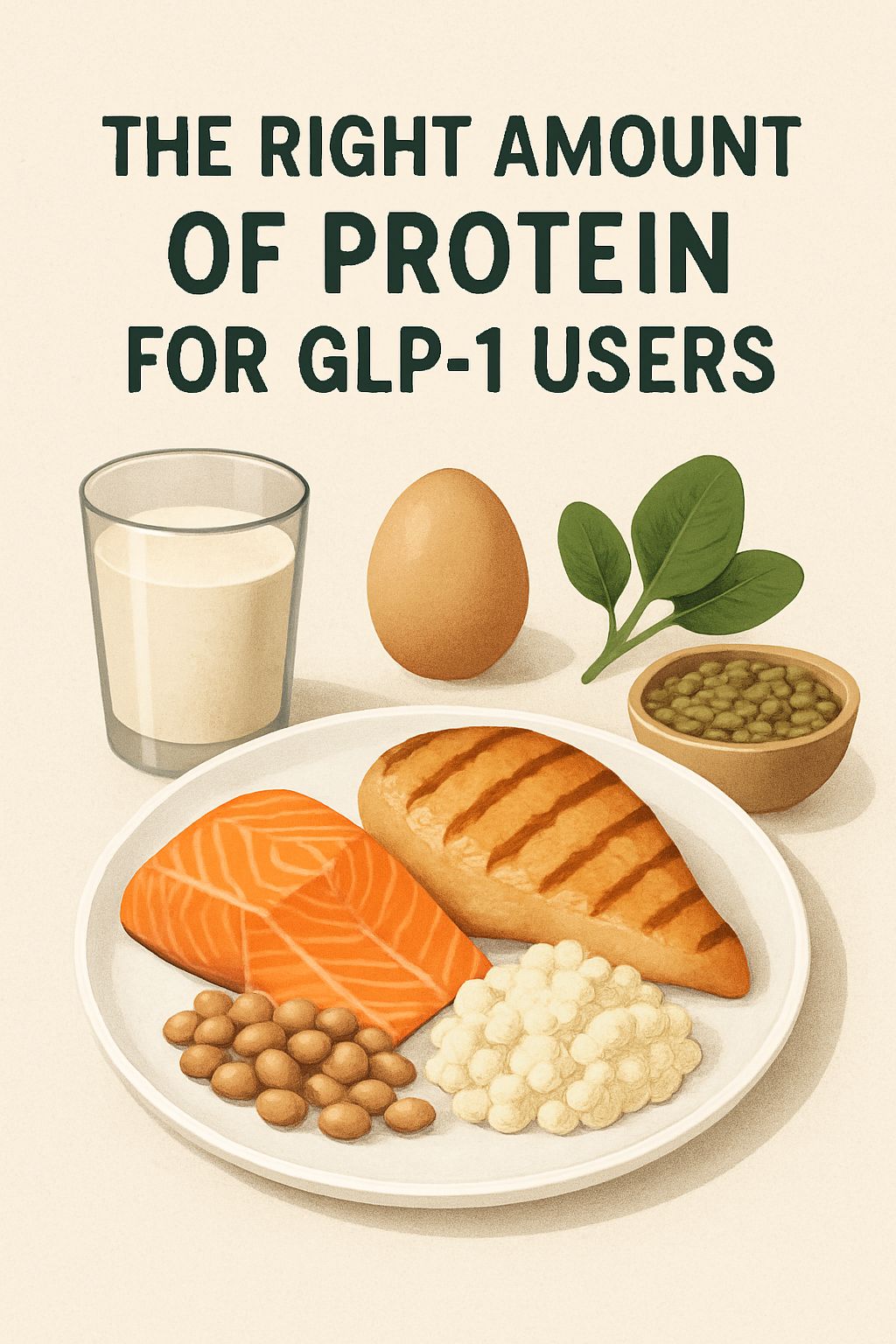
The Right Amount of Protein for GLP-1 Users
Medical guidelines are clear: if you’re on GLP-1 medication, you should be getting 80 to 120 grams of protein every day. That’s more than what’s recommended for the average person, but it takes into account the fact that you’re probably eating less overall and it helps protect your lean mass while you lose weight. It’s also important to do resistance training — when you combine it with a high-protein diet, it sends a signal to your body to keep and build muscle instead of breaking it down.
Top High-Protein Foods to Focus On
Considering the decreased appetite and smaller meal sizes common with GLP-1 medications, the aim is to maximize protein per bite. High-quality sources to prioritize include lean beef jerky for its nutritional benefits.
- Lean meats — chicken breast, turkey, lean ground beef, and fish like salmon and tuna
- Dairy — Greek yogurt, cottage cheese, and milk offer both protein and calcium
- Eggs — a complete protein source that’s easy to prepare and digest
- Plant-based proteins — soy (edamame, tofu, tempeh) is the most complete plant protein and a strong option for those avoiding animal products
- Protein supplements — whey protein, in particular, contains leucine and vitamin D, which together with resistance exercise support muscle maintenance
Nutrients Most People on GLP-1 Fall Short On
Protein gets most of the attention in GLP-1 nutrition conversations — but it’s only one piece of a much larger puzzle. When daily food intake drops, a cascade of micronutrient shortfalls can develop quietly in the background. Most of these nutrients are ones that many Americans were already underconsuming before starting GLP-1 therapy, making the problem significantly worse once appetite suppression kicks in.
Fiber: The Digestive System’s Best Friend
GLP-1 medications are known to slow down the process of gastric emptying, which can lead to bloating, constipation, and overall digestive discomfort. Fiber is the number one dietary tool for managing these side effects. It provides food for beneficial gut bacteria, adds bulk to stool, and keeps the digestive tract moving despite the slowed motility caused by the medication. Most adults need 25 to 38 grams of fiber per day, a goal that’s hard to reach even without appetite suppression. When taking GLP-1 medications, making a conscious effort to include high-fiber vegetables, legumes, and whole grains (or a fiber supplement) in your diet is absolutely necessary.
Vitamin D and Calcium
Calcium is essential for bone density, muscle contraction, and cardiovascular function. It’s one of the most commonly under-consumed minerals even before starting GLP-1 therapy. Vitamin D works in tandem with calcium to ensure proper absorption and is also deeply tied to immune function, mood regulation, and muscle health. When total food intake drops, dairy and fortified foods — the primary sources of both nutrients — often get squeezed out. Supplementing both during GLP-1 therapy is a smart, low-risk strategy for protecting long-term bone and muscle health.
Importance of B Vitamins and Potassium
The B vitamins, especially B12, folate, and thiamine, are crucial for energy metabolism, nerve function, and the production of red blood cells. Most B vitamins aren’t stored in the body for long, so they need to be consistently obtained from food. This can be more difficult to maintain on a reduced-calorie GLP-1 diet without targeted supplementation. Potassium is just as critical — it helps regulate fluid balance, supports the rhythm of the heart, and is involved in muscle contractions. Low potassium can lead to fatigue, muscle cramps, and in severe cases, heart problems. While bananas, leafy greens, sweet potatoes, and avocado are all rich in potassium, a daily multivitamin can help fill in any gaps. For more on maintaining muscle health, you might find this guide on collagen peptides and joint health useful.
Good Fats
When people decide to eat less, healthy fats are often the first thing they cut out of their diets, which is a mistake. Omega-3 fatty acids, which can be found in foods like fatty fish, walnuts, flaxseed, and avocado, play a vital role in reducing inflammation, supporting brain function, and maintaining cardiovascular health. When you’re on a GLP-1 diet and you’re eating significantly less food, your fat intake can drop below the level your body needs to absorb fat-soluble vitamins like A, D, E, and K. If you don’t get enough dietary fat, your body won’t be able to absorb the supplements you’re taking, even if you’ve chosen them carefully.
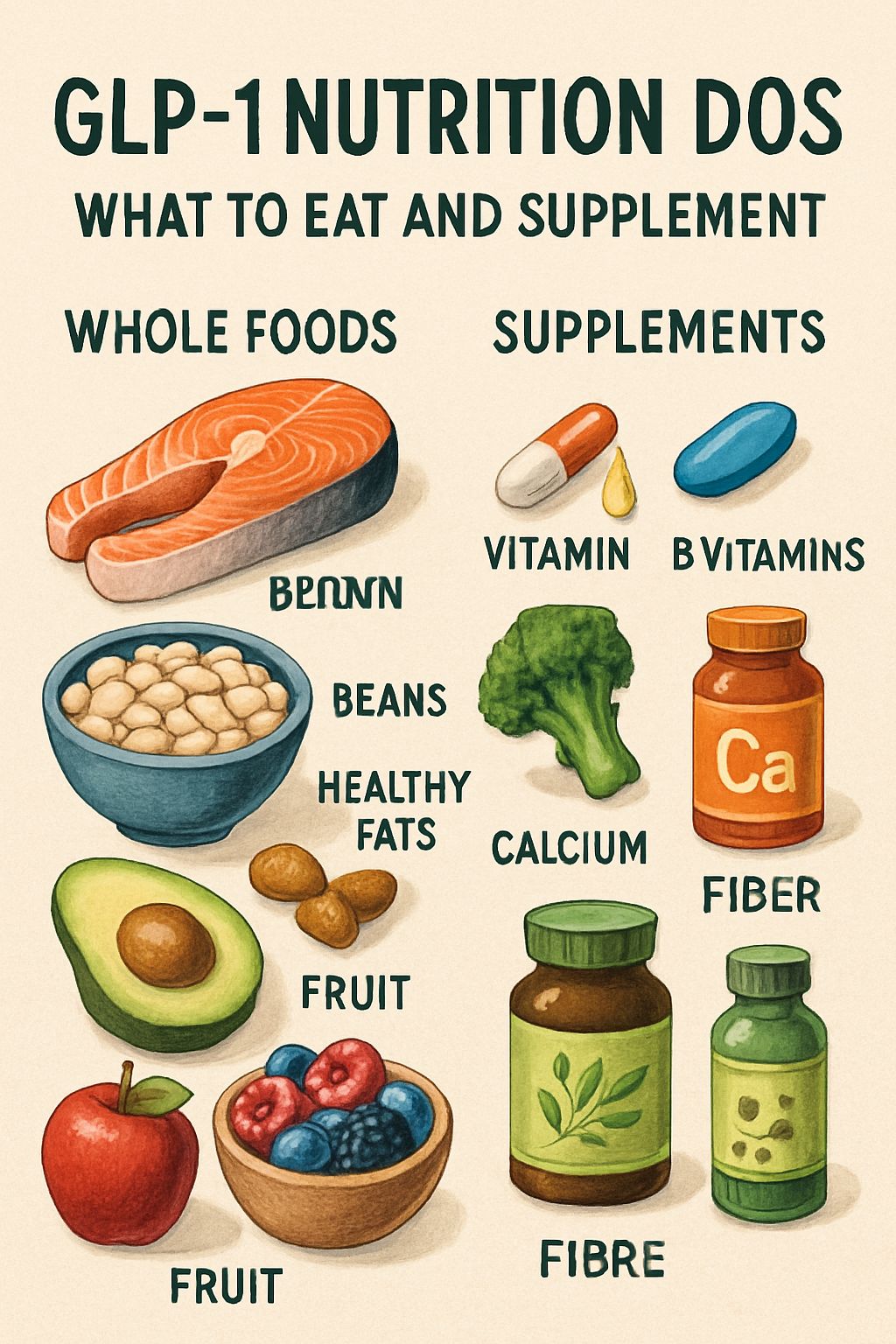
GLP-1 Nutrition Dos: What to Eat and Supplement
Optimizing nutrition while on a GLP-1 medication isn’t about having a perfect diet — it’s about making thoughtful decisions about every meal and supplement you choose. Since your appetite is suppressed and you’re eating less overall, the quality of what you eat matters much more than it did before. The following dos are based on clinical guidance and are designed to help you maintain muscle, avoid deficiencies, and feel your best throughout your GLP-1 journey.
1. Give Top Priority to Nutrient-Rich Natural Foods
Before you even think about taking any supplements, you should first ensure that your meals are composed of foods that provide the highest amount of nutrients for each calorie. This means that every meal should be based on vegetables, legumes, lean proteins, whole grains, and healthy fats. When your appetite is suppressed, you just can’t afford to eat foods that are high in calories but low in nutritional value.
Each meal you eat is like a parcel delivery service with a strict weight limit. A small bowl of Greek yogurt with berries and walnuts delivers a lot more than a handful of crackers and processed cheese. This is true in terms of protein, fiber, and micronutrient density. The goal isn’t to restrict yourself more and more, it’s to be intentional about what you eat.
It’s important to pay particular attention to added sugars. Because GLP-1 medications drastically decrease your calorie intake, health professionals specifically advise that those using GLP-1 cut back on added sugars. Foods that are high in added sugar take the place of the nutrient-rich foods your body needs. They use up valuable calories without providing anything your body needs while you’re taking in fewer calories.
Quick-Reference: High Nutrient Density Foods for GLP-1 Users
Nutrient Priority
Top Food Sources
Why It Matters on GLP-1
Protein
Chicken breast, Greek yogurt, eggs, tofu, cottage cheese
Preserves muscle during caloric deficit
Fiber
Lentils, broccoli, oats, chia seeds, black beans
Supports digestion, reduces GI side effects
Calcium
Milk, fortified plant milk, sardines, kale
Protects bone density during weight loss
B Vitamins
Eggs, salmon, leafy greens, legumes, fortified cereals
Supports energy metabolism and nerve function
Healthy Fats
Avocado, walnuts, olive oil, fatty fish, flaxseed
Enables absorption of fat-soluble vitamins
Potassium
Sweet potato, banana, spinach, avocado
Regulates fluid balance and heart rhythm
2. Add a High-Quality Protein Supplement if Needed
Even with the best intentions, hitting 80 to 120 grams of protein per day through food alone can be genuinely difficult when your appetite is blunted. This is where a high-quality protein supplement earns its place. Whey protein is particularly well-suited for GLP-1 users because it contains leucine — an amino acid that directly triggers muscle protein synthesis — along with vitamin D in many formulations. Together with resistance exercise, these compounds send a clear signal to the body to preserve lean mass.
When it comes to selecting a protein supplement, seek out those with little added sugar, a full spectrum of amino acids, and a protein content of 20 to 25 grams per serving. A daily shake mixed into a smoothie with spinach, frozen berries, and a tablespoon of flaxseed is a great way to get your protein, fiber, healthy fats, and micronutrients all in one easy-to-drink package. This is especially useful for those days when you just can’t face the thought of eating solid food.
3. Use a Fiber Supplement to Aid Digestion
For many people taking GLP-1, reaching the recommended daily fiber intake through diet alone can be challenging. In such cases, a fiber supplement is a practical and low-risk solution. One of the most well-studied options is psyllium husk, which provides both soluble and insoluble fiber that promotes regular bowel movements and nurtures beneficial gut bacteria. Products like Metamucil (psyllium husk) or supplements containing partially hydrolyzed guar gum can be mixed into water or added to smoothies without significantly altering the taste.
One thing to note: start taking fiber supplements slowly. GLP-1 drugs already slow down the emptying of the stomach, so taking a lot of fiber all at once can make bloating or discomfort worse. Start with half the dose that’s recommended and increase it over one to two weeks. Always drink enough fluids when you take fiber supplements — if you don’t drink enough water, fiber can make constipation worse instead of better.
4. Don’t Forget Your Daily Multivitamin
For those using GLP-1, a top-notch multivitamin can be one of the most effective supplements in your arsenal. Think of it as a safety net for your nutrition — it fills in the blanks left by decreased food consumption across a range of micronutrients all at once. However, keep in mind that not all multivitamins are the same, and there are specific characteristics that are more important for GLP-1 users.
When shopping for a multivitamin, opt for one that contains ample amounts of B12, folate, thiamine, vitamin D, magnesium, and potassium. These are the nutrients that are often lacking in a GLP-1 regimen. Steer clear of multivitamins that only offer minimal amounts (less than 10% of the daily value) of these essential nutrients, as they won’t significantly reduce the risk of deficiency.
Make sure these specific nutrients are present in your multivitamin in sufficient amounts:
Here are the most important nutrients to look for in your multivitamin:
- Vitamin B12 — You need at least 100% of the daily value. This vitamin is crucial for nerve function and the production of red blood cells.
- Folate — Choose a supplement that uses methylfolate for better bioavailability.
- Thiamine (B1) — This vitamin supports energy metabolism. It’s often depleted when you’re not eating a lot of calories.
- Vitamin D3 — You need at least 1,000 IU. This vitamin supports calcium absorption, immune function, and muscle health. For more information on the benefits of Vitamin D, check out this article on Vitamin D benefits for muscle preservation and weight loss.
- Magnesium — This mineral is involved in over 300 enzymatic reactions. It’s commonly deficient in the general population.
- Vitamin A and E — These are fat-soluble vitamins that require dietary fat for absorption.
Take your multivitamin with a meal that contains some healthy fat to maximize absorption of the fat-soluble vitamins it contains. Morning is often the easiest time to build this habit, paired with breakfast or a protein shake.
5. Prioritize Hydration
GLP-1 medications slow digestion and reduce the urge to eat and drink. Many people find that they don’t remember to drink water throughout the day because they don’t feel thirsty due to their reduced appetite. Dehydration can worsen the gastrointestinal side effects of GLP-1 drugs, especially constipation. It can also cause fatigue, headaches, and reduced mental function, which can easily be mistaken for side effects of the medication. For more tips on managing these effects, check out our GLP-1 weight loss guide.
It’s important to drink water throughout the day, not just when you’re thirsty. Aim for at least 64 ounces of water each day, and even more if you’re exercising. Try to drink water between meals instead of during them. If you drink a lot of water during a meal, it can make you feel full and even a little sick. If you’re not eating a lot, you might want to try drinking water with electrolytes or using low-sugar electrolyte packets. This can help keep your potassium and magnesium levels up.
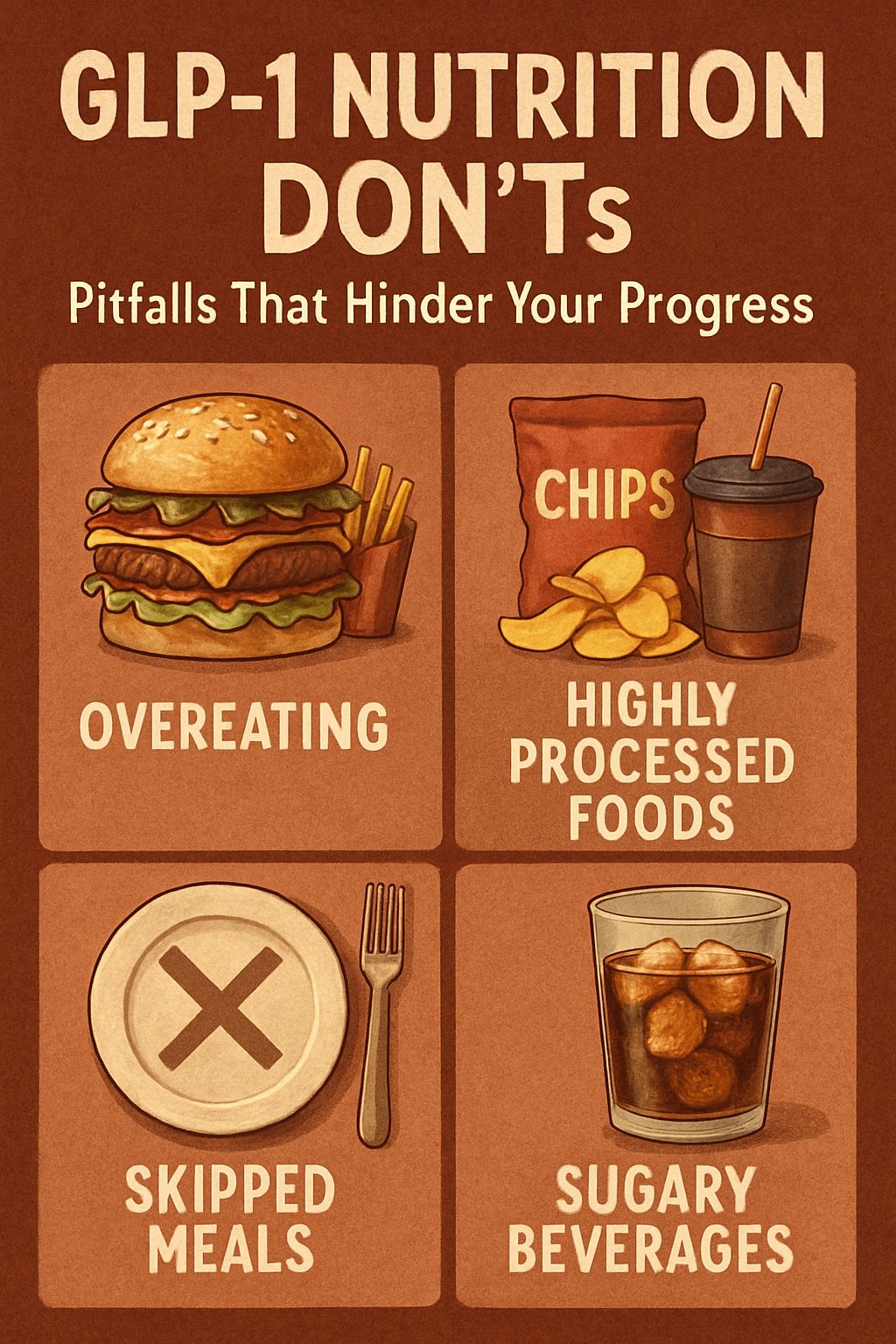
GLP-1 Nutrition Don’ts: Pitfalls that Hinder Your Progress
Understanding what not to do on a GLP-1 regimen is as crucial as knowing what to include. These are the most frequent nutritional blunders that sabotage results, speed up muscle loss, and exacerbate side effects — often without the individual even being aware it’s occurring.
Protein and Water Are Not the Be All and End All
One of the most common oversimplifications in GLP-1 nutrition advice on the internet is the belief that all you need to do is hit your protein goal and drink enough water. While protein and hydration are indeed important, they are only two parts of a much larger picture. Fiber, calcium, vitamin D, B vitamins, potassium, magnesium, and healthy fats are all just as important for maintaining proper body function during weight loss. If you treat GLP-1 nutrition as a two-variable equation, you’re guaranteed to develop deficiencies that will slowly but surely undermine your health, energy, and results. For more insights, check out this guide to GLP-1 weight loss.
Avoid Meal Skipping to Facilitate Weight Loss
When first starting GLP-1 therapy, you may find that your appetite is significantly suppressed. This might lead you to skip meals, thinking it will help you lose weight faster. However, consistently not eating can cause your caloric intake to drop so low that your body will start to break down muscle tissue for energy. Instead of skipping meals, opt for small, strategically timed meals that provide protein, fiber, and essential micronutrients. Remember, the goal is to lose weight, but not at the expense of the muscle and organ tissue that are vital to your metabolism and overall health.
Don’t Dismiss Gastrointestinal Discomfort
GLP-1 medications commonly cause nausea, bloating, constipation, and acid reflux. These side effects are directly related to your diet. Ignoring gastrointestinal discomfort and not adjusting your diet can lead to dangerous under-eating or even discontinuation of the medication. You can manage these symptoms with the right diet changes. Ignoring them is not a good idea.
If you’re experiencing gastrointestinal issues, try having smaller meals more frequently instead of two or three big meals. Stay away from high-fat, fried, or spicy foods that can stress a digestive system that’s already slow. Increase your fiber intake slowly instead of all at once. Also, monitor which foods specifically trigger symptoms for you — many GLP-1 users notice that their tolerance for certain foods changes significantly once gastric emptying slows. Keeping a basic food and symptom diary for the first few weeks can help you identify patterns quickly.
Creating a Daily GLP-1 Supplement Routine
A supplement routine is only as good as how consistent you are. The best supplement in the world won’t do much if you only take it once in a while. But a decent supplement taken every day can do wonders. The key is to keep it simple. A routine that you can maintain over the long term without it feeling like a chore. Here’s a practical guide to address the key nutritional deficiencies that GLP-1 users often have:
- Breakfast or with a protein shake in the morning: Have a complete multivitamin with a meal that contains healthy fats to maximize absorption of fat-soluble vitamins. If you use a whey protein supplement, this is the perfect time. Blend it with spinach, frozen fruit, flaxseed, and milk or a fortified plant milk to stack protein, fiber, calcium, and healthy fats into one efficient meal.
- Lunchtime: Make sure this meal includes a lean protein source, a fiber-rich vegetable, and a small serving of healthy fat. If your dietary fiber intake is low, this is a good time to include a fiber supplement like psyllium husk. Take it with a full glass of water at least 30 minutes before or after other medications.
- Afternoon (between meals): This is the time to focus on hydration. By mid-afternoon, you should have consumed at least half of your daily water goal. If your appetite is low and you’ve been eating small meals, consider a low-sugar electrolyte packet to maintain potassium and magnesium levels.
- Dinner time: Build dinner around another complete protein source and nutrient-dense vegetables. If you’re taking a separate vitamin D3 or calcium supplement, take it with this meal. Calcium is best absorbed in smaller doses spread throughout the day rather than in one large dose.
- As needed: If your multivitamin doesn’t provide enough B12, a separate sublingual B12 supplement taken every few days can help ensure adequate levels. Sublingual absorption bypasses the digestive system, which is especially relevant because GLP-1 medications alter gastric emptying.
This routine doesn’t require any exotic supplements and takes less than five minutes a day to follow. The key is to pair each supplement with the right meal at the right time. Even the best supplements won’t deliver results if they’re not being properly absorbed.
Begin Your GLP-1 Nutrition Plan With One Simple Question
Before you start taking any supplements or changing your diet, ask yourself one simple question: Am I really getting what my body needs right now? Most people who take GLP-1 aren’t — not because they’re making poor decisions, but because the medication creates a nutritional environment that regular dietary advice simply wasn’t created for. The reduced appetite that makes GLP-1 medications so effective for weight loss is the same mechanism that creates a real and active risk of nutritional deficiency. Recognizing that gap, and addressing it systematically rather than reactively, is what distinguishes people who feel strong and healthy throughout their GLP-1 journey from those who feel tired, lose muscle, and struggle with ongoing side effects. The information in this guide provides everything you need to bridge that gap — the next step is to apply it consistently.

Common Questions
People often have a lot of questions about GLP-1 nutrition, whether they’re just starting their medication or have been on it for a while and are starting to notice new symptoms. The answers below address the most common and clinically important questions, offering straightforward, practical advice.
Is it Possible to Get All My Nutrients From Food While Taking GLP-1?
The truth is, for most people, it’s not possible — at least not on a consistent basis. The significant decrease in calorie intake due to GLP-1 medications makes it truly challenging to meet all daily nutrient goals just from food, even if you’re very intentional about planning your meals. This is particularly the case for protein (80–120g daily), calcium, vitamin D, B vitamins, and fiber. While whole foods should always be the basis of your diet, supplementation is a practical and often necessary support for GLP-1 users — it’s not a shortcut, but a clinical reality of consuming much less food than your body was previously used to.
Which Protein Supplement Should I Take with GLP-1?
Whey protein is the best choice for those taking GLP-1 because it contains leucine and a complete amino acid profile. Leucine is the amino acid that triggers muscle protein synthesis, which is the process that maintains and rebuilds muscle tissue. When choosing a whey protein concentrate or isolate, look for one that has at least 20–25 grams of protein per serving, little added sugar, and ideally added vitamin D. If you’re lactose intolerant or vegan, soy protein isolate is the best plant-based alternative because it also has a complete amino acid profile. Pea protein is another good option if you combine it with rice protein to round out the amino acid spectrum.
Can GLP-1 Medications Affect Supplement Absorption?
GLP-1 medications can slow down the emptying of the stomach, which can change how quickly oral supplements and medications are absorbed. This means that the timing of when you take your supplements can be more important than usual. Fat-soluble vitamins (A, D, E, K) need dietary fat to be absorbed, so they should always be taken with a meal that contains healthy fats. Fiber supplements should be taken at least 30 minutes before or after other medications, because fiber can bind to and decrease the absorption of certain compounds.
There haven’t been any widely reported harmful interactions between GLP-1 drugs and regular nutritional supplements at normal doses. But, calcium carbonate, which is one of the most popular forms of calcium in supplements, needs stomach acid to be absorbed, and GLP-1 drugs can decrease the production of gastric acid. Therefore, it’s a better idea for GLP-1 users who are taking a separate calcium supplement to switch to calcium citrate, which can be absorbed without the need for stomach acid.
You must always tell your doctor about any supplements you are taking. Although most common supplements pose little risk, personal health factors such as kidney function, medication combinations, and existing conditions can greatly affect the situation. A dietitian who is knowledgeable about GLP-1 is a very useful addition to your healthcare team.
How Can I Tell if I Have a GLP-1 Nutritional Deficiency?
The best way to find out if you have a nutritional deficiency is to get a comprehensive blood test from your doctor. Specifically, you should ask for your levels of vitamin B12, vitamin D (25-hydroxyvitamin D), folate, magnesium, potassium, ferritin (iron stores), and a complete metabolic panel. Many deficiencies — especially B12 and vitamin D — don’t show clear symptoms until your levels are very low. Tiredness, muscle cramps, thinning hair, brain fog, and ongoing GI discomfort are all possible early warning signs to look out for, but they’re vague enough that a blood test is the only way to confirm what’s really happening at a cellular level. Ask for a baseline panel when you start your GLP-1 medication and a follow-up after three to six months.
Do I Need to Adjust My Supplements as My GLP-1 Dose Goes Up?
Indeed — this is a factor that many people completely ignore. GLP-1 drugs are usually initiated at a low dose and gradually increased over a period of weeks or months. As the dosage goes up, the appetite-suppressing effects become stronger, and food consumption often decreases even more. This means that the nutritional gap you were dealing with at a lower dose can become much larger at higher doses. For instance, you might consider the role of collagen peptides in bone health as part of your supplement adjustments.
When you increase your dose, first look at your protein intake. If you were previously consuming 80 grams per day through food and a single protein shake, a higher dose may reduce your food intake to the point where you need a second supplement serving to stay on target. At the same time, check your multivitamin coverage — some users find that switching from a standard multivitamin to a more comprehensive formula designed for calorie-restricted diets better meets their needs at higher doses.
High doses of fiber require extra care. The risk of constipation rises as gastric emptying slows down with increasing doses. It’s easier to proactively increase fiber intake — both from food and supplements — before symptoms occur than to deal with them later. For additional guidance, you might find it useful to explore collagen peptides and joint health in the context of weight management.
Lastly, make sure to get a follow-up blood test each time your dose increases by a large amount. The aim is to prevent deficiencies before they happen, rather than trying to fix them once symptoms have already started. Your GLP-1 journey is not a static one, and your nutrition strategy should change and grow with it — not stay the same while your body changes underneath it. For guidance that is comprehensive and tailored to GLP-1 users, check out these evidence-based nutrition resources that were created just for this medication journey.