Beef Jerky Nutrition & Phytates: What You Need to Know
- Beef jerky contains virtually no phytates — as an animal-based food, it skips the mineral-blocking antinutrient found heavily in grains, legumes, and seeds.
- Despite being phytate-free, beef jerky delivers serious mineral density, including 74% of your daily zinc and 68% of your daily iron in just 100 grams.
- The sodium content in beef jerky sits at a jaw-dropping 2,081mg per 100g — nearly 90% of the recommended daily limit in a single serving size most people exceed.
- Beef jerky has a glycemic index of zero, making it one of the few high-protein snacks with virtually no blood sugar impact.
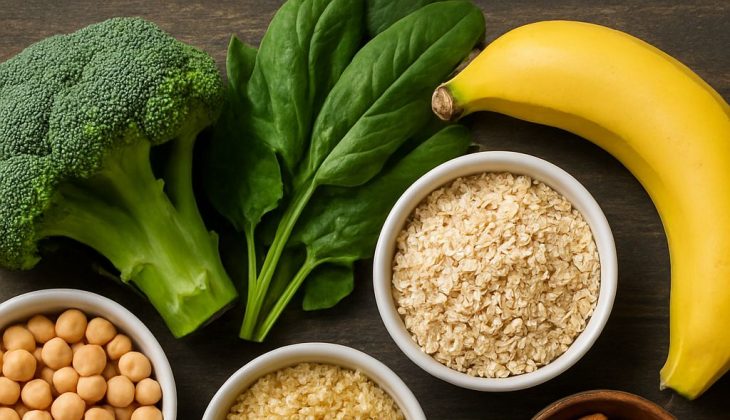
- There’s a surprising phytate connection when beef jerky is eaten alongside plant-based snacks — keep reading to understand how food combining affects your mineral absorption.
Most people grab beef jerky as a quick protein hit without thinking twice about what’s actually happening nutritionally. The phytate question is one worth unpacking carefully, because it changes how you should think about this snack entirely.
Nutrition awareness resources like those found at nutrition-focused food guides often highlight antinutrients like phytates as a concern across all snack foods — but beef jerky sits in a completely different category than plant-based snacks when it comes to this issue. Understanding why matters for anyone optimizing their diet around mineral absorption and protein intake.
Beef Jerky Is Packed With Nutrients — But Phytates Complicate the Picture
Beef jerky is a concentrated source of protein, zinc, iron, phosphorus, and B vitamins. The dehydration process used to make it removes water weight, which means nutrients become more dense per gram compared to fresh beef. A 100g serving delivers 33.2g of protein, 410 calories, and meaningful amounts of nearly every essential mineral your body needs daily. But the moment you start pairing it with grain-based crackers, trail mix, or legume snacks — the phytate conversation becomes very relevant.
What Are Phytates and Why Do They Matter in Beef Jerky?
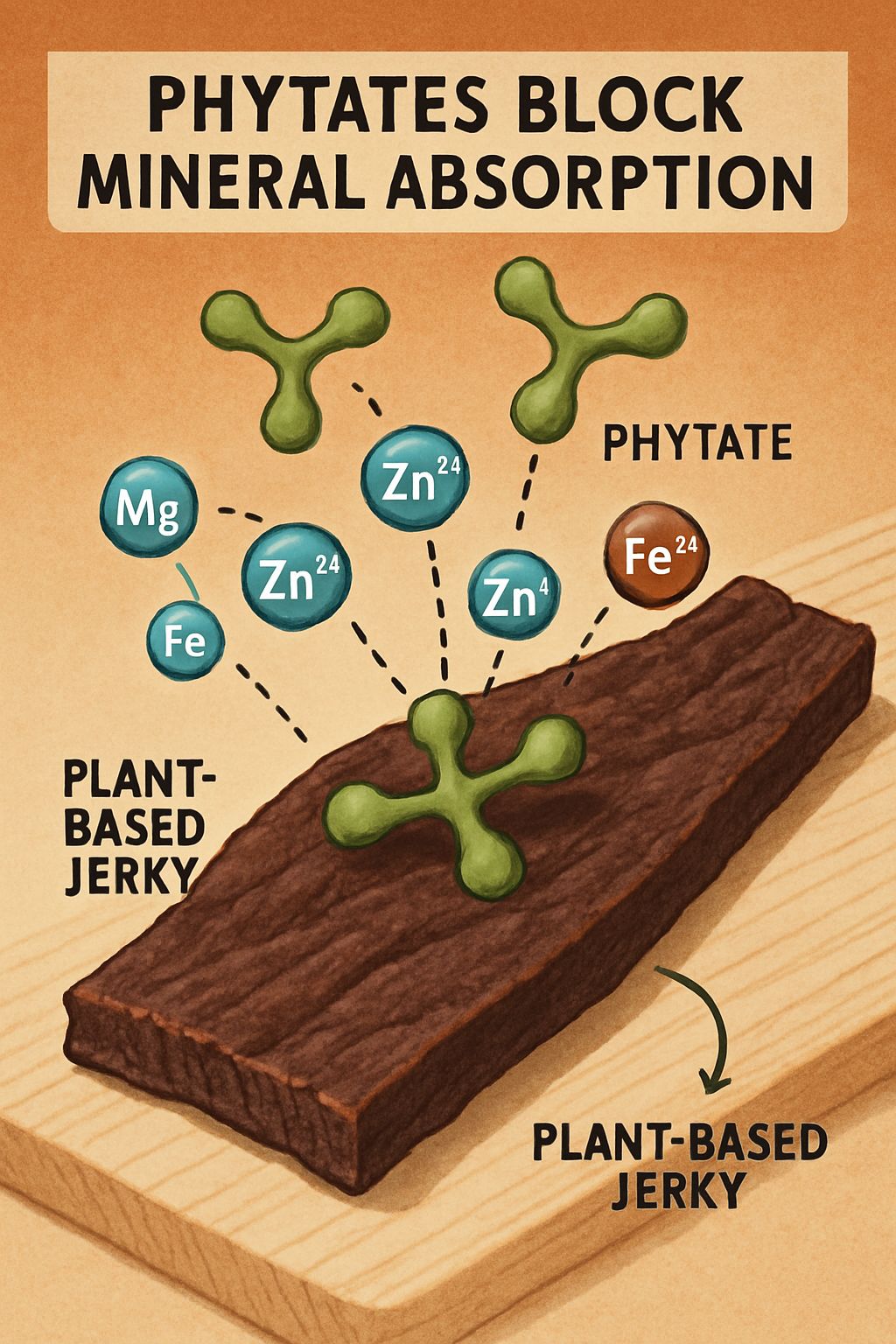
Phytates, also called phytic acid, are naturally occurring compounds found in the seeds of plants — including grains, nuts, legumes, and some vegetables. Their biological role is to store phosphorus for the plant during germination. The problem for humans is that phytic acid binds tightly to minerals like zinc, iron, calcium, and magnesium in the digestive tract, forming insoluble complexes the body cannot absorb. This is why nutritionists refer to phytates as antinutrients.
How Phytates Block Mineral Absorption
When phytic acid enters your digestive system, it acts like a magnet for positively charged mineral ions. It latches onto zinc, iron, and phosphorus before your intestines can absorb them, escorting them out of the body unused. Research into plant-based meat analogs has shown that enzymatic treatment with phytase can reduce phytic acid content by up to 32%, and extrusion cooking can degrade it by a further 18% — illustrating just how aggressively food scientists work to counteract this compound. The practical takeaway: the more phytate-rich foods you eat in one sitting, the more minerals you lose from everything else consumed at the same time. For more detailed information, you can explore the impact of fermentation and phytase treatment on phytic acid.
Why Beef Jerky Has Lower Phytate Levels Than Plant Foods
Beef jerky is derived entirely from animal muscle tissue. Phytates are a plant defense mechanism — they simply don’t exist in meaningful quantities in animal products. This is one of the most nutritionally significant advantages meat-based snacks have over plant-based alternatives. While a handful of mixed nuts or a serving of whole grain crackers can carry substantial phytate loads that compete with mineral absorption, beef jerky delivers its zinc and iron in a highly bioavailable form with no internal interference.
This becomes especially important when you look at zinc specifically. Plant-based zinc sources are routinely compromised by phytate binding, which is why vegetarians and vegans are statistically at higher risk for zinc deficiency. Beef jerky’s zinc — at 8.1mg per 100g — arrives without that obstacle.
The indirect phytate risk for beef jerky consumers comes from meal context, not from the jerky itself. If you’re eating jerky as part of a snack board loaded with hummus, crackers, and dried fruit, the phytates from those foods will still compete for absorption of the minerals the jerky provides. Eating jerky as a standalone snack eliminates this risk entirely.
Beef Jerky Macronutrient Breakdown
Understanding beef jerky’s macronutrient profile helps clarify why it earns its place as a serious performance and satiety snack — not just a gas station convenience item.
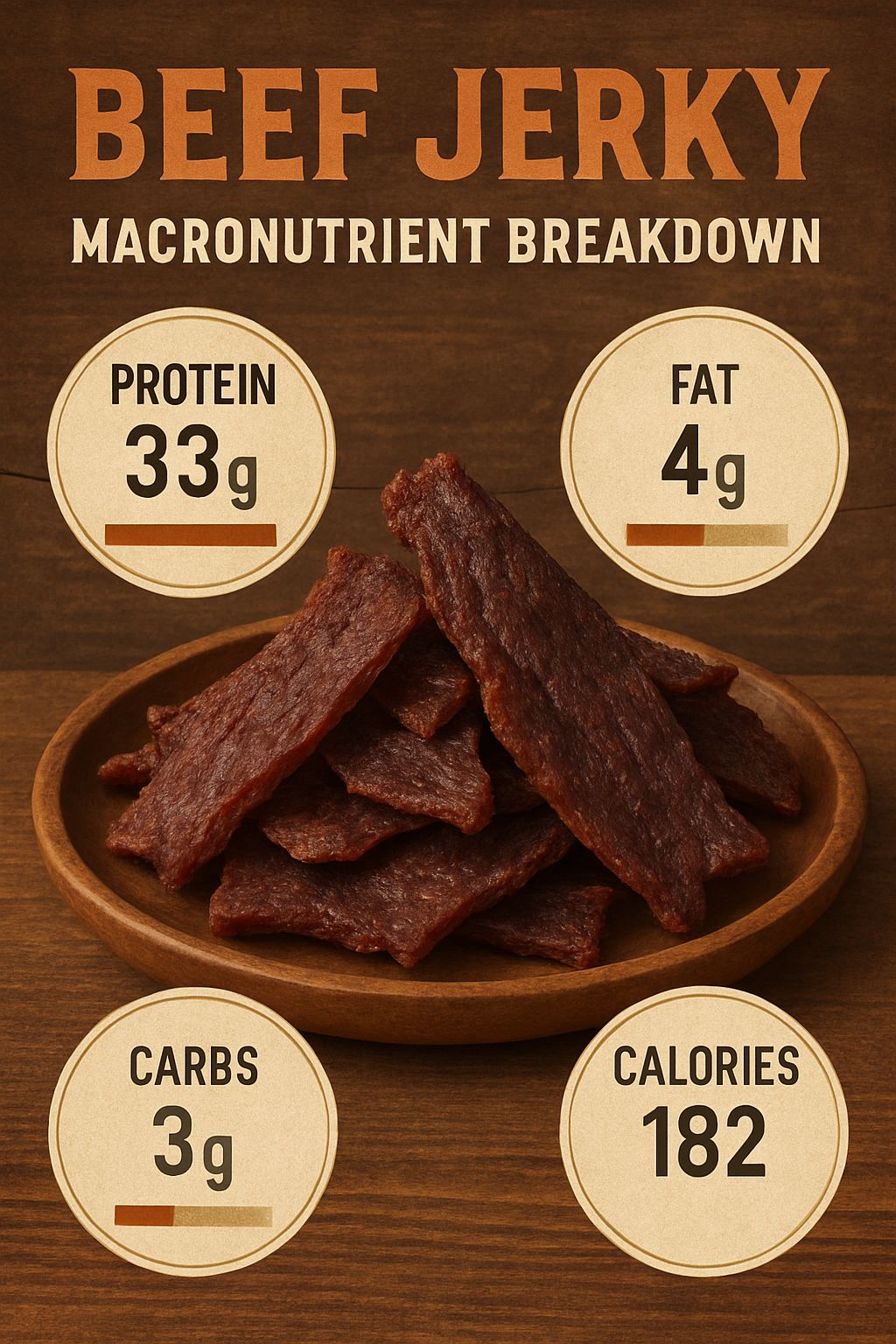
Protein Content: 33.2g per 100g
Beef jerky is one of the most protein-dense portable foods available. At 33.2g of protein per 100g, it outpaces fresh chicken breast on a per-gram basis simply because the water has been removed. This concentrated protein content supports muscle repair, satiety, and metabolic function. For athletes, travelers, or anyone needing a protein source without refrigeration, the math is straightforwardly favorable.
Fat Breakdown: Saturated vs. Unsaturated
Per 100g, beef jerky contains approximately 11g of saturated fat and 11g of monounsaturated fat, with only 1g of polyunsaturated fat. That near-equal split between saturated and monounsaturated fat mirrors the profile of many cuts of beef. The fat type distribution breaks down roughly as:
- Saturated fat: ~47% of total fat
- Monounsaturated fat: ~49% of total fat
- Polyunsaturated fat: ~4% of total fat
This profile is neither alarming nor exceptional by current nutritional standards. Monounsaturated fats are widely considered heart-supportive, and the saturated fat content, while present, comes packaged alongside a robust mineral and protein payload that changes the overall nutritional calculus.
Total fat content for beef jerky runs high on a per-100g basis, primarily because of water removal concentrating all macronutrients. When consumed in realistic serving sizes — typically a 20g to 28g piece — the fat numbers become much more manageable. A single large piece contains roughly 3-4g of total fat, which is negligible in most dietary frameworks.
|
Macronutrient |
Per 100g |
Per 1 oz (28.35g) |
Per Large Piece (20g) |
|---|---|---|---|
|
Calories |
410 kcal |
116 kcal |
82 kcal |
|
Protein |
33.2g |
~9.4g |
~6.6g |
|
Total Fat |
~23g |
~6.5g |
~4.6g |
|
Saturated Fat |
11g |
~3.1g |
~2.2g |
|
Monounsaturated Fat |
11g |
~3.1g |
~2.2g |
|
Polyunsaturated Fat |
1g |
~0.3g |
~0.2g |
Carbohydrates, Sugar, and Fiber Content
Beef jerky’s carbohydrate content is modest but worth examining. Per 100g, total carbohydrates break down to approximately 9g of sugar and 1.8g of fiber, with roughly 0.2g in other carbohydrate forms. The sugar content comes largely from marinades and seasonings used during production — teriyaki and sweet flavored varieties will push this number higher. If glycemic control is a priority, choosing minimally seasoned or original-flavor jerky keeps the sugar contribution close to negligible at standard serving sizes.
Key Minerals in Beef Jerky and Phytate Interference
The mineral profile of beef jerky is where it genuinely separates itself from most portable snack foods. Because phytates are absent from the jerky itself, every milligram of zinc, iron, and phosphorus it contains is available for absorption without the binding interference that plagues plant-based mineral sources. This bioavailability advantage is significant — and it’s exactly why beef jerky earns a place in diets focused on mineral optimization, not just protein intake.
Zinc: 8.1mg per 100g — 74% of Daily Value
Beef jerky’s zinc content is exceptional. At 8.1mg per 100g, it covers 74% of the daily recommended value and delivers 1.3 times more zinc than broiled beef on a gram-for-gram basis — a direct result of water removal concentrating the mineral content. Zinc supports immune function, wound healing, testosterone production, and DNA synthesis. Getting this much of your daily zinc from a single snack food, in a form completely unhindered by phytate interference, is nutritionally rare. For comparison, plant-based zinc sources like legumes and whole grains routinely lose a significant portion of their zinc to phytate binding before the body ever has a chance to absorb it.
Iron: 5.4mg per 100g — 68% of Daily Value
Iron in beef jerky comes in the form of heme iron — the type found exclusively in animal products and absorbed at a substantially higher rate than the non-heme iron found in plants. At 5.4mg per 100g, beef jerky covers 68% of the daily iron requirement and delivers 2.1 times more iron than broiled beef. Heme iron absorption rates range from 15% to 35%, compared to just 2% to 20% for non-heme iron — and phytates in plant foods push that non-heme absorption rate even lower. Beef jerky sidesteps both problems entirely.
Phosphorus: 407mg per 100g — 58% of Daily Value
Phosphorus in beef jerky comes in at 407mg per 100g, covering 58% of the daily value. That’s 2.2 times more phosphorus than chicken meat on an equal weight basis. Phosphorus plays a critical role in bone structure, energy metabolism through ATP production, and kidney function. Unlike phosphorus in plant foods — where it’s often stored as phytate-bound phosphorus the body struggles to release — the phosphorus in beef is in a freely bioavailable form that the body absorbs efficiently without enzymatic assistance.
Copper and Potassium Levels
Copper in beef jerky checks in at 0.23mg per 100g — 25% of the daily value, and notably 1.6 times more than shiitake mushrooms, which are commonly cited as a top copper source. Potassium sits at 597mg per 100g, covering 18% of the daily value and delivering 4.1 times more potassium than cucumber. Potassium is essential for blood pressure regulation and muscle contraction, and while 18% might seem modest, it’s a meaningful contribution from a shelf-stable snack with no preparation required.
Sodium Content in Beef Jerky: Top 1% of All Foods
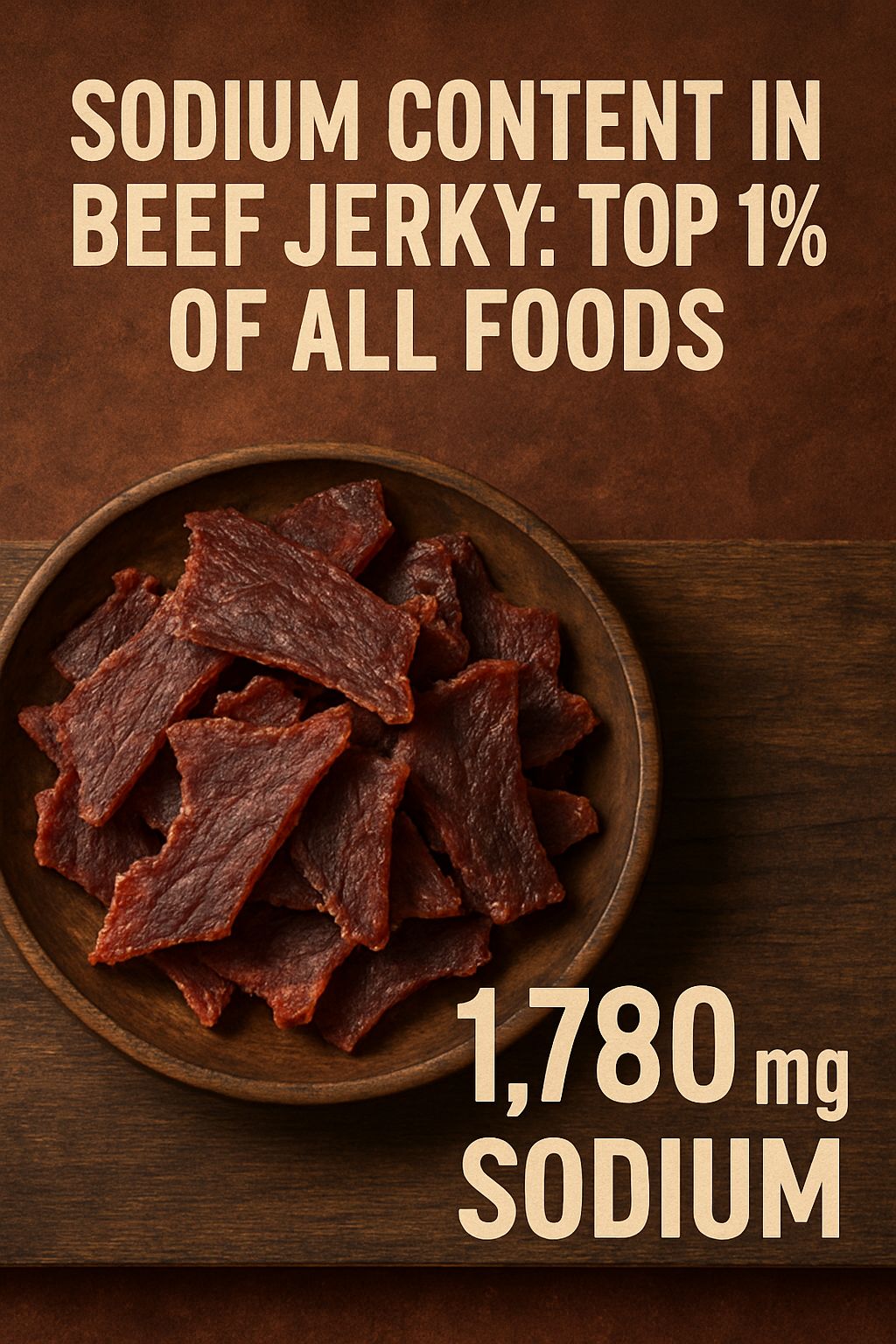
There is no way to discuss beef jerky nutrition honestly without confronting its sodium content directly. At 2,081mg of sodium per 100g, beef jerky sits at 90% of the recommended daily sodium limit in a single 100g serving — placing it firmly in the top 1% of all foods by sodium concentration. This is a preservation reality, not a manufacturing oversight. Salt is fundamental to the jerky-making process, inhibiting bacterial growth and extending shelf life without refrigeration.
For most healthy adults consuming jerky in realistic portion sizes — a 20g to 28g piece — the actual sodium intake per serving lands around 415mg to 590mg, which is meaningful but not catastrophic in the context of an otherwise low-sodium diet. The concern escalates when multiple servings are consumed in one sitting, or when jerky is paired with other sodium-heavy foods. People managing hypertension, kidney disease, or cardiovascular conditions should treat beef jerky as an occasional food rather than a daily staple, and should prioritize low-sodium jerky varieties where available.
Beef Jerky Calories and Glycemic Impact
Calorie density and glycemic response are two separate but equally important measures when evaluating any snack food. Beef jerky delivers a high-calorie punch per 100g, but its glycemic footprint is essentially zero — a combination that makes it uniquely useful for sustained energy without blood sugar disruption.
Caloric Density: 410 kcal per 100g
At 410 calories per 100g, beef jerky is calorie-dense by weight — a direct consequence of moisture removal during the drying process. In practical terms, a single large piece weighing 20g contains approximately 82 calories, and a standard 1oz (28.35g) serving delivers around 116 calories. Those numbers are reasonable for a high-protein snack, but the caloric density means portion awareness matters. Eating jerky straight from a large bag without tracking pieces is an easy way to consume 400+ calories without realizing it. Measured servings make the caloric math work in your favor — giving you strong protein and mineral returns for a controlled calorie investment.
Glycemic Index of Zero: What It Means for Blood Sugar
Beef jerky has a glycemic index of zero. Because it contains no meaningful carbohydrates from starch or glucose-releasing sugars in its base form, it produces no measurable spike in blood glucose after eating. This makes it one of the few satisfying, portable snacks that works cleanly for people following low-carb, ketogenic, or diabetic-friendly eating patterns. The small amount of sugar present in flavored varieties comes from marinades, and even then, the per-serving impact remains low in standard portion sizes.
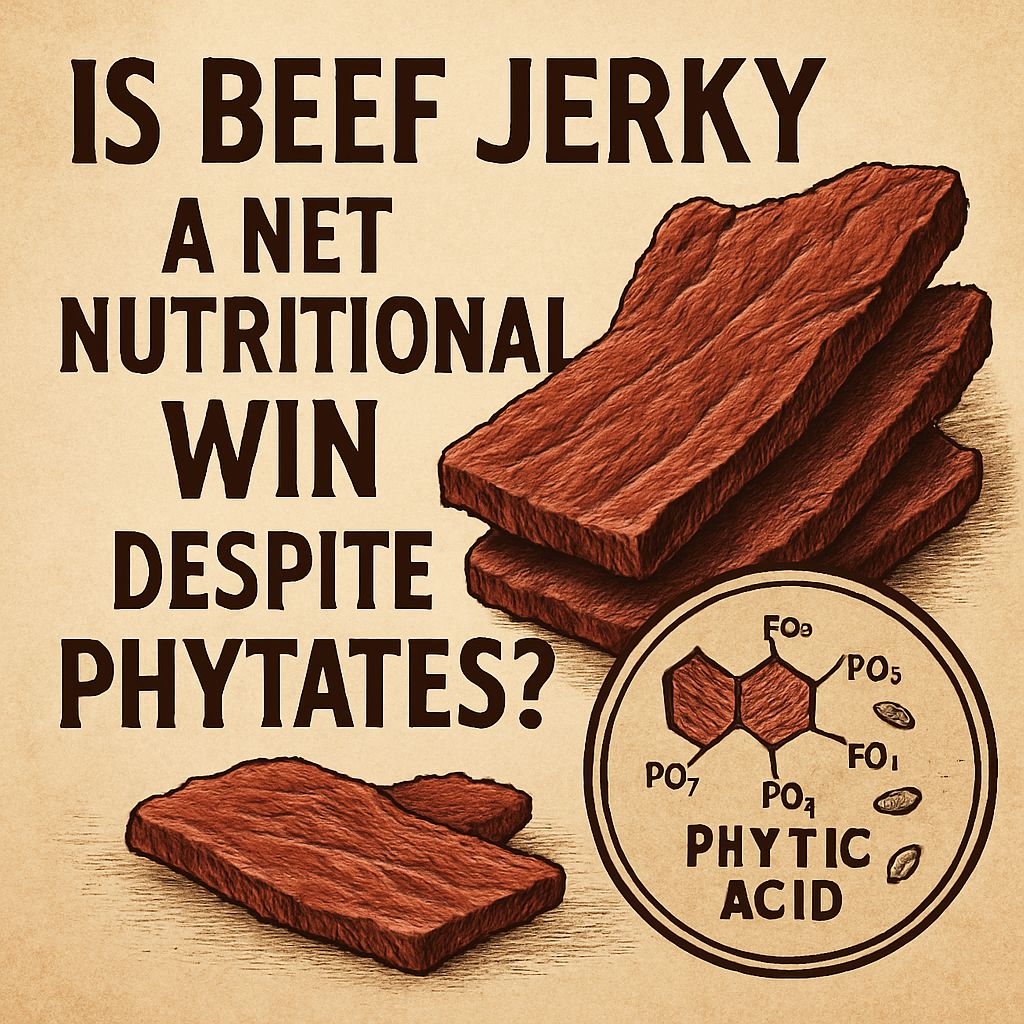
Is Beef Jerky a Net Nutritional Win Despite Phytates?
The short answer is yes — and the phytate angle actually strengthens the case for beef jerky rather than weakening it. Since beef jerky contains no meaningful phytates of its own, every mineral it delivers is absorbed efficiently by the body. The zinc, iron, phosphorus, and copper in beef jerky arrive in highly bioavailable forms, unencumbered by the antinutrient interference that makes plant-based mineral sources far less reliable.
The real nutritional trade-off with beef jerky isn’t about phytates at all — it’s about sodium. The 2,081mg per 100g sodium content is the single most legitimate nutritional concern attached to this food. For people without blood pressure or kidney issues, eating jerky in measured portions keeps this concern manageable. For those with cardiovascular concerns, low-sodium jerky varieties are widely available and worth prioritizing.
Weigh the full picture: exceptional protein density, zero glycemic impact, top-tier zinc and iron bioavailability, meaningful potassium and copper content, and no phytate interference. The sodium caveat is real, but it doesn’t erase the genuine nutritional value beef jerky provides — especially as a standalone snack consumed in reasonable amounts.
Frequently Asked Questions
Here are the most common questions people ask about beef jerky’s phytate content and overall nutritional profile, answered with the specificity the topic deserves.
Does beef jerky contain phytates?
No — beef jerky does not contain phytates in any meaningful quantity. Phytic acid is a plant-based compound that plants use to store phosphorus in seeds. It is found in grains, legumes, nuts, and certain vegetables. Beef is derived from animal muscle tissue, which contains no phytic acid by nature.
This distinction has real nutritional consequences. Foods high in phytates — like whole grains, lentils, and soy products — can block the absorption of zinc, iron, and calcium by binding to these minerals before the intestines can absorb them. Beef jerky skips this problem entirely. The minerals you consume from jerky are absorbed without antinutrient competition, provided the jerky is eaten away from high-phytate foods.
- Plant foods with high phytate content: wheat bran, soybeans, lentils, almonds, oat bran
- Animal foods with negligible phytate content: beef jerky, chicken, fish, eggs, dairy
- Practical tip: Avoid pairing jerky with crackers, trail mix, or hummus in the same sitting if mineral absorption is a priority
- Processing impact: Even in plant-based meat analogs, enzymatic treatment only reduces phytic acid by up to 32% — beef jerky starts at essentially zero
The bottom line is simple: beef jerky is one of the cleanest mineral delivery vehicles available in snack form, precisely because it bypasses the phytate problem from the start.
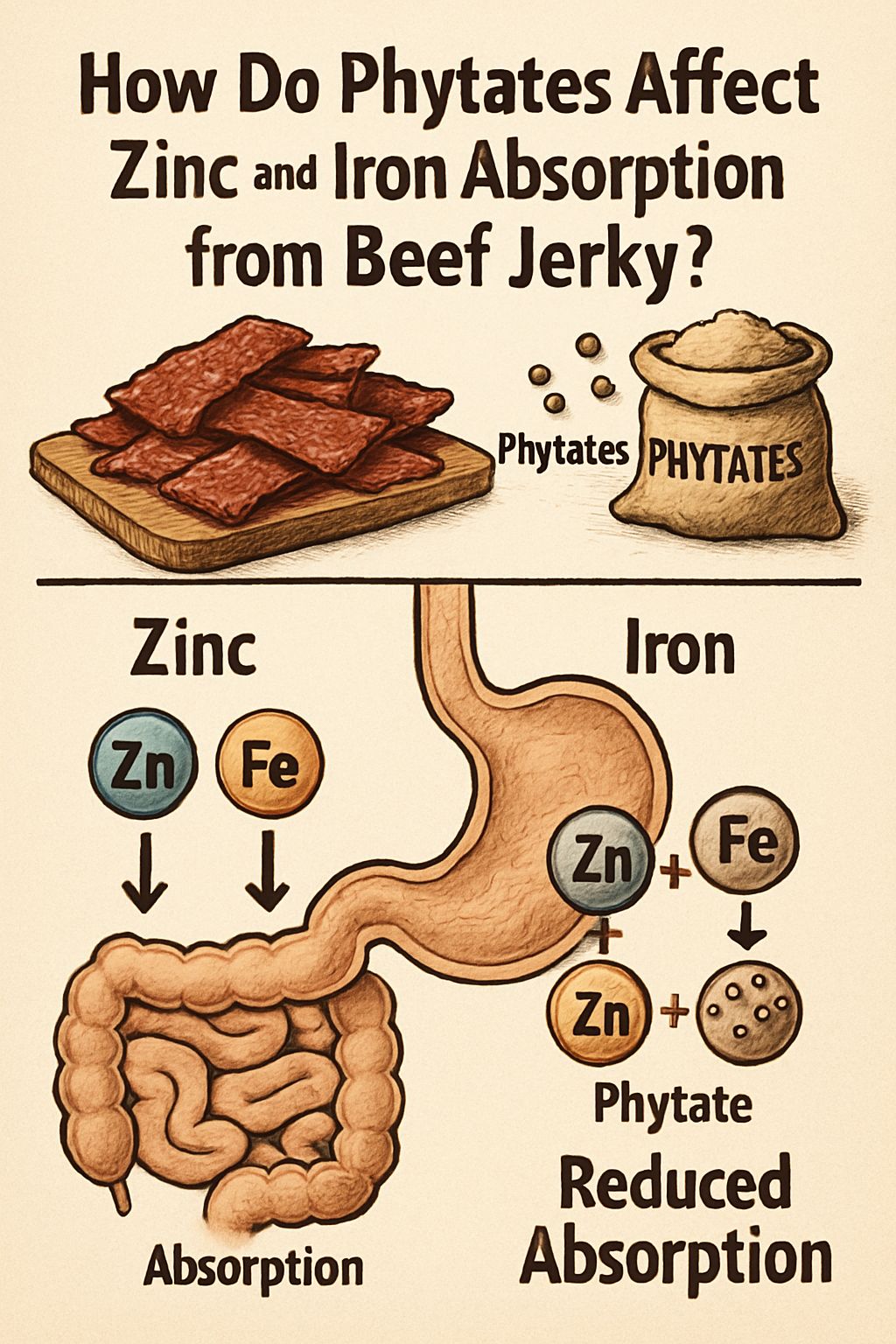
How do phytates affect zinc and iron absorption from beef jerky?
Phytates do not directly affect zinc or iron absorption from beef jerky itself — because the jerky contains no phytates. The absorption concern arises only when jerky is consumed alongside phytate-rich foods in the same meal or snack. In that scenario, the phytates from the accompanying food can bind to the zinc and iron the jerky provides, reducing how much the body actually absorbs.
The mechanism works like this: phytic acid carries a strong negative charge that attracts positively charged mineral ions — including zinc²⁺ and iron²⁺/³⁺. Once bound, these mineral-phytate complexes are insoluble and pass through the digestive system without being absorbed. The higher the phytate load from companion foods, the greater the mineral loss from everything consumed in that eating occasion — including the highly bioavailable heme iron and zinc from your beef jerky.
- Eating jerky alone: Full zinc and iron bioavailability, zero phytate competition
- Eating jerky with crackers or bread: Phytates from wheat can partially bind jerky’s zinc and iron
- Eating jerky with legume-based dips: High phytate load from legumes competes directly with mineral absorption
- Eating jerky with vitamin C-rich foods: Vitamin C enhances non-heme iron absorption and does not increase phytate risk
If you want to maximize the mineral return from beef jerky, eat it as a standalone snack or pair it with low-phytate foods like cheese, hard-boiled eggs, or fresh vegetables — not with grain-based or legume-based companions.
Is beef jerky a good high-protein snack despite its sodium content?
Yes, for most healthy adults, beef jerky is an excellent high-protein snack. The 33.2g of protein per 100g is elite-level for a portable, shelf-stable food — and the zero glycemic index means it supports satiety without triggering blood sugar swings. The sodium content is the legitimate concern, but in a realistic single serving of 20g to 28g, actual sodium intake lands between 415mg and 590mg — significant but workable within a balanced daily intake. People managing hypertension or kidney conditions should opt for low-sodium varieties and keep portions controlled, but for the general population, beef jerky delivers strong nutritional value for its convenience.
What is the glycemic index of beef jerky?
Beef jerky has a glycemic index of zero. The glycemic index measures how quickly a food raises blood glucose levels compared to pure glucose. Since beef jerky contains no digestible starch and minimal carbohydrates in its base form, it produces no measurable blood glucose response. This places it in the same glycemic category as pure protein and fat sources. For more detailed nutritional information, you can visit FoodStruct’s beef jerky page.
This characteristic makes beef jerky particularly valuable for specific dietary approaches where blood sugar stability is the goal. Consider how it stacks up against common snack alternatives:
Snack Food
Glycemic Index
Protein per 100g
Phytate Risk
Beef Jerky
0
33.2g
None
Whole Grain Crackers
~59
~10g
High
Roasted Almonds
~0–15
~21g
Moderate–High
Oat-Based Granola Bar
~65
~5g
High
Hard-Boiled Egg
0
~13g
None
The zero glycemic index holds true for plain and minimally seasoned beef jerky. Sweet or teriyaki-flavored varieties introduce added sugars through their marinades, which can nudge the glycemic response slightly upward. The effect at standard serving sizes remains small, but if glycemic precision matters to you — as it does for diabetics or those in ketosis — sticking with original or peppered flavors keeps the impact as close to zero as possible.
Beyond blood sugar, the zero glycemic index also signals that beef jerky won’t trigger the insulin response that drives fat storage and hunger cycling. Snacks that spike glucose lead to the familiar energy crash an hour later. Beef jerky’s protein and fat composition produces a slow, steady satiety signal instead — which is why it earns consistent praise as a between-meal snack that actually holds hunger at bay.
How does beef jerky compare to other meats in mineral content?
Beef jerky outperforms most fresh meat cuts in mineral concentration per 100g — and the reason is straightforward. Dehydration removes water, which concentrates everything that remains. This means the zinc, iron, phosphorus, and copper levels in jerky are significantly elevated compared to the same cut of beef in its fresh, unprocessed form.
The numbers tell a clear story. Beef jerky delivers 1.3 times more zinc than broiled beef, 2.1 times more iron than broiled beef, and 2.2 times more phosphorus than chicken meat. Even copper, which isn’t typically highlighted as a beef strength, comes in at 1.6 times the copper content of shiitake mushrooms — a food routinely celebrated for its copper density.
It’s worth noting that these elevated numbers reflect concentration through dehydration, not a fundamental change in mineral composition. If you were to rehydrate jerky back to its original water content, the mineral levels would realign more closely with fresh beef. The practical significance is still real though — when you eat 100g of beef jerky, you are genuinely consuming more minerals than you would from 100g of fresh beef, in a form the body absorbs efficiently without phytate interference.
Beef jerky is a popular snack known for its high protein content and savory flavor. It’s a convenient option for those looking to increase their protein intake without consuming a lot of calories. However, some people might wonder about the nutritional aspects, such as the presence of phytates. Phytates are naturally occurring compounds found in plant-based foods that can affect the absorption of minerals in the body. While beef jerky is primarily made from animal protein, it’s essential to consider all nutritional factors when incorporating it into your diet. If you’re curious about how different foods and compounds can impact your health, you might be interested in learning more about how long GLP-1 stays in your system and its effects on weight management.